Lorem ipsum dolor sit amet, consectetur adipiscing elit. Suspendisse varius enim in eros elementum tristique. Duis cursus, mi quis viverra ornare, eros dolor interdum nulla, ut commodo diam libero vitae erat. Aenean faucibus nibh et justo cursus id rutrum lorem imperdiet. Nunc ut sem vitae risus tristique posuere.
Miami's climate is tough on homes. Constant humidity, salty air, and intense sunlight lead to grime buildup, discoloration, and material damage year-round. Regular exterior cleaning is critical to protect your property and keep it looking its best. Here's what you need to know:
Key Issues: Algae, mildew, salt residue, and tannins from trees cause stains and deterioration.
Cleaning Methods:
Soft Washing: Low-pressure water with biodegradable detergents for delicate surfaces like stucco and siding.
Pressure Washing: High-pressure cleaning for hard surfaces like driveways and patios.
Roof & Gutter Care: Regular cleaning prevents water damage, mold, and structural issues.
Frequency: Most surfaces need cleaning 1–2 times a year, while roofs and gutters may require more frequent attention in coastal or high-humidity areas.
Pro Tips: Use biodegradable solutions, schedule cleanings during cooler months, and rinse surfaces after storms to remove salt and debris.
Regular maintenance not only keeps your property looking great but also prevents costly repairs caused by Miami's harsh conditions. Professional services tailored to the local climate can make a big difference in protecting your investment.
Pressure Washing vs Soft Washing: Methods and Applications for Miami Homes
Pressure Washing for Hard Surfaces
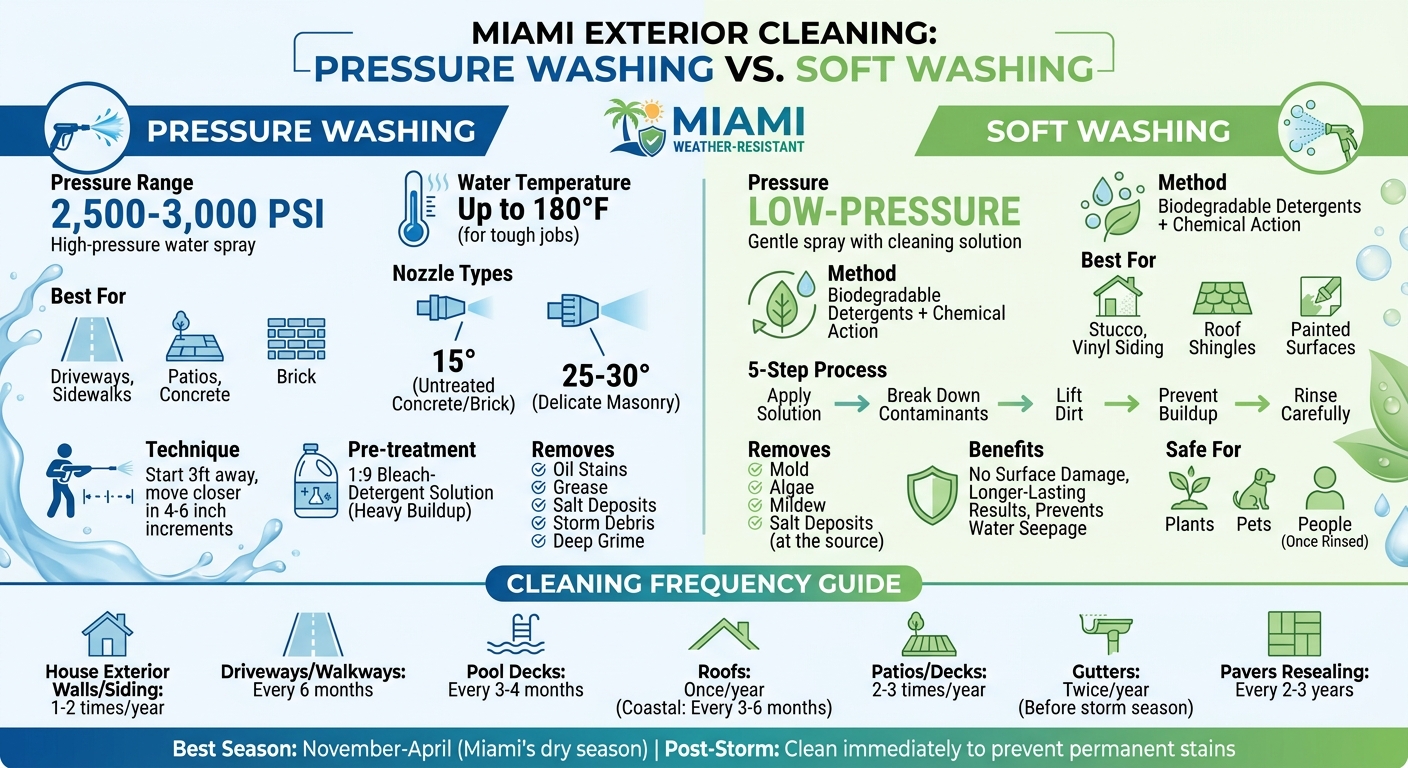
Miami's salty air and stormy weather make maintaining hard surfaces a challenge, but pressure washing can help. Driveways, sidewalks, and patios in Miami benefit from high-pressure washing, which effectively removes the grime that softer methods can't handle. These surfaces can withstand pressures between 2,500 and 3,000 PSI, which is enough force to strip away dirt and buildup. The trick lies in using the right nozzle for the job. For untreated concrete or brick, a 15-degree nozzle delivers concentrated power, while a 25- to 30-degree nozzle works better for more delicate masonry.
For tougher cleaning tasks, like removing oil stains from garage floors or cleaning commercial loading zones, hot water pressure washing is the go-to method. This technique heats water to 180°F, effectively breaking down grease and residue while protecting the surface from Miami's challenging climate.
Removing Salt and Storm Debris with Pressure Washing
Pressure washing also tackles salt and storm debris, common issues in Miami's coastal environment. Salt spray isn't limited to beachfront areas - it can travel miles inland, leaving a crusty residue that can damage concrete over time. After storms, debris and salt often settle into cracks and crevices, where they can cause long-term harm if not removed. High-pressure washing lifts these deposits before they have a chance to do lasting damage.
"The warm air, ocean breeze, and near-constant humidity all contribute to buildup on surfaces... Salt from the coast, pollen from trees, and smog from busy roads affect walls, driveways, and roofs." - GWS Pressure Cleaning
Start by rinsing surfaces with fresh water to remove loose sand and salt, which helps prevent scratches when applying high pressure. For heavy buildup, pre-treat the area with a 1:9 bleach-detergent solution before washing. Keep the nozzle 3 feet away from the surface initially, then gradually move closer in 4- to 6-inch increments until finding the right distance for effective cleaning without causing damage.
Cleaning Concrete and Pavers Without Damage
When it comes to brick pavers and older concrete, using low pressure combined with biodegradable cleaning agents is key. This approach removes mold and salt without stripping sealants or harming the surface. A surface cleaner attachment is particularly useful for even coverage, as it prevents "tiger striping" or unintentional etching caused by handheld wands.
"Best Pressure Washing... isn't about blasting harder, it's about restraint, chemistry, and timing." - Advanced Power Wash
Avoid pressure washing in the intense summer sun, as cleaning agents can dry too quickly and leave streaks. Instead, aim for mild days in spring or fall for optimal results. After cleaning, pavers often need resealing every 2 to 3 years to guard against salt and moisture intrusion. Keep in mind that surfaces may stay slick for up to an hour after cleaning. These careful methods ensure effective cleaning while protecting your property for the long term.
sbb-itb-20350f7
Soft Washing for Sensitive Materials
Soft washing provides a gentle yet effective cleaning option for Miami's more delicate surfaces. Unlike high-pressure cleaning, which is best suited for tougher materials, soft washing is designed for fragile surfaces like stucco, vinyl siding, and roof shingles - areas that could be damaged by intense water pressure. This method uses low-pressure water combined with specially formulated cleaning solutions to target and eliminate organic growth at its source. By doing so, it avoids issues like water seeping behind stucco, which can occur with high-pressure techniques.
The process typically involves five steps: applying the cleaning solution, breaking down contaminants, lifting dirt, preventing buildup, and rinsing with care. This approach not only removes mold and algae but also offers longer-lasting results compared to power and soft washing techniques. By relying on chemical action rather than brute force, soft washing also paves the way for discussions around environmentally friendly cleaning methods and effective mold prevention.
Cleaning with Biodegradable Solutions
Biodegradable cleaning solutions are key to soft washing's effectiveness. These solutions neutralize mold spores, algae, and mildew while also breaking down salt deposits. They penetrate surfaces deeply to prevent quick regrowth and are safe for plants, pets, and people once rinsed away.
Eliminating Mold and Mildew in High Humidity
Miami's humid climate creates the perfect conditions for mold and mildew to thrive. Soft washing addresses these issues by targeting the microorganisms at their source, rather than merely removing surface stains. The city’s frequent rain often leads to roof streaks and algae on siding, making annual treatments essential for most properties. In areas with higher moisture levels, biannual cleanings are often recommended.
The timing of these cleanings can make a big difference. Spring treatments help remove pollen that feeds mold growth, Fall sessions refresh exteriors after heavy summer rains, and Winter cleanings help combat salt buildup. By scheduling cleanings strategically, homeowners can maintain their property’s appearance and structural integrity year-round.
Roof and Gutter Cleaning Methods
Miami's roofs and gutters face constant challenges from humidity, salt spray, and storms. Without regular upkeep, these elements can fail when severe weather strikes. In fact, the National Oceanic and Atmospheric Administration has forecasted a 60% likelihood of above-normal hurricane activity in 2025, marking the seventh consecutive year of increased storm risks. Regular cleaning is crucial to safeguard your property’s structural integrity.
When it comes to cleaning roofs, the approach depends on the environment. Homes in wooded or high-humidity areas often need cleaning every 6 to 9 months to control algae and moss buildup. Meanwhile, coastal properties require more frequent attention - every 3 to 6 months - to combat the corrosive effects of salt spray. Generally, most Miami homes benefit from at least one professional exterior cleaning per year.
Gutters are equally important. Clogged gutters can lead to water backing up under shingles, creating conditions ripe for mold growth and water damage. During Miami’s heavy rainstorms, blocked gutters can overflow and direct water toward your foundation, potentially causing erosion, cracked walls, or uneven flooring. Cleaning gutters twice a year, especially before storm season, helps prevent these problems. Additionally, ensuring downspouts channel water at least three feet away from your home is essential.
Extending Roof Life with Soft Washing
Soft washing is a gentle yet effective method to clean roofs without causing damage. As Juan Ferrer explains:
"No water pressure guns that over the time damages the roof and they cause roof leaks".
This technique uses low-pressure water combined with eco-friendly detergents to eliminate algae, mold, and other contaminants. Unlike high-pressure washing, it doesn’t risk cracking or loosening roofing materials. The detergents work by breaking down biological growth at its source, making this method ideal for delicate materials like shingles. Regular soft washing helps preserve shingles, preventing premature wear and maintaining their protective function.
In addition to cleaning, some professionals apply treatments to prevent future growth. Trimming overhanging branches can also reduce debris buildup and allow more sunlight to naturally deter algae. Together, these measures ensure long-term roof protection.
Preparing Gutters for Storm Season
After addressing roof care, gutters need specific attention to ensure they’re ready for Miami’s stormy weather. Professional gutter cleaning involves more than just removing leaves and dirt. Technicians clear out debris like sticks and damp materials that attract pests and mold. They also inspect for structural issues, such as sagging, rust, or gutters pulling away from the roofline - problems that heavy rain and strong winds can worsen.
Testing the gutter system is a key step. Running water through the gutters with a hose can expose clogs, which may require mechanical tools like a plumber’s snake to clear. If water pools instead of flowing freely through the downspouts, immediate action is necessary. Many homeowners in Miami install mesh or surface tension guards to minimize debris buildup between professional cleanings. This preventative measure is far more cost-effective than dealing with foundation damage or basement flooding caused by neglected gutters.
Creating a Cleaning Schedule for Your Property
Miami’s warm, humid climate creates the perfect environment for mold, mildew, and algae to thrive on exterior surfaces. Add in the region’s salt air, frequent storms, and long wet seasons, and it’s clear why a regular cleaning schedule is essential. Not only does it keep your property looking great, but it also protects your investment over time.
Recommended Cleaning Frequencies for Miami
Different surfaces on your property require cleaning at varying intervals to stay in top condition:
House exterior walls and siding: Clean 1–2 times a year, ideally in spring and fall, to remove salt buildup, algae, and dust.
Driveways and walkways: Clean every six months to prevent oil stains and maintain safe traction.
Pool decks: Clean every 3–4 months to eliminate chemical residue and reduce slip hazards.
Roofs: A soft wash once a year removes black algae streaks and prolongs the roof’s lifespan.
Patios and decks: Clean 2–3 times a year for optimal upkeep.
If your property is near the coast, consider adding an extra cleaning session each year to counteract the corrosive effects of salt air. Schedule pressure washing during Miami’s dry season (November to April) to maximize results, and aim for morning cleanings so detergents don’t dry out too quickly on hot surfaces. After hurricanes or heavy storms, a prompt cleaning is crucial to clear organic debris and prevent permanent stains.
Regular cleaning doesn’t just maintain appearances - it also protects your property from long-term damage. As Jordan Denahan, a Licensed Handyman & Home Repair Specialist, explains:
"In South Florida's climate, waiting too long between pressure washings isn't just about aesthetics - it's about protecting your investment. Mold, mildew, and algae can actually damage your home's surfaces if left unchecked, leading to costly repairs down the road."
How Regular Cleaning Protects Your Investment
Miami’s coastal environment can be tough on properties, but consistent cleaning helps mitigate the effects of salt-induced corrosion and organic buildup. By removing algae and mildew, you prevent moisture from being trapped, which could otherwise lead to paint failure or wood rot. For homes near the ocean, rinsing surfaces regularly removes salt film that can corrode metal fixtures and accelerate wear.
Safety is another key factor. Algae on walkways and pool decks can make them dangerously slippery when wet, so frequent cleaning reduces the risk of accidents. Porous materials like concrete and pavers are also prone to staining and etching, but routine maintenance can save you from costly repairs or replacements later.
Beyond protection, regular cleaning preserves your property’s value. Clean surfaces shed water and grime more effectively, which can extend the time between expensive repainting jobs. If you live in a community with a homeowners association (HOA), like Doral or Miami Lakes, maintaining a bright, uniform exterior helps ensure compliance with neighborhood standards. And when it’s time to sell, a well-maintained property makes a stronger impression, potentially increasing its market value.
Conclusion: Maintaining Your Miami Property's Exterior
Keeping the exterior of your Miami property clean is key to protecting your investment in a challenging coastal environment. The region's intense heat, heavy rain, and salty air take a toll on building materials over time. Add in high humidity and storm debris, and it's clear why regular maintenance is so important.
The techniques covered earlier - pressure washing for tough surfaces like concrete, soft washing for more delicate areas like stucco or painted siding, and focused roof and gutter care - are essential for addressing these environmental stresses. Together, these methods help prevent corrosion, decay, and other long-term damage.
In a city like Miami, where properties face a 73% chance of flooding up to 1.7 feet deep over a 30-year period, a well-planned cleaning schedule is a must. Routine upkeep not only prevents moisture buildup and slip hazards but also helps you avoid costly repairs, like repainting or replacing materials prematurely.
For property owners, especially those near the coast or in flood-prone zones, professional cleaning services can make all the difference. Companies like Palm Shine Pros specialize in handling Miami's unique conditions. Using biodegradable detergents and low-pressure techniques, they ensure effective cleaning without damaging delicate surfaces - all while keeping South Florida's climate in mind.
In Miami's demanding climate, regular exterior maintenance isn't just about aesthetics - it's about safeguarding your property's value.
FAQs
Will pressure washing damage my stucco or paint?
When handled properly, pressure washing doesn’t harm stucco or paint. Professional exterior cleaning services in Miami are skilled at using the right pressure settings and techniques to safeguard these surfaces. This careful approach ensures your property stays clean and unharmed, even in South Florida’s tough weather conditions.
How do I know if I need soft washing or pressure washing?
When it comes to cleaning surfaces, the best method often depends on the material and the type of buildup you're dealing with. Soft washing is a gentler approach that combines low-pressure water with cleaning solutions to tackle issues like mold, mildew, and salt buildup. It's perfect for delicate surfaces such as roofs or painted siding. On the other hand, pressure washing relies on high-pressure water to clean tougher, more durable surfaces like concrete or brick. For fragile materials, stick with soft washing; for sturdy surfaces, pressure washing is the way to go.
What should I do right after a hurricane to prevent stains?
After a hurricane, it’s important to clean exterior surfaces as soon as possible to get rid of salt, mold, mildew, and debris left behind by the storm. Hiring professionals for this task can be a smart move - they can remove salt and grime effectively, which helps prevent stains and potential damage to your home. Once it’s safe to do so, act quickly. If salt and moisture are left untreated, they can lead to persistent problems like staining and mold growth.
.avif)

.avif)