Lorem ipsum dolor sit amet, consectetur adipiscing elit. Suspendisse varius enim in eros elementum tristique. Duis cursus, mi quis viverra ornare, eros dolor interdum nulla, ut commodo diam libero vitae erat. Aenean faucibus nibh et justo cursus id rutrum lorem imperdiet. Nunc ut sem vitae risus tristique posuere.
Florida's climate is tough on homes. Between high humidity, heavy rains, intense UV rays, and salty coastal air, your home's exterior faces constant challenges. Without regular maintenance, small issues like mold, algae, or cracked paint can quickly escalate into costly repairs. Here's what you need to know:
Roof Care: Inspect twice yearly for damage like curling shingles or algae. Clean gently with soft washing to avoid stripping protective layers.
Gutter Cleaning: Clear gutters at least twice a year (spring and fall) to prevent water damage.
Exterior Cleaning: Wash siding monthly to prevent mold and algae buildup. Use soft wash vs pressure washing methods to protect surfaces.
Windows and Doors: Check seals and frames seasonally for cracks or gaps. Clean screens and lubricate hinges to prevent corrosion.
Driveways and Pavers: Inspect for cracks and algae. Seal pavers every 1–2 years to protect against UV and moisture damage.
Storm Prep: Secure outdoor furniture, trim trees, and inspect sea walls before hurricane season.
Regular upkeep not only extends the life of materials but also saves money on repairs and ensures insurance claims aren't denied due to neglect. Stay ahead of Florida's harsh conditions by following this guide.
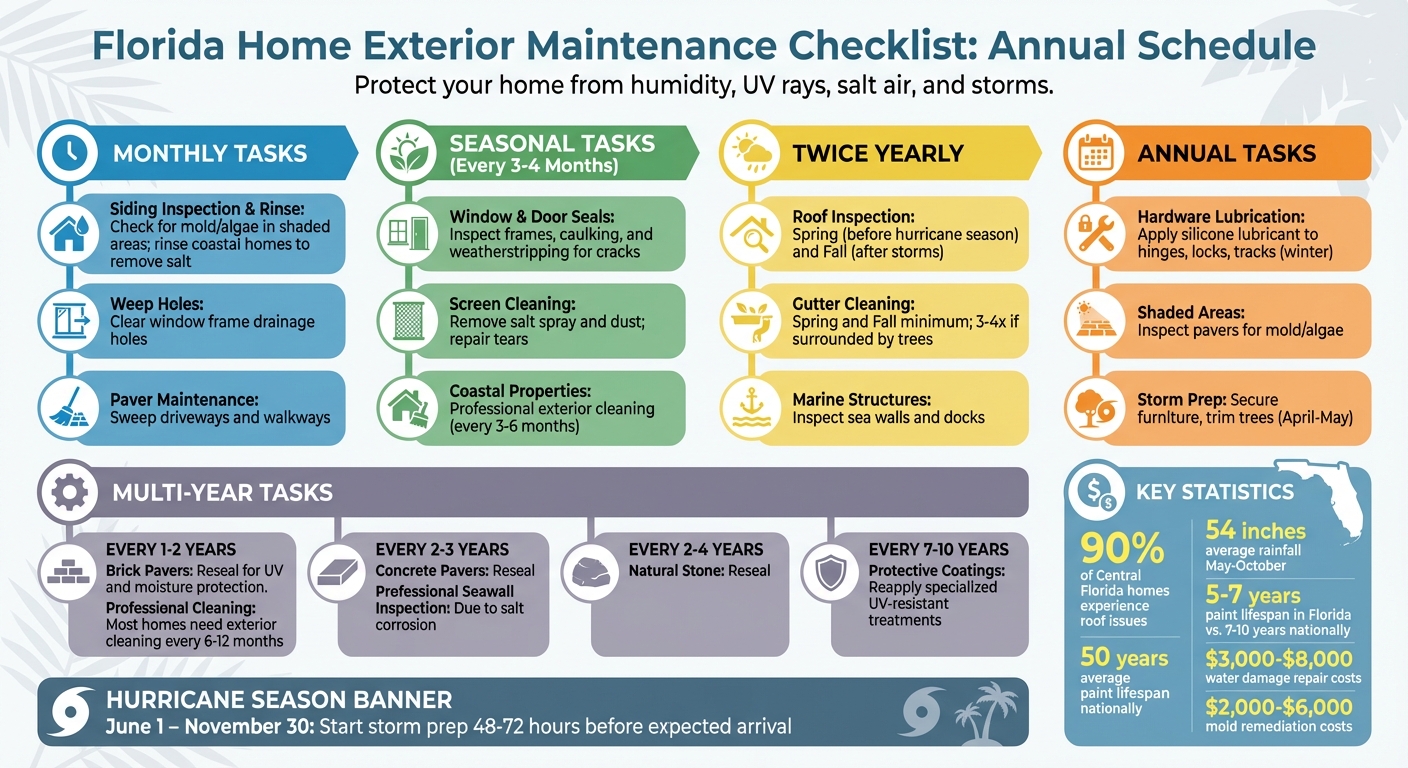
Florida Home Exterior Maintenance Schedule: Annual Task Frequency Guide
Mastering Exterior Maintenance: Essential Tips for Homeowners
sbb-itb-20350f7
Roof and Gutter Maintenance
Florida's weather puts your roof and gutters to the test. With over 90% of Central Florida homes experiencing roof issues due to a mix of intense sunlight and storms, regular upkeep is essential. A little maintenance can be the difference between a roof that lasts its intended lifespan and one that fails far too soon. Start by inspecting your roof regularly to catch problems before they escalate.
Inspect Your Roof Regularly
Plan to inspect your roof at least twice a year - once in the spring before hurricane season and again in the fall after the most active storm months. Look for warning signs like curling shingles, cracks, bare patches from granule loss, or granule buildup in your gutters, which often signals aging shingles.
Black streaks on your roof aren't just cosmetic - they're algae, which can weaken asphalt shingles over time. Florida's humid climate also encourages moss, mold, and lichen growth, which can trap moisture and cause further damage. Near the coast, salt air accelerates corrosion on metal components like flashing around vents and chimneys.
"Most Florida roofs fail early because they're ignored, not because they're old."
Florida Roofing & Gutters
When cleaning your roof, avoid high-pressure washing, which can strip away protective granules. Instead, opt for soft washing. This method uses low pressure and algaecide solutions to remove organic growth without causing damage, potentially extending your roof's lifespan by up to 10 years.
Don't overlook interior signs of trouble. Water stains, peeling paint, musty smells, or damp insulation often point to roof issues. Addressing these early can save you thousands - water damage repairs can range from $3,000 to $8,000, and mold remediation can cost between $2,000 and $6,000.
Clear Gutters and Downspouts
Gutters in Florida face more than just falling leaves. Palm fronds, pine needles, and heavy pollen are constant challenges. With Florida's rainy season delivering an average of 54 inches of rain from May to October, even a single thunderstorm can dump several inches of water in an hour. Clogged gutters can lead to water overflow, fascia rot, and even foundation damage.
"In Florida, we recommend scheduling gutter cleanings twice a year - once in the spring, and once in the fall."
If your home is surrounded by trees or dense vegetation, you might need to clean your gutters 3 to 4 times a year. After major storms, inspect and clear gutters right away. Start by removing large debris, then flush the system with a garden hose to ensure downspouts are clear. Direct downspouts at least 3 feet away from your home's foundation to avoid erosion. Trimming tree branches back 8 to 10 feet from your roofline can also reduce debris buildup.
Keeping gutters clean isn't just about water flow. Clogged gutters can attract mosquitoes and pests like rodents, while standing water from improper sloping adds weight that may pull gutters away from the fascia.
Professional Gutter Services
While regular cleaning can handle minor issues, professional services provide a deeper level of care. Companies like Palm Shine Pros specialize in tackling Florida-specific challenges, such as removing palm fronds and tropical debris. Their services include flow testing to ensure downspouts are clear and inspecting fasteners and seams to catch problems early. By addressing these issues proactively, you can avoid costly water damage to your home's exterior.
Cleaning and Protecting Exterior Surfaces
After addressing roof and gutter maintenance, keeping your home's exterior surfaces clean and protected is just as important - especially in Florida's tough climate.
The state's humidity and salt-filled air create the perfect environment for mold, algae, and mildew to flourish. Exterior paint in Florida typically lasts only 5 to 7 years, compared to the national average of 7 to 10 years. Regular care of your siding, stucco, and other surfaces is essential to avoid damage and maintain your home’s curb appeal.
Inspect and Wash Siding
Take a monthly walk around your home to check for mold or algae in shaded or damp areas. Watch for telltale signs like green or black streaks, chalky residue from UV damage, or a gritty texture on siding. If you have stucco, keep an eye out for cracks or chips and seal them with acrylic caulk as needed.
Before cleaning, be sure to cover electrical outlets and protect nearby plants with tarps. For homes near the coast, a quick monthly rinse with a garden hose can wash away salt, pollen, and dust before they stick to surfaces. Most Florida homes benefit from a professional cleaning every 6 to 12 months, but waterfront properties may need it as often as every 3 to 6 months.
Pressure Washing vs. Soft Washing
While pressure washing might seem like a quick fix, it can actually harm your home by cracking stucco, stripping paint, or forcing moisture behind siding, which encourages mold growth. Soft washing is a safer alternative, using low-pressure water (under 1,000 PSI) paired with specialized cleaning solutions to tackle mold and algae at their roots.
Given Florida's high humidity, it's best to use detergents specifically designed to remove mold and mildew. These products are far more effective than water alone in slowing regrowth. When soft washing, hold the wand at a 45-degree angle and keep it 12 to 18 inches away from the surface. Avoid spraying upward into gaps in siding or rooflines to prevent water from seeping inside.
Material Type
PSI
Nozzle
Stucco
1,200–1,500 PSI
40° (White)
Vinyl Siding
1,300–1,600 PSI
40° (White)
Hardie Board
1,300–1,800 PSI
40° (White)
Wood Siding
1,000–1,200 PSI
40° (White)
Brick
1,500–2,000 PSI
25° (Green) or 40° (White)
Concrete
2,000–2,800 PSI
15° (Yellow) or 25° (Green)
Palm Shine Pros specializes in soft washing tailored to Florida's environment. Their process involves eco-friendly cleaning solutions and careful handling of delicate areas like stucco and painted surfaces.
Once your home is clean, applying protective treatments can extend the life of your exterior surfaces.
Apply Protective Treatments
Cleaning removes existing grime and growth, but protective treatments help guard against future damage. Elastomeric coatings, for example, work well in Florida because they expand and contract with temperature changes, sealing small cracks and keeping water out. For stucco, breathable sealants are a smart choice - they block external moisture while allowing trapped dampness to escape.
To combat UV damage, use paints that are resistant to fading and opt for lighter shades to reflect heat. Specialized coatings like StoColor Lotusan are designed with self-cleaning properties, causing dirt and water to bead and roll right off the surface. These coatings should be reapplied every 7 to 10 years.
"Paint isn't just cosmetic - it seals and protects your home's surfaces from moisture and mold."
For homes near the coast, look for salt-air-resistant coatings, as standard paints may peel or crack under salt exposure. Additionally, keeping trees and bushes trimmed at least 12 inches away from your home can improve airflow and reduce moisture buildup, limiting the growth of mold and mildew.
Windows, Doors, and Screens
Florida’s humid, salty air puts your home’s windows, doors, and screens through the wringer. These elements face constant wear from moisture, salt, and relentless UV rays. Without regular upkeep, hardware can corrode, seals may crack, and cooled air could escape - leading to rising energy bills and potential moisture damage. Staying on top of maintenance helps preserve energy efficiency and shields your home from costly repairs.
Inspect Frames and Seals
Seasonal inspections of your windows and doors are key to catching problems early. Cracks or gaps in caulking and weatherstripping are common after Florida’s intense summer heat, which can dry out and damage these materials. When seals fail, humidity can creep in, compromising your home’s comfort and energy efficiency.
"In the blazing Florida heat, window and door seals can quickly dry out and crack."
A1 Windows & Doors
Check weatherstripping for brittleness or gaps, and use a flashlight to spot water stains in corners after storms. On windy days, a candle held near the edges can reveal drafts. If you find any issues, replace damaged seals right away to prevent humid air from sneaking in and driving up cooling costs.
Don’t overlook the weep holes - those small drainage openings at the bottom of vinyl window frames. Clogged weep holes can lead to water pooling, leaks, and even mold. Clear them regularly to keep your windows functioning properly. For added protection, apply a silicone-based lubricant to hinges, locks, and tracks once a year (winter is a good time). Avoid petroleum-based products, which can attract dirt and grime.
Once your frames and seals are in good shape, it’s time to focus on your screens.
Clean and Repair Screens
Salt spray and dust can accumulate on windows and screens, creating a gritty layer that can damage glass and corrode metal. If you live near the coast, cleaning your windows at least once a month can help prevent this buildup.
Start by rinsing screens with a garden hose, then scrub them gently with mild soap and water using a soft brush. Check for tears or holes that might let pests inside. For window tracks, vacuum out debris, and clean the glass with a soap-and-vinegar solution using a microfiber cloth to avoid streaks. Skip the pressure washer - it can damage seals. To prevent mold around frames and tracks, keep indoor humidity below 60%. If mold does appear, clean it with a mix of one part bleach to three parts water.
Professional Window Cleaning
For those hard-to-reach windows or stubborn salt buildup, calling in professionals can be a smart move. Companies like Palm Shine Pros specialize in cleaning windows in South Florida’s challenging environment. Their team uses the right tools and techniques to safely remove grime and leave your windows sparkling, all while protecting your investment from Florida’s tough conditions.
Driveways, Walkways, and Pavers
Florida’s intense sun, high humidity, and heavy rains can take a toll on driveways, walkways, and pavers. Without proper upkeep, these surfaces can fade, crack, and become a breeding ground for algae and mildew. Regular cleaning and sealing not only improve your home’s curb appeal but also protect your investment and help you avoid costly repairs later. Let’s dive into the key steps for inspecting, cleaning, and sealing these surfaces.
Inspect and Clean Paved Surfaces
Make it a habit to walk around your property and check for early signs of damage, like cracks, fading, or green algae creeping in. Florida’s humid climate is the perfect setup for mold and mildew, especially in shaded spots. Weekly sweeping and occasional rinsing with a hose can help keep debris and grime from settling into the joints of your pavers.
For light cleaning, mix warm water with mild dish soap and scrub the surface with a stiff brush. Stubborn stains? A 1:1 mix of white vinegar and water usually does the trick, but avoid this on acid-sensitive stones like limestone. If mildew pops up, oxygen bleach is a plant-safe option. Oil stains should be tackled quickly with baking soda or a specialized paver degreaser to prevent permanent discoloration.
If you’re using a pressure washer, be cautious. Stick to a pressure setting below 1,500 PSI, use a fan-tip nozzle, and keep the wand at least 12 inches away from the surface. Experts warn that too much pressure can damage your pavers, so less is more in this case.
Seal Pavers for Protection
Once your pavers are clean, sealing them is a must to protect against UV rays and moisture. Florida’s intense sun can break down unsealed surfaces, leading to fading and brittleness. A good sealer acts as a barrier, blocking UV damage, repelling moisture, and making future cleaning easier. It also stabilizes the joint sand, helping to prevent weeds and ant tunnels - both common nuisances in outdoor spaces.
Before sealing, ensure your pavers are completely clean and dry. Allow at least 24–48 hours for drying, as sealing over trapped moisture can result in a hazy, milky finish that’s difficult to fix. If you notice a white, chalky buildup (efflorescence), treat it with a mild acid wash before sealing to avoid permanently locking it in.
Timing matters, too. Aim to seal during fall or early winter when temperatures are cooler and rainfall is less frequent, giving the sealer plenty of time to cure properly. Unsure if your pavers need resealing? Try the water test: sprinkle a few drops of water on the surface. If it beads up, your sealer is still effective. If it soaks in right away, it’s time to reseal.
For professional sealing services designed to withstand South Florida’s tough climate, Palm Shine Pros offers tailored solutions for every surface type.
Sealing Frequency by Material Type
Different materials require different maintenance schedules, especially in Florida’s challenging conditions. Here’s a quick guide:
Surface Material
Recommended Sealing Frequency
Florida Climate Impact
Protection Benefit
Brick Pavers
1–2 Years
High UV fading; very porous and absorbs moisture quickly
Shields against UV rays; prevents oil, rust, and organic stains
Natural Stone
2–4 Years
Susceptible to salt air corrosion; can become brittle
Acts as a moisture barrier; preserves natural appearance; prevents shifting
Shaded/Moist Areas
Annual Inspection
High risk for mold, algae, and mildew
Prevents organic growth; keeps surfaces safe to walk on
High-traffic areas like driveways and pool decks often need more frequent attention than less-used spaces like decorative patios. If you live near the coast, salt air can accelerate wear, so plan on rinsing these areas more often and resealing sooner than usual.
Seasonal Storm Preparation
Florida's hurricane season stretches from June 1 to November 30, making preparation essential. Ideally, start getting ready 48–72 hours before a storm is expected. Begin by documenting your property for insurance purposes, then secure outdoor areas to minimize potential damage.
Secure Outdoor Features
Move lightweight items indoors to prevent them from becoming dangerous projectiles. For heavier furniture that can't be moved, brace it against interior walls. Stack outdoor dining chairs together and secure them with bungee cords or ratchet straps to make them heavier and reduce their wind resistance. Flip tables on their sides to protect glass tops and limit movement.
Avoid the common misconception of placing furniture in your pool - it can damage the pool structure, plumbing, and the furniture itself. Instead, anchor large items like gas grills or heavy tables using ground anchors or bolts. Make sure to close and secure umbrellas, and if winds are expected to exceed 50 mph, disassemble and store larger umbrellas.
Bring smaller potted plants and hanging plants indoors. For larger potted trees that are too heavy to move, lay them on their sides with the tops pointing away from the wind's expected direction. By late spring (April or May), trim tree branches and clear your yard of loose debris to ensure local waste facilities can collect it before storm-related service interruptions.
Maintain Sea Walls and Docks
Once loose items are secured, turn your attention to any structural features near the water. Inspect sea walls and docks at least twice a year - once before hurricane season and again after any storms - for signs of damage like cracks, leaning sections, rust, or rot. A tilting dock could signal deeper issues with the sea wall's foundation.
Keep seawall weep holes clear on a monthly basis and after storms to avoid pressure buildup. Regularly remove algae, barnacles, and marine growth from pilings to prevent rot and structural weakening. Before a storm, tighten bolts, secure loose decking boards, and clear away debris that could be swept up by strong winds.
It's also smart to schedule a professional seawall inspection every two to three years. Florida's salty environment accelerates corrosion, making routine maintenance essential. Companies like Palm Shine Pros specialize in marine cleaning and can help keep your sea walls and docks in good condition year-round.
Post-Storm Cleanup Services
After a storm, safety comes first. Treat all downed power lines as live and keep your distance. Before starting cleanup, inspect your roof, siding, and trees for unstable areas. Remove palm fronds, leaves, and branches promptly - wet organic debris can cause permanent tannin stains on concrete in just a few hours.
Clear gutters clogged with silt, twigs, and seed pods, as blockages can lead to water damage. Pooling water may seep under roofing materials or collect at your foundation, causing rot and structural problems. Additionally, wind-driven rain often forces mud, salt, and grime into porous materials like stucco and wood, encouraging algae and mildew growth in Florida's humid climate. If left untreated, this can result in permanent stains and deterioration of paint, roofing shingles, and building materials.
For durable surfaces like concrete driveways, use high-pressure washing. For more delicate areas like siding, roofs, or wood fences, opt for soft washing, which uses low pressure and specialized detergents to avoid forcing water behind the surface. Document any damage to your roof, walls, or attic with dated photos and videos to support insurance claims.
For a thorough and efficient cleanup, Palm Shine Pros offers professional post-storm services tailored to the unique challenges of South Florida, ensuring your property is restored quickly and effectively.
Conclusion
We’ve walked through the key maintenance tasks for roofs, exteriors, and outdoor spaces, all of which can be woven into a solid yearly plan to keep your property in excellent shape.
Florida’s climate is tough on homes. The combination of high humidity, relentless UV rays, salty air, and seasonal storms accelerates wear and tear on exterior surfaces. Staying on top of maintenance can save you from skyrocketing repair bills down the line.
"Maintaining the homes that we have is really essential to protecting our health and our well-being." - Amanda Reddy, Executive Director, National Center for Healthy Housing
A proactive approach to upkeep offers more than just peace of mind - it can also deliver a strong return on investment. For example, addressing a small leak early can save you from thousands of dollars in water damage repairs. Plus, keeping a record of your maintenance efforts can be crucial for insurance claims, ensuring they aren’t denied due to preventable issues.
Think of this checklist as your go-to annual maintenance guide. Prioritize tasks like clearing gutters before the rainy season, resealing pavers every six months, and scheduling inspections both before hurricane season and after major storms. These actions not only protect your property’s value but also extend the lifespan of materials and shield your family from hazards like mold and pests.
For professional help, Palm Shine Pros offers a range of exterior maintenance services, from soft washing and paver sealing to post-storm cleanup and marine structure care. Protect your investment with expert attention - because a little maintenance today can save you from costly repairs tomorrow.
FAQs
What exterior issues should I fix first in Florida?
Start by giving your roof a thorough inspection and making any necessary repairs. Seal windows and doors to keep leaks at bay, and take care of any mold or mildew that might be lurking in shaded spots. To protect your home from storm damage, secure shutters and clear away any debris that could become hazardous. Florida’s climate - known for its humidity, storms, and salt air - makes these steps crucial for keeping your home’s exterior in good shape.
How do I know if I should soft wash or pressure wash?
Deciding between soft washing and pressure washing comes down to the surface you’re cleaning and the type of grime you’re dealing with. Soft washing uses less than 500 PSI and biodegradable detergents, making it ideal for fragile surfaces like roofs, stucco, or painted siding. It’s especially effective for removing algae and mildew without causing harm. On the other hand, pressure washing operates at much higher pressures (2,000–4,000 PSI) and is better suited for tackling tough stains on sturdy surfaces like driveways or concrete. Choosing the right method is key to protecting surfaces, especially in Florida’s unique climate.
What maintenance records should I keep for insurance?
Keeping thorough records of all home maintenance activities, inspections, repairs, and updates is essential for staying on top of your property's condition. Make sure to also maintain documentation of your insurance policies, including coverage limits and any communications with your insurer. These records can be invaluable when it comes to substantiating claims and ensuring you have the right coverage when it matters most.
.avif)

.avif)