Lorem ipsum dolor sit amet, consectetur adipiscing elit. Suspendisse varius enim in eros elementum tristique. Duis cursus, mi quis viverra ornare, eros dolor interdum nulla, ut commodo diam libero vitae erat. Aenean faucibus nibh et justo cursus id rutrum lorem imperdiet. Nunc ut sem vitae risus tristique posuere.
When cleaning your property, the choice between pressure washing and soft washing depends on the surface and the type of dirt or growth you're dealing with. Pressure washing uses high-pressure water (1,500–4,000+ PSI) to remove stubborn stains on durable surfaces like concrete, while soft washing relies on low-pressure water (below 500 PSI) and cleaning solutions to safely clean delicate materials like roofs and siding.
Here’s a quick breakdown:
In South Florida’s humid climate, soft washing is often the better choice for long-term maintenance, especially for roofs and siding. Pressure washing is better suited for durable, stain-prone areas like driveways. Both methods have pros and cons, so choosing the right one depends on your property’s specific needs.
Quick Comparison:
Feature
Pressure Washing
Soft Washing
Pressure Level
1,500–4,000+ PSI
Below 500 PSI
Best For
Concrete, brick, stone
Roofs, stucco, siding
Results Duration
3–12 months
1–3 years
Risk of Damage
High on delicate areas
Low
Cost per Sq Ft
$0.10–$0.25
$0.15–$0.30
Choose the method that aligns with your surface type and cleaning goals to protect your property and save on long-term costs.
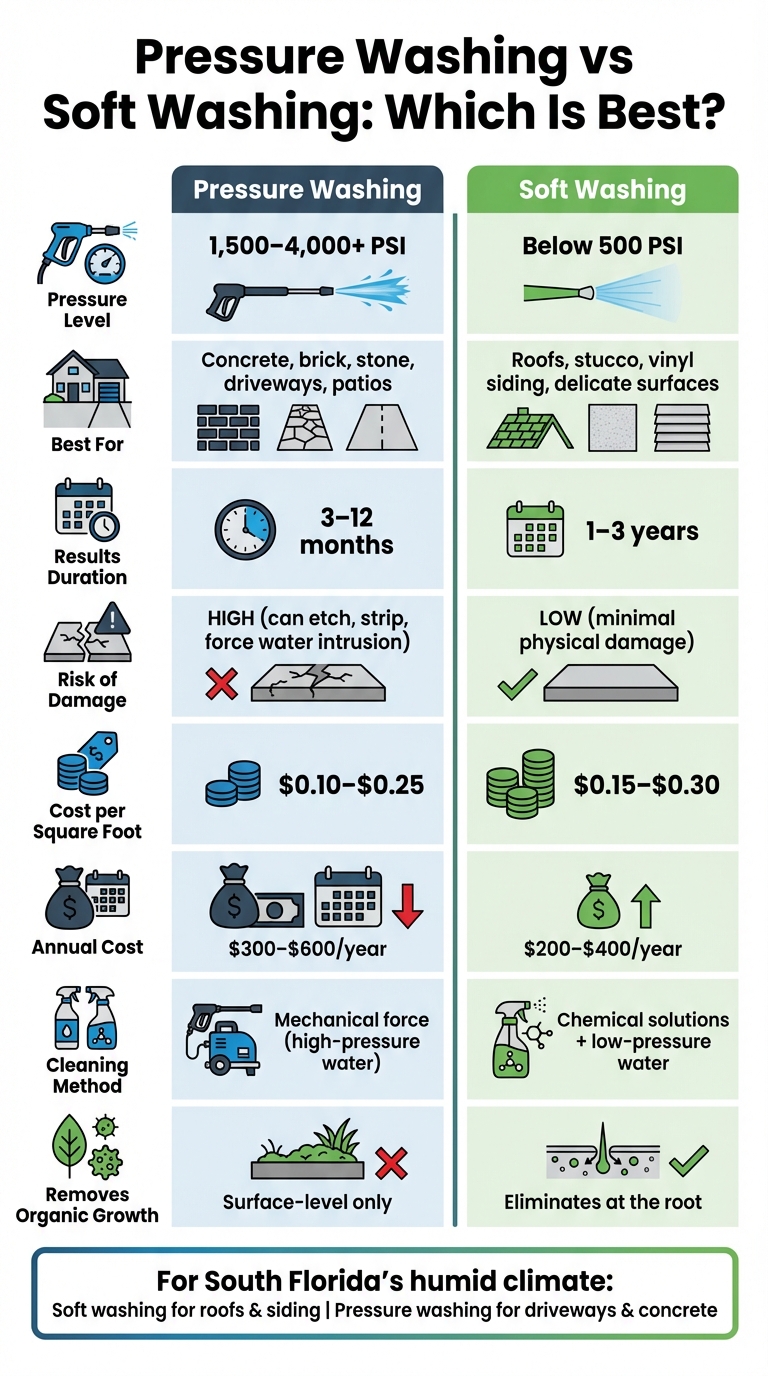
Pressure Washing vs Soft Washing Comparison Chart
What Are Pressure Washing and Soft Washing?
Pressure Washing Explained
Pressure washing is a cleaning technique that uses high-pressure water to remove dirt, grime, and tough stains from surfaces. With its intense water force, it’s highly effective on sturdy materials like concrete driveways, brick patios, sidewalks, and unsealed stone. This method is great for tackling built-up debris but can be too harsh for more fragile surfaces, which is where soft washing comes into play.
"Pressure washing is like scraping the surface clean with force. Soft washing is like giving the surface a deep-cleansing treatment to kill what's growing on it." - Power Wash Enterprise
Soft Washing Explained
Soft washing takes a gentler approach, using low-pressure water combined with cleaning solutions to safely clean surfaces. With water pressure below 500 PSI, it depends on biodegradable chemicals to break down mold, algae, and mildew at their roots. The cleaning mix often includes sodium hypochlorite (bleach), surfactants, and algaecides, which need a few minutes to work their way into the organic buildup before being rinsed away.
This method is perfect for more delicate surfaces like asphalt shingles, vinyl siding, and stucco. Because soft washing eliminates organic growth at its source, the results typically last longer - about 1 to 3 years - compared to the 3 to 12 months you might get with pressure washing. Between 2015 and 2025, the popularity of soft washing has grown by over 25% each year, and it now makes up around 40% of residential exterior cleaning jobs in places like Canada and Australia. For homes in humid and hot regions like South Florida, where organic growth thrives, soft washing offers longer-lasting protection for vulnerable materials.
sbb-itb-20350f7
How the Techniques and Equipment Differ
Pressure Washing Tools and Methods
Pressure washing relies on high-pressure pumps that can generate 1,500 to over 4,000 PSI, paired with specialized wands to direct the water stream effectively. These systems use color-coded nozzle tips, each designed for a specific angle and purpose. For instance, narrower angles provide concentrated power to tackle stubborn stains, while wider angles create a gentler spray for general cleaning. On flat surfaces like driveways, professionals often use surface cleaners - rotating disc attachments that evenly distribute pressure to avoid "zebra striping" on concrete.
Power washing, a variation of pressure washing, incorporates heated water (180°F–200°F). This added heat makes it especially effective for breaking down grease and oil. It’s also great for removing dirt, mud, and even peeling paint. On the other hand, soft washing takes a completely different approach, which we’ll explore next.
Soft Washing Tools and Methods
Soft washing combines low-pressure water flow with chemical solutions to clean surfaces gently yet thoroughly. The equipment operates at pressures below 500 PSI - similar to the output of a garden hose, typically ranging from 150 to 300 PSI. A key component is the downstream chemical injector, which introduces cleaning solutions into the water after it passes through the pump. This design helps protect the internal parts from chemical corrosion. Additionally, the system includes dedicated chemical tanks and low-pressure tips for applying large volumes of solution without high force.
The cleaning mixture often contains sodium hypochlorite, surfactants to help the solution stick to surfaces, and algaecides to eliminate biological growth. To work effectively, the solution needs 15–20 minutes of dwell time, allowing it to penetrate and kill mold and algae down to the root before rinsing.
Side-by-Side Comparison
The table below outlines the main differences between pressure washing and soft washing, making it easy to see how these methods vary.
Feature
Pressure Washing
Soft Washing
Pressure Level
1,500–4,000+ PSI
Below 500 PSI (typically 150–300 PSI)
Water Flow (GPM)
1.5–4+ GPM
0.5–2 GPM
Water Temperature
Cold or heated (180°F–200°F for power washing)
Cold only
Primary Cleaning Agent
Mechanical force (water pressure)
Chemical solutions (sodium hypochlorite, surfactants, algaecides)
Nozzle Types
High-pressure tips (Red 0°, Yellow 15°, Green 25°, White 40°)
Low-pressure tips (e.g., Black soap tip, White 40°)
Application Method
Immediate rinse
15–20 minute dwell time required
Special Equipment
Surface cleaners, turbo nozzles
Downstream injectors, chemical tanks
Pressure Washing vs Softwashing (Which Is Better?!)
Pros and Cons of Each Method
For properties in South Florida dealing with constant humidity and mold, weighing the pros and cons of different cleaning methods is crucial.
Pressure Washing: Benefits and Drawbacks
Pressure washing is a quick and powerful cleaning method, especially effective on tough stains like oil, grease, and tire marks. It's ideal for durable surfaces such as concrete and brick. The high-pressure stream removes dirt and peeling paint efficiently, making it a go-to option for heavy-duty cleaning.
But there’s a downside. The intense pressure can damage surfaces by stripping protective granules, etching concrete, splintering wood, or even forcing water behind siding. These issues often lead to expensive repairs, which can range from $1,150 to $3,400. Additionally, the Asphalt Roofing Manufacturers Association strongly advises against using pressure washers on roofs, stating:
"DO NOT use a power washer or any type of brush or broom to clean algae from the roof surface. High-pressure washing systems are likely to damage asphalt roofing and should not be used."
Using pressure washing on sensitive materials like roofs can void warranties from manufacturers such as James Hardie and GAF. Another limitation is that it only removes surface-level dirt, meaning mold and algae often reappear within 3 to 12 months.
Soft washing, on the other hand, provides a less aggressive solution with longer-lasting results.
Soft Washing: Benefits and Drawbacks
Soft washing employs low-pressure water combined with biodegradable chemicals to tackle mold and algae at their roots. This method prevents regrowth for 1 to 3 years - lasting significantly longer than pressure washing. It’s also gentle on delicate surfaces like vinyl siding, stucco, and wood, and can extend a roof’s lifespan by 5 to 10 years by preserving its protective coatings.
However, soft washing isn’t perfect. It takes more time since the cleaning solution needs to sit on surfaces to work effectively. While great for organic growth, it struggles with heavy mechanical stains like oil or rust, which typically require more forceful methods. Additionally, if landscaping isn’t properly protected, the chemicals can harm plants.
To help you decide, here’s a side-by-side comparison of the two methods:
Pros and Cons Comparison Table
Factor
Pressure Washing
Soft Washing
Speed
Quick (~2 hours to clean house)
Slower (1–2 days for full process)
Best For
Concrete, brick, stone, metal
Roofs, vinyl siding, stucco, wood
Results Last
3–12 months
1–3 years
Surface Damage Risk
High (etching, stripping, water intrusion)
Low (minimal physical damage)
Removes Organic Growth
Surface-level removal only
Eliminates at the root
Removes Heavy Stains
Excellent for oil, grease, tire marks
Limited effectiveness
Warranty Safe
Often voids warranties
Preserves most warranties
Cost per Sq Ft
$0.10–$0.25
$0.15–$0.30
When to Use Each Method in South Florida
South Florida’s warm, humid, and salty air creates the perfect storm for algae and mold to thrive. The cleaning method you choose isn’t just about removing dirt - it’s about protecting your property from long-term damage caused by these conditions. Let’s break down when to use pressure washing versus soft washing, based on the specific needs of your property.
When to Use Pressure Washing
Pressure washing is ideal for hard, durable surfaces like concrete driveways, sidewalks, and brick patios. These areas often bear the brunt of oil stains, tire marks, and stubborn dark streaks that can make them look worn out over time. With a PSI range of 1,500 to over 4,000, pressure washing effectively blasts away the salt and sand that coastal properties regularly face.
It’s also the go-to method for painting prep on block or concrete surfaces. The high-pressure stream removes peeling paint and debris, creating a clean surface that ensures new paint adheres properly. However, for surfaces that are more delicate, you’ll want to consider soft washing instead.
When to Use Soft Washing
Soft washing is the safer option for roofs and delicate materials, using a low-pressure chemical approach to tackle black algae and other growths without damaging the surface. This is especially important for roofs, as untreated algae and mold can return within 24 to 48 hours after rain.
For sensitive surfaces like stucco siding, wood decks, and pool enclosures, soft washing is the recommended method. Stucco’s porous nature makes it prone to cracking under high pressure, while pool screens and wood can be easily damaged by forceful streams. Scheduling an annual soft wash for these materials is a smart way to manage the rapid buildup of pollen, dust, and mildew that Florida’s coastal climate encourages.
Cost, Safety, and Performance Factors
Cost Comparison
In South Florida, exterior cleaning services typically range from $250 to $1,000, depending on the property size and the type of surface being cleaned. For specific tasks, expect to pay:
While soft washing initially costs 25%–50% more than pressure washing, it offers longer-lasting results - lasting 4 to 6 times longer - which translates to lower annual expenses. Soft washing averages $200–$400 per year, compared to $300–$600 per year for pressure washing. Stewart Esposito, owner of Absolutely Clean Power Washing, explains:
"One soft wash often eliminates the need for 2–3 pressure washes. Research shows soft washing prevents regrowth 4–6x longer".
Understanding these cost differences helps highlight why many homeowners are opting for soft washing despite the higher initial investment.
Safety Concerns
When evaluating cleaning methods, safety is just as important as cost. Pressure washing can pose significant risks to both property and the operator. With water pressures ranging from 1,500 to 4,000 PSI, it can cause severe damage, such as stripping paint, etching concrete, shattering windows, or forcing water behind siding. This trapped moisture can lead to rot or mold in wall cavities. The Asphalt Roofing Manufacturers Association (ARMA) advises:
"DO NOT use a power washer or any type of brush or broom to clean algae from the roof surface. High-pressure washing systems are likely to damage asphalt roofing and should not be used".
These risks can shorten a roof’s lifespan by up to 50% and may void manufacturer warranties.
Soft washing, on the other hand, carries a lower risk of physical damage to surfaces but requires careful handling of cleaning chemicals. Misapplied solutions can cause chemical burns, and improper runoff management might harm landscaping. To protect plants, operators need to pre-rinse and post-rinse surrounding areas, ensuring no damage occurs from the cleaning detergents.
Performance and Environmental Impact
Performance and environmental considerations also play a big role in deciding between the two methods. Pressure washing is effective for quickly cleaning tough surfaces like concrete, removing tire marks and oil stains. However, in South Florida’s humid climate, mold and algae often reappear within 24 to 48 hours after rain because pressure washing only removes surface-level growth.
Soft washing works differently, using biodegradable solutions to eliminate organic growth at its roots. This method delivers results that last 1 to 3 years, compared to the 3 to 12 months typically seen with pressure washing. Additionally, soft washing uses less water and relies on phosphate-free, biodegradable cleaning agents, making it a more eco-friendly choice.
Cost, Safety, and Performance Table
Factor
Pressure Washing
Soft Washing
Typical Cost Range
$250–$600 per job
$350–$900 per job
Annual Cost
$300–$600/year
$200–$400/year
Surface Risk
High (etching, water intrusion, granule loss)
Low (chemical burns if misapplied)
Operator Risk
High (physical injury from stream)
Low (chemical exposure)
Results Duration
3–12 months
1–3 years
Water Usage
High
Low
Environmental Impact
Higher water consumption; may use harsh chemicals
Lower water usage; biodegradable solutions
Conclusion: Choosing the Right Method for Your Property
For tough, durable surfaces like concrete driveways, brick patios, and stone walkways, high-pressure washing works best. But when it comes to more delicate areas - like roofs, vinyl siding, stucco, or painted wood - soft washing is the safer choice, minimizing the risk of damage. Knowing these differences helps ensure you’re using the right approach for each surface.
In South Florida’s exterior cleaning experts understand that in this humid climate, where mold can grow quickly, soft washing provides longer-lasting results compared to pressure washing. While it might cost more upfront, it reduces the need for frequent cleanings, ultimately lowering your annual maintenance expenses.
To protect your property in the long run, it’s important to weigh costs, safety, and effectiveness. Always check manufacturer guidelines - improper cleaning techniques can void warranties or even shorten the lifespan of surfaces like roofs.
FAQs
How do I know which method my surface can handle?
When deciding between cleaning methods, think about the material's durability and the recommended pressure levels. Soft washing, which uses pressures below 500 PSI, is perfect for fragile surfaces like roofs, siding, and wood. It helps clean effectively while reducing the risk of damage. On the other hand, pressure washing, with pressures ranging from 1,500 to 4,000 PSI, is better suited for tough surfaces like concrete and brick. However, this method can harm more delicate materials.
Always refer to the manufacturer's guidelines since using the wrong method could void warranties. If you're unsure about the best approach, it's smart to reach out to a professional for advice.
Will soft washing kill algae and mold for good?
Soft washing removes algae and mold by targeting them at their roots, leading to results that last longer than surface-level cleaning methods. That said, it doesn't promise a permanent solution since factors like weather and humidity can cause these organisms to come back. To maintain clean surfaces and prevent regrowth, regular upkeep is essential.
Is it safe to soft wash around plants and pets?
Soft washing is a safe option for plants and pets.
.avif)

.avif)