What Commercial Pressure Washing Covers in South Florida
Lorem ipsum dolor sit amet, consectetur adipiscing elit. Suspendisse varius enim in eros elementum tristique. Duis cursus, mi quis viverra ornare, eros dolor interdum nulla, ut commodo diam libero vitae erat. Aenean faucibus nibh et justo cursus id rutrum lorem imperdiet. Nunc ut sem vitae risus tristique posuere.
In South Florida, commercial pressure washing usually means cleaning the outside parts of a property that get slick, stained, or dirty from humidity, rain, traffic, grease, and salt air.
If you manage or own a commercial property, this service usually covers storefronts, sidewalks, facades, parking lots, loading docks, dumpster pads, pool decks, lanais, patios, ramps, and other shared outdoor areas. It is used to remove algae, mold, mildew, gum, oil, grease, tire marks, food spills, and salt residue before they turn into slip risks or leave surfaces looking worn.
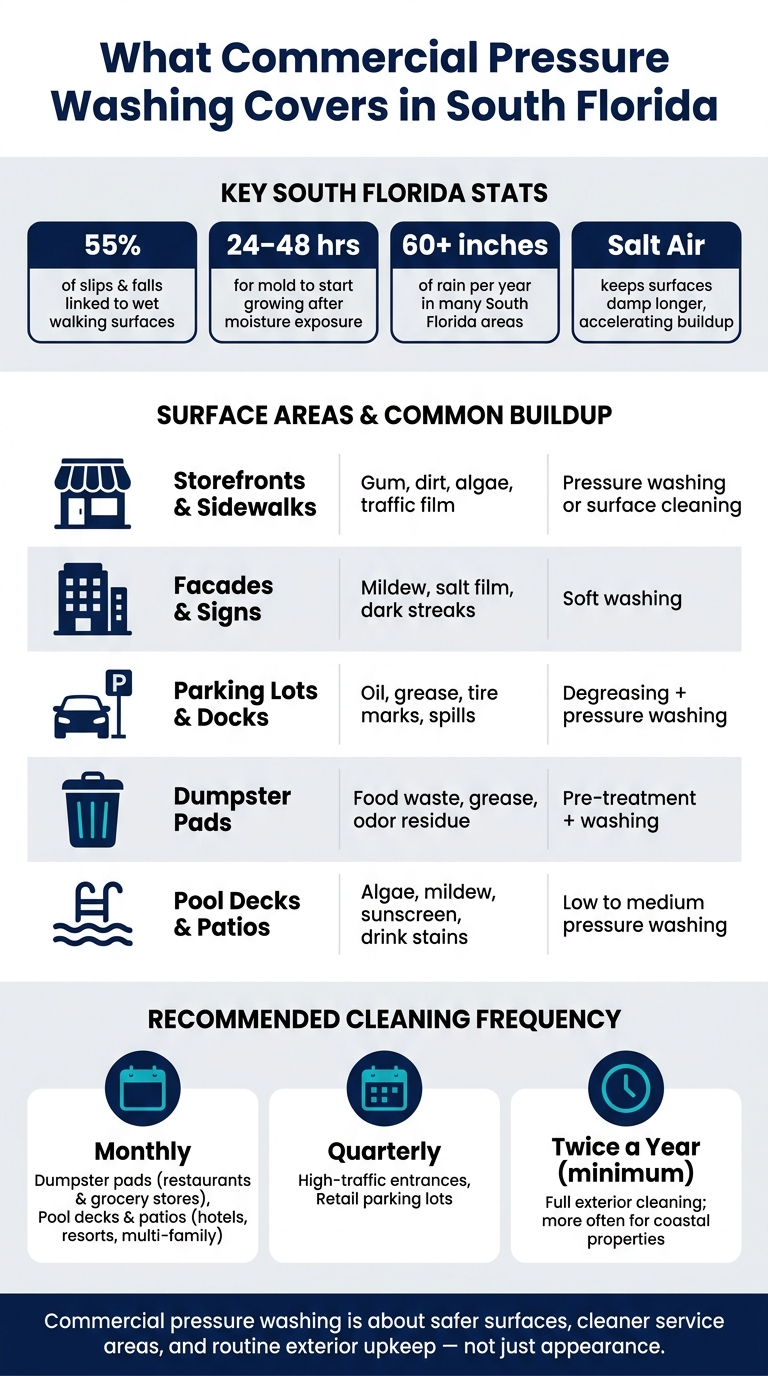
A few facts explain why this comes up so often in South Florida:
Wet walking surfaces are tied to about 55% of slips, trips, and falls
Mold can start growing within 24 to 48 hours after moisture exposure
Many South Florida areas get 60+ inches of rain per year
Coastal salt air can leave surfaces damp longer and make buildup stick harder
In simple terms, you can expect this service to focus on:
Front-facing areas like entrances, sidewalks, curbs, and exterior walls
Service zones like parking lots, docks, and dumpster areas
Shared outdoor spaces like pool decks, patios, lanais, stairs, and ramps
Surface-safe cleaning methods such as high-pressure washing for concrete and soft washing for stucco, paint, EIFS, and signs
Prep and cleanup steps like stain treatment, degreasing, plant rinsing, and off-hours scheduling
Area
Common buildup
Usual cleaning method
Storefronts and sidewalks
Gum, dirt, algae, traffic film
Pressure washing or surface cleaning
Facades and signs
Mildew, salt film, dark streaks
Soft washing
Parking lots and docks
Oil, grease, tire marks, spills
Degreasing plus pressure washing
Dumpster pads
Food waste, grease, odor-causing residue
Pre-treatment plus washing
Pool decks and patios
Algae film, mildew, sunscreen, drink stains
Surface-based low or medium pressure
The short version: commercial pressure washing in South Florida is not just about looks - it's mainly about safer walking surfaces, cleaner service areas, and routine exterior upkeep. The rest of the article breaks down what gets cleaned, what problems the service fixes, and how crews handle different surfaces.
Commercial Pressure Washing: Surface Areas, Buildup & Cleaning Methods in South Florida
Exterior areas commercial pressure washing typically covers
Commercial pressure washing usually focuses on three outdoor zones: customer-facing areas, back-of-house surfaces, and shared outdoor spaces. In South Florida, these spots pick up moisture, salt, and traffic film fast.
Storefronts, sidewalks, entrances, and building facades
The front of a property does a lot of work. It shapes first impressions, and it also collects grime fast. Concrete sidewalks, paver walkways, entry thresholds, and curb edges deal with nonstop foot traffic. That means tracked-in dirt, chewing gum, traffic film, and other residue build up over time.
Vertical surfaces get dirty too, just in a different way. Common materials include stucco, painted masonry, EIFS walls, columns, and signage surrounds. These areas don't get worn down by foot traffic, but they often collect salt haze, algae streaks, and dark mildew lines, especially in shaded spots. Soft washing is usually used instead of high pressure because it helps protect the finish while removing organic growth and coastal film.
These surfaces matter for safety as much as appearance. Algae films, packed-in dirt, and gum near entry points can make walking areas slippery, especially after rain. Cleaning ramps, curb cuts, and main pedestrian paths helps keep traction in place and supports safer, more accessible walking surfaces.
Parking lots, loading docks, dumpster pads, and service areas
These areas have a direct effect on safety, sanitation, and day-to-day operations. In South Florida, rain mixes with service traffic, oil, and grease, which can leave surfaces slick and dirty in a hurry. Oil spots, transmission fluid drips, tire marks, grease, food spills, and beverage runoff are some of the most common contaminants in South Florida commercial parking areas and service yards.
When oil and grease sit on the surface, friction drops. Add rain, and the risk goes up for both drivers and pedestrians. Around loading docks and dumpster pads, leaked liquids, food waste, and grease buildup can also lead to strong odors, pest activity, and unsanitary conditions. Regular cleaning with commercial-grade degreasers and controlled pressure helps remove this buildup and leaves concrete cleaner and less odorous.
Some properties need this work more often than others:
Restaurants and grocery stores often schedule dumpster pad cleaning monthly because grease and organic residue build up fast.
Parking lots at retail centers may be cleaned on a quarterly schedule, with more frequent service for high-traffic or hospitality properties.
Pool decks, lanais, patios, ramps, and shared outdoor areas
Shared outdoor spaces in South Florida face a tough mix of constant moisture, shade, and heavy use. That combo creates the perfect setup for algae and mildew films, sunscreen and tanning oil residue, drink and food stains, and general darkening from organic debris.
Pool decks are often made from textured concrete, travertine, ceramic tile, or concrete pavers. Lanais and patios often use stamped concrete or pavers. The cleaning method needs to match the surface. Natural stone or grout usually calls for lower pressure and the right detergents, while durable textured concrete can handle higher pressure. The goal is simple: a cleaner, slip-resistant surface that feels safer for bare feet and everyday foot traffic.
The biggest risk here is biofilm. Algae and mildew can look dry and harmless, but once wet, they can become extremely slick. On ramps and stairs, where falls can be worse, keeping treads and landings clear matters even more. Hotels, resorts, and multi-family communities in South Florida often schedule pool deck and patio cleaning monthly or every other month because buildup comes back fast in warm, humid conditions. Those same surfaces are also where the most common grime and slip hazards start.
sbb-itb-20350f7
Problems commercial pressure washing is built to fix
Commercial pressure washing is meant to deal with the mess South Florida properties pick up all the time: mold, mildew, algae, salt residue, gum, grease, oil, and deep-set stains.
Organic growth, grime, and coastal residue
Mold, mildew, and algae can stain surfaces and leave behind a slick film. That’s not just ugly. It can also make walkways and other exterior areas more slippery.
Salt residue is another big issue in coastal areas. It sticks to painted, sealed, and porous surfaces and can wear them down faster. Add in dirt, pollen, and everyday grime, and exterior finishes start to look faded, dirty, and ignored.
At that point, a simple rinse usually won’t do much.
Gum, grease, oil, and embedded stains
Gum often needs hot water or steam to loosen it before it can be removed. High pressure by itself can end up damaging concrete.
Oil and grease around dumpster pads, loading docks, and service areas usually need hot-water washing plus pre-treatment to break down the residue.
The main point is simple: different surfaces call for different cleaning methods. That’s why the right technique matters just as much as the stain itself.
How commercial pressure washing is done and what it includes
Property managers need to know three things: what gets cleaned, how it gets cleaned, and what gets protected during the job.
After the crew identifies the buildup, they pick the right cleaning method for the surface.
Concrete can take high-pressure washing because it’s dense and built to handle it. Stucco, painted finishes, and signage are different. Too much pressure can strip paint, wear down the surface, or force water behind the finish. That’s where soft washing comes in. It uses lower pressure plus cleaning solutions to remove mold, mildew, and salt residue without harming the material underneath. Soft washing helps protect stucco and EIFS finishes.
The method changes based on the surface and the kind of buildup South Florida leaves behind:
Concrete sidewalks and docks - high-pressure washing for gum, oil, tire marks, and embedded dirt
Stucco and painted masonry - soft washing for mold, mildew, and salt spray without surface damage
Signage and awnings - low-pressure or soft washing to remove oxidation and buildup without cracking or tearing
Inspection, pre-treatment, cleanup, and scheduling
Once the method is set, the crew gets the area ready and plans the work around the property’s schedule.
A standard visit starts with a walkthrough. The crew checks for problem spots like stains, gum, and algae before any water is used. Then degreasers, algaecides, or mildew treatments are applied where needed and given time to work before washing starts.
Crews also rinse nearby windows, doors, and landscaping to clear off overspray and residue. Tropical plants can react badly to cleaning agents, so pre-wetting and post-rinsing plant beds is a normal safety step. The goal isn’t just to clean the target area. Entry points, walkways, and nearby surfaces should be left clean too.
Most jobs are scheduled before opening or after hours. That helps crews avoid heat that can dry cleaning solutions too fast. High-traffic entrances usually need service every quarter. A full exterior cleaning is usually recommended at least twice a year, and properties near the coast may need it more often because salt air speeds up buildup.
Pressure washing works best when it’s part of routine exterior upkeep.
It pairs well with paver sealing to help resist stains, window cleaning to clear overspray, and gutter service to keep water moving the way it should. Palm Shine Pros handles all of these services through one coordinated maintenance plan, including soft washing, window cleaning, paver sealing, and gutter maintenance.
For property managers, that can make day-to-day upkeep a lot easier. Instead of juggling multiple vendors, they can keep exterior care under one plan and keep service more consistent over time.
Conclusion: What owners and managers should expect from commercial pressure washing
Commercial pressure washing in South Florida focuses on the exterior areas that take the most wear, moisture, and grime. That usually means storefronts, facades, parking areas, service zones, and shared outdoor spaces.
That matters in South Florida because humidity, rain, and salt air can turn those surfaces into slip hazards and stain magnets. The buildup this service deals with - algae, mold, mildew, salt residue, grease, gum, oil, rust, and stains - affects both safety and appearance. Leave it alone long enough, and you end up with more slip risk and weaker curb appeal.
In day-to-day use, regular service helps stop buildup before it settles in. It also cuts down on the need for deeper corrective cleaning later. How often a property needs service comes down to a few simple things: surface type, foot traffic, and how close the property is to the coast.
For steady upkeep, Palm Shine Pros can help support that plan with commercial property cleaning, plus paver sealing and gutter cleaning and maintenance.
FAQs
How often should commercial pressure washing be scheduled in South Florida?
Most commercial properties in South Florida do well with professional pressure washing at least once a year. But South Florida’s high humidity changes the game. Mold, algae, and grime can build up fast, so twice-a-year cleanings are often needed to keep the property looking sharp and to help reduce slip risks.
You may need service sooner if you notice:
Dark or dull walls
Mold or algae that keeps coming back
Slippery sidewalks
Peeling paint
Properties near the coast often need cleaning more often too, since salt buildup can wear surfaces down and make the exterior look dirty faster.
What surfaces need soft washing instead of high pressure?
Soft washing works best on surfaces that don’t handle high pressure well, like roofs, stucco, painted siding, and wood fences.
Instead of blasting the surface, it uses low pressure - usually under 500 PSI - along with biodegradable detergents to clear away mold and algae. That gentler approach helps lower the risk of cracking, paint stripping, water intrusion, and other damage to the outside of your home.
Does commercial pressure washing reduce slip hazards?
Yes. Commercial pressure washing can cut slip risks by removing algae, mold, and mildew that often build up on South Florida properties.
Those growths hold moisture and can make sidewalks, pool decks, and patios slick, even when the surface looks dry. Washing them off helps bring back traction and makes the area safer for visitors and staff.
Lorem ipsum dolor sit amet, consectetur adipiscing elit, sed do eiusmod tempor incididunt ut labore et dolore magna aliqua. Ut enim ad minim veniam, quis nostrud exercitation ullamco laboris nisi ut aliquip ex ea commodo consequat. Duis aute irure dolor in reprehenderit in voluptate velit esse cillum dolore eu fugiat nulla pariatur.
.avif)

.avif)