Lorem ipsum dolor sit amet, consectetur adipiscing elit. Suspendisse varius enim in eros elementum tristique. Duis cursus, mi quis viverra ornare, eros dolor interdum nulla, ut commodo diam libero vitae erat. Aenean faucibus nibh et justo cursus id rutrum lorem imperdiet. Nunc ut sem vitae risus tristique posuere.
Call a licensed, insured Miami-area exterior cleaning company that knows when to use soft washing and when to use pressure washing. If a crew cannot show insurance, explain its cleaning plan, or give you a written quote, I would move on.
Miami’s heat, salt air, and humidity help mold, algae, and grime build up fast. That means the wrong cleaning method can do damage just as fast. For most homes, I’d check five things before booking:
License or county certification
General liability and workers’ comp
The right method for each surface
Local job photos and reviews
A written estimate with scope and price
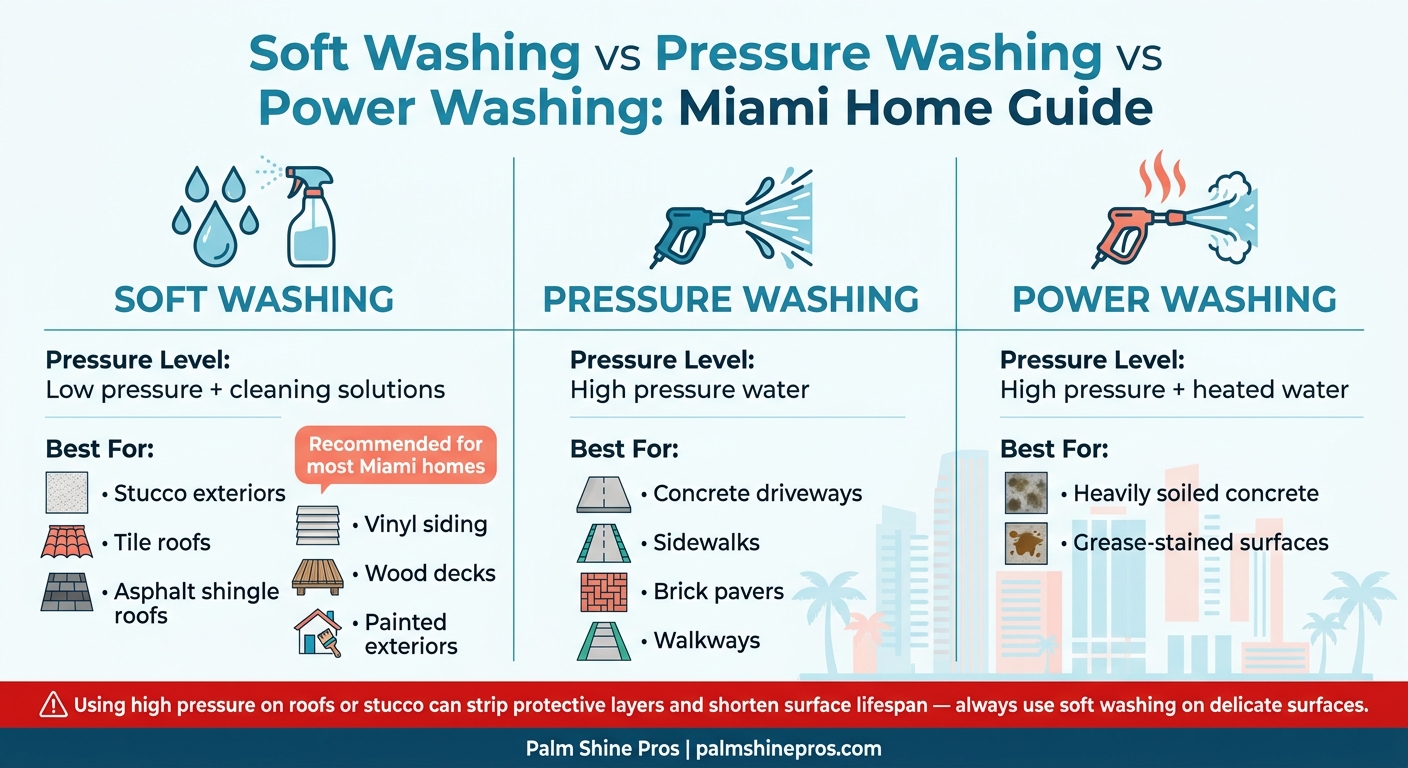
Here’s the short answer by surface:
Roofs, stucco, painted exteriors, vinyl, and wood:soft washing
Driveways, sidewalks, and pavers:pressure washing
Greasy or heavily soiled concrete:power washing, if heat is needed
A few warning signs stand out right away:
No proof of insurance
High pressure suggested for roofs or stucco
Verbal-only pricing
No plan to protect plants, pool areas, or nearby surfaces
About 90% of hiring mistakes in home services come down to poor screening, vague quotes, or no insurance paperwork. So before I hire anyone in Miami, I’d ask for documents first, not after the job starts.
If you want the safe choice, look for a company that can explain why it picked each cleaning method, show recent Miami-area work, and put every detail in writing.
Quick Comparison
What to Check
What I’d Want to See
Red Flag
Licensing
Miami-Dade license or county certification
“We don’t need that”
Insurance
Current liability + workers’ comp
No documents available
Cleaning plan
Soft wash for delicate surfaces; pressure for hard surfaces
High pressure for roof or stucco
Local experience
Recent Miami photos and reviews
No local examples
Estimate
Written scope, method, prep, cleanup, full price
Verbal quote only
That’s the core of it: check paperwork, match the method to the surface, and get the full job in writing before you book.
sbb-itb-20350f7
What qualifies a power washing company in Miami
Soft Washing vs Pressure Washing vs Power Washing: Miami Home Guide
Not every company with a pressure washer is qualified to clean your home.
Licenses, business registration, and insurance to verify
In Miami-Dade County, look for contractors who are CTQB-certified for pressure-cleaning work. Also check that the company has current business registration, general liability insurance, and workers' compensation coverage.
Here’s why that matters:
General liability insurance can help cover property damage if something goes wrong during the job.
Workers' compensation can help protect you if a crew member gets hurt on your property.
One more detail that’s easy to miss: make sure the business name matches on every document. If the name on the estimate, insurance certificate, and registration doesn’t line up, that’s a red flag.
Why the cleaning method matters for Miami homes
Choosing between soft wash vs pressure washing matters more than many homeowners think. Miami homes often have surfaces that can be damaged if the crew uses too much pressure.
Soft washing uses low pressure plus cleaning solutions. It’s the better fit for delicate surfaces like stucco, asphalt shingles, tile roofs, vinyl siding, wood, and painted exteriors.
Pressure washing uses high-pressure water. It works better on hard surfaces like concrete driveways, walkways, and brick pavers.
Power washing is close to pressure washing, but it usually uses heated water. That can help on heavily soiled concrete or grease-stained surfaces.
Use the wrong method, and the surface can pay the price. High pressure on tile or shingle roofs, for example, can strip protective layers and shorten roof life.
A qualified company should walk you through which method they’ll use for each surface before the job starts. After that, it makes sense to compare experience, equipment, detergents, and how they protect the surfaces around your home.
How to judge experience, equipment, and service quality
Experience with South Florida surfaces and coastal conditions
Once you've narrowed down the cleaning method, the next step is simple: find out whether the company has actual Miami-area experience.
That matters because South Florida is hard on exterior surfaces. Salt air, heavy humidity, and strong sun can speed up corrosion and organic buildup. A crew that works in Miami all the time should already know that. You shouldn't have to teach them what local conditions do to a roof, wall, or pool deck.
A company with local know-how will usually bring this up on its own. They should be able to explain that barrel tile roofs, stucco exteriors, and coral stone or paver pool decks each need a different approach. That includes roof algae staining too. If they understand the area, they should walk you through how they'll clean each surface and why.
Ask for before-and-after photos from recent Miami-area jobs, especially homes with surfaces like yours. A local portfolio is a strong sign that the company knows what it's looking at.
Equipment, detergents, and surface protection standards
The right crew should show up with the right tools for the job. That usually means:
Commercial surface cleaners for even concrete cleaning
Extension wands for second-story work
Soft-wash systems for delicate surfaces
Just as important, they should adjust pressure, nozzle choice, and protection steps to fit each surface before they start.
They should also use biodegradable, plant-safe detergents. Landscaping should be pre-wet before cleaning and rinsed again after the work is done.
Then check whether that process shows up in reviews and written estimates. A company can say all the right things on a call. The paperwork and customer feedback tell you whether they follow through.
Reviews, written estimates, and service policies
When you read reviews, don't just look at the star rating. Look for comments about punctuality, how the crew handled surfaces like yours, and whether the final result matched what the company promised.
A written estimate is non-negotiable. It should clearly list:
Which surfaces are being cleaned
Which method will be used for each one
What prep steps, cleanup, and damage-response terms are included
Before you schedule, make sure the estimate covers scope, methods, protection steps, and pricing. Then confirm the prep plan and what the crew will need from you when they arrive.
Miami homeowner checklist before you book
Once you've checked credentials and cleaning method, use this checklist to compare companies fast.
Questions to ask before scheduling an estimate
Before you call, keep these questions in front of you:
Can you provide proof of your Miami-Dade license or certification and insurance?
What cleaning approach do you recommend for my roof and siding?
How do you protect plants and landscaping during the job?
Does the written estimate cover all labor and materials with no hidden fees?
If the answers sound vague, or the crew can't explain the method for each surface, don't book them.
Property details to confirm before the crew arrives
Take a quick walk around your property and note any trouble spots. Look for walls with heavy green or black streaks, slippery walkways, paver buildup, or salt film, especially if you're near the coast. When you point these areas out during the walkthrough, the crew can focus on the places that need the most attention on Miami homes.
Also check your HOA or condo association rules ahead of time. Some Miami-area associations have set rules about cleaning methods or limit service hours. A quick check now can save you a scheduling headache later.
On the practical side, find your exterior water spigots and make sure the crew can reach them. Confirm there's parking for the service vehicle. Move patio furniture and potted plants away from work areas, and keep pets indoors while the job is underway. If you have cracked tiles, loose siding, or window seal leaks, take photos before the crew starts. That gives you a clear record of anything that was already there.
If any answer feels vague, the next step is to watch for red flags before you book.
Red flags to watch for and how to make the final call
Warning signs in credentials, quotes, and cleaning methods
If earlier answers felt fuzzy, this is where problems usually show up. Once you compare credentials and cleaning methods, these warning signs help you cut weak options fast.
A contractor who can't show proof of insurance and business licensing isn't a deal. It's a risk. If a crew wants to use high-pressure cleaning on your roof, tile, or stucco, that's another clear warning. Those surfaces need soft washing, not brute force. And if a contractor won't show credentials or explain the cleaning solution, that's your cue to walk away.
These are some of the fastest ways to spot a weak quote or an unsafe cleaning plan.
Red Flag
Why It Matters
What a Qualified Company Does
No proof of insurance or license
Leaves you liable for injuries or damage on your property
Provides up-to-date proof of Miami-Dade licensing and active insurance
High pressure proposed for roofs or stucco
Can strip protective layers and shorten surface lifespan
Confirms soft washing for delicate surfaces upfront
Vague or verbal-only quote
Leads to hidden fees and disputes once the job starts
Delivers a written estimate itemizing services and total costs
No plant or pool protection plan
Harsh chemicals can damage landscaping or disrupt pool chemistry
Pre-wets greenery, uses biodegradable solutions, and rinses thoroughly
If a company misses any of these basics, keep looking.
Conclusion: What to check before calling a Miami power washing company
Miami's salt air and humidity mean the wrong crew does damage faster than most homeowners expect. Before you book anyone, confirm licensing and insurance, get the cleaning method for each surface in writing, and ask for photos from recent local jobs. Anyone can claim South Florida experience. Local portfolios show whether they've actually worked in this climate.
How can I verify a Miami power washing company’s insurance?
Ask for proof of insurance coverage and business licensing. If something goes wrong on the job, proper insurance can help protect you from liability.
It’s a simple check, but it matters. You’re making sure the company has the basic coverage and credentials in place before you hire them.
Will soft washing harm my plants or pool area?
When it’s done the right way, soft washing is gentle and meant to avoid harm to nearby plants, patios, and pool areas. In most cases, it’s safe for landscaping and pools.
How often should a Miami home be washed?
Miami homeowners should wash their home’s exterior at least once a year to keep curb appeal in good shape and help prevent damage from dirt, mildew, and algae buildup.
That matters even more in Miami’s humid, salt-air climate, where moisture and residue can stick around and wear surfaces down over time.
.avif)

.avif)