Exterior Cleaning in Hialeah: What Local Homes Require
Lorem ipsum dolor sit amet, consectetur adipiscing elit. Suspendisse varius enim in eros elementum tristique. Duis cursus, mi quis viverra ornare, eros dolor interdum nulla, ut commodo diam libero vitae erat. Aenean faucibus nibh et justo cursus id rutrum lorem imperdiet. Nunc ut sem vitae risus tristique posuere.
Your Hialeah home needs cleaning matched to its surfaces - not stronger pressure for every stain. With about 65–67 inches of rain a year, shaded walls and outdoor surfaces need checks for growth and drainage problems.
Choose surface-safe soft washing for compatible stucco, tile roofs, and delicate finishes; use controlled pressure on sound, uncoated concrete. Treat pavers, pool decks, screens, gutters, and trim according to their condition and finish, and <u>fix leaks or damaged coatings before washing</u>.
Inspect at least once a year, before the wet season, and after major storms. Protect plants, openings, and equipment, keep wash water out of storm drains, and get professional help for roofs, ladder work, or damaged surfaces.
Start by checking the material, its condition, and the manufacturer’s cleaning instructions.
Cleaning Methods for Each Exterior Surface
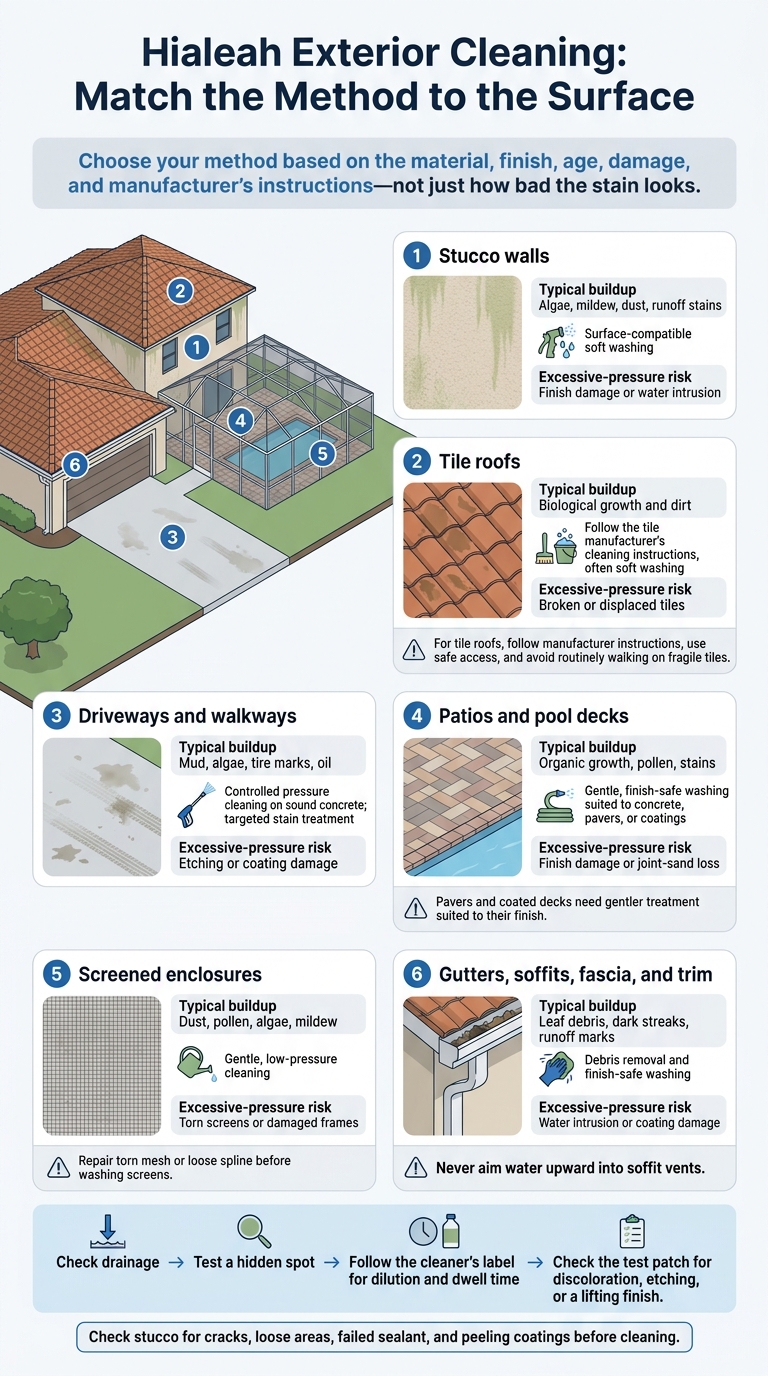
Hialeah Exterior Cleaning: Match the Method to the Surface
Hialeah’s humidity, rain, and sun affect each surface differently. The cleaning method needs to match the material.
Choose your method based on the material, finish, age, damage, and manufacturer’s instructions - not just how bad the stain looks. Check drainage and test a hidden spot first. Follow the cleaner’s label for dilution and dwell time, then check the test patch for discoloration, etching, or a lifting finish.
Surface
Typical buildup
Suitable approach
Excessive-pressure risk
Stucco walls
Algae, mildew, dust, runoff stains
Surface-compatible soft washing
Finish damage or water intrusion
Tile roofs
Biological growth and dirt
Follow the tile manufacturer’s cleaning instructions, often soft washing
Broken or displaced tiles
Driveways and walkways
Mud, algae, tire marks, oil
Controlled pressure cleaning on sound concrete; targeted stain treatment
Etching or coating damage
Patios and pool decks
Organic growth, pollen, stains
Gentle, finish-safe washing suited to concrete, pavers, or coatings
Finish damage or joint-sand loss
Screened enclosures
Dust, pollen, algae, mildew
Gentle, low-pressure cleaning
Torn screens or damaged frames
Gutters, soffits, fascia, and trim
Leaf debris, dark streaks, runoff marks
Debris removal and finish-safe washing
Water intrusion or coating damage
Stucco Walls and Tile Roofs
Before cleaning stucco, check for cracks, loose areas, failed sealant around windows and doors, and peeling coatings. Use a compatible cleaner and rinse gently. Follow the finish manufacturer’s pressure limits; some finishes permit only low pressure.
For tile roofs, check for cracked or loose tiles, flashing problems, and blocked drainage. Follow the tile manufacturer’s instructions, use safe access, and avoid routinely walking on fragile tiles. High pressure can damage tile surfaces or push water beneath overlaps.
Driveways, Patios, and Pool Decks
Clear loose debris first. Check concrete for spalling and coatings, pavers for missing joint sand, and pool decks for flaking finishes.
Sound, uncoated concrete can handle controlled pressure cleaning. Pavers and coated decks need gentler treatment that suits their finish. Remove slippery growth without stripping sealers or washing sand out of joints. Oil stains may need targeted treatment - and may only lighten rather than disappear. Protect plants and the pool, and keep runoff out of storm drains.
Screens, Gutters, and Trim
Repair torn mesh or loose spline before washing screens and frames. Use gentle water flow, mild detergent, and soft brushes.
Remove gutter debris before washing, then check outlets, seams, hangers, and downspouts. Use finish-compatible cleaners on trim, and never aim water upward into soffit vents. Overflow, sagging gutters, or recurring streaks below joints point to a drainage or seal problem that needs repair.
sbb-itb-20350f7
Soft Washing vs. Pressure Cleaning
Once you’ve identified the surface, choose a cleaning method that suits the material. Soft washing uses low pressure and a cleaning solution to loosen algae and mildew. Pressure cleaning relies on stronger water force, adjusted for the surface. Neither has a single pressure setting that’s safe for every material.
Factor
Soft washing
Pressure cleaning
Pressure level
Low pressure
Higher pressure matched to the material
Cleaning mechanism
Cleaning solution applied and rinsed gently
Water force, sometimes combined with cleaners
Appropriate surfaces
Compatible stucco, roofs, painted finishes, and screens
Sound concrete and suitable hardscapes
Major risks
Cleaner mismatch or plant damage
Etching, water intrusion, coating loss, or joint-sand displacement
Choose the Method by Material
Use soft washing for delicate finishes and controlled pressure cleaning for sound, durable hardscapes. The material and its condition - not stain severity - should guide your choice. Check the manufacturer’s instructions. Stucco, roofs, and screens need gentle treatment, while pavers and coated decks need methods and spray settings that won’t damage their finishes.
Low pressure won’t make an incompatible cleaner safe. Check that the product is safe for nearby glass, metals, coatings, and equipment, too - not just the surface you’re cleaning. Ask which product will be used, how it will be diluted, and how long it will sit on the surface. The label “soft wash” alone doesn’t answer those questions.
Protect Plants, Openings, and Equipment
Close windows and doors before cleaning. Shield outlets, cameras, and HVAC components from overspray, and keep spray away from seals and vents. Move furniture and grills out of the work area.
Protect vulnerable plants and pre-wet them where appropriate. Rinse exposed foliage according to the product label and professional procedure. Never mix bleach-based cleaners with acids or ammonia.
Sweep or vacuum debris before washing, and contain runoff. Keep untreated wash water out of storm drains, using barriers or runoff recovery where needed.
When to Clean Hialeah Home Exteriors
Once you’ve chosen the right cleaning method, decide when to use it. Inspect your entire exterior at least once a year, after major storms, and before the wet season. Let those inspections guide your cleaning schedule. Before removing algae or mildew from masonry or stucco, fix leaks and drainage problems.
Signs Your Exterior Needs Attention
Between inspections, watch for green, black, or brown streaks; slippery growth on hardscapes; growth inside screened enclosures; musty odors; and overflowing gutters or dirt trails below downspouts. Make sure water drains away from the foundation. Choose a cleaning method that suits the affected material - not just the growth you see.
Chalking, peeling paint, or growth that returns soon after cleaning points to a moisture or coating problem - not a need for stronger washing. Take photos and check for moisture or finish damage before cleaning again.
When to Get Professional Help
Get a professional assessment for roof work, areas that require ladders, multi-story walls, heavy growth, delicate finishes, or damaged surfaces. The Tile Roofing Industry Alliance recommends hiring a licensed roofing professional to clean tile roofs because wet tiles create fall and breakage hazards. The assessment should determine whether soft washing, pressure cleaning, or gutter cleaning suits the material.
Conclusion: Clean Without Damaging Surfaces
Use buildup and drainage conditions - not the calendar alone - to plan maintenance, and match the cleaning method to each surface. For areas that are unsafe to reach or surfaces prone to damage, Palm Shine Pros provides licensed, insured assessments and recommends the right service for the material.
FAQs
How can I tell algae from permanent surface damage?
Algae usually shows up as green or black streaks, fuzzy growth, or dark stains on stucco, roofs, or pavers. Professional soft washing can often remove these growths safely.
Permanent damage involves physical wear, such as cracks, chips, crumbling, fading, chalky residue, or pitting. If glass stays foggy or hazy after cleaning, it may have permanent salt etching.
Does sun exposure affect when I should clean?
Yes. South Florida’s UV rays can fade surfaces, make them brittle, and leave a chalky residue. Organic growth may return every 12 months in sunny areas, compared with 6 to 9 months in shaded areas. But sunlight also breaks down unsealed surfaces.
Apply a UV-resistant sealer to pavers and concrete every 2 to 3 years. Avoid cleaning during peak summer heat, when surfaces can reach 140°F and cleaning may leave uneven finishes.
How can I slow algae regrowth in Hialeah?
Start with moisture control. Make sure drainage includes a slope of 1/4 inch per foot to prevent standing water. Trim overhanging trees and bushes so air and sunlight can reach the surface. Sweep away leaves and grass clippings regularly - they feed algae.
For long-term protection, combine professional soft washing with breathable, algae-resistant sealers applied every 2 to 3 years. This creates a moisture barrier that helps delay algae regrowth by a large margin.
.avif)

.avif)