Lorem ipsum dolor sit amet, consectetur adipiscing elit. Suspendisse varius enim in eros elementum tristique. Duis cursus, mi quis viverra ornare, eros dolor interdum nulla, ut commodo diam libero vitae erat. Aenean faucibus nibh et justo cursus id rutrum lorem imperdiet. Nunc ut sem vitae risus tristique posuere.
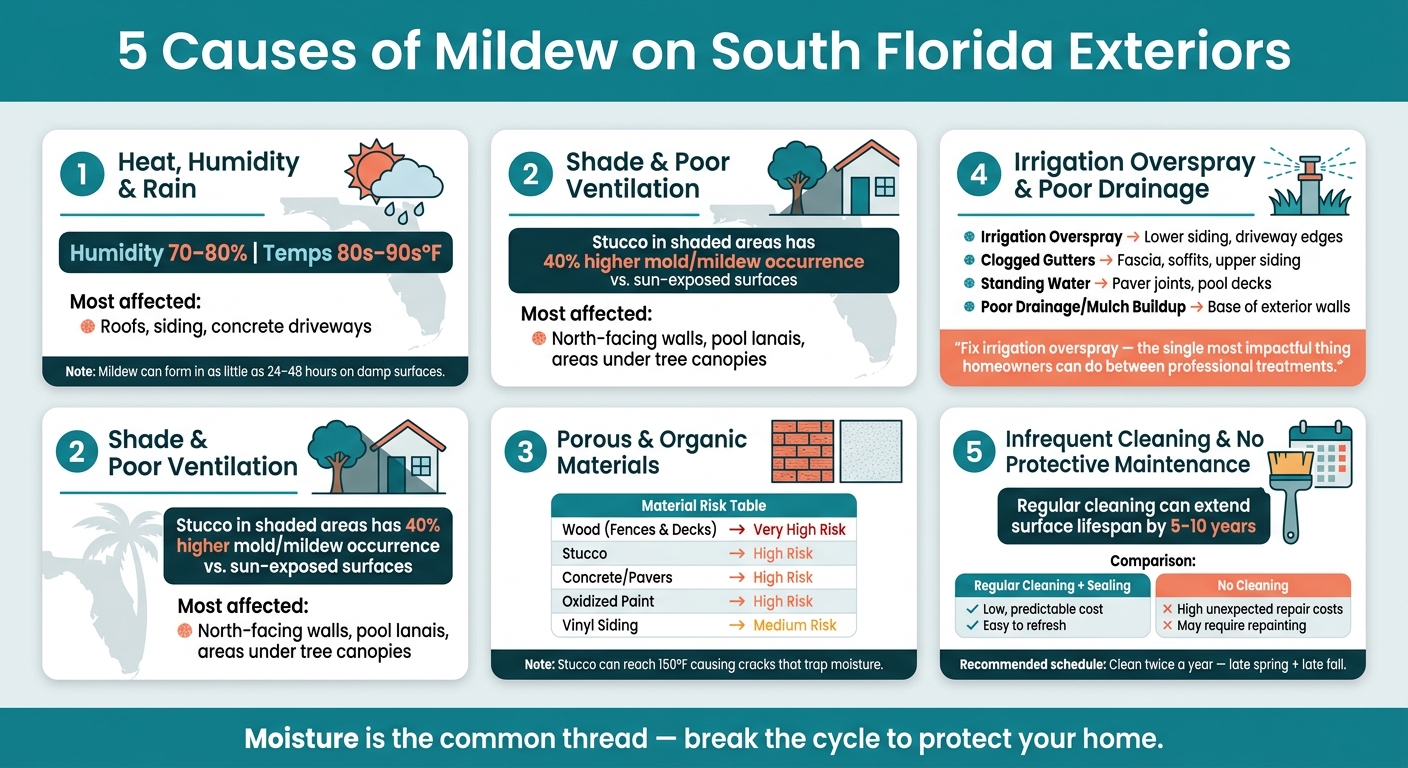
Mildew is a common problem for South Florida homes due to the region's humid, rainy, and hot weather. It thrives on damp surfaces like stucco, wood, and concrete, especially in shaded or poorly ventilated areas. Factors like irrigation overspray, clogged gutters, and infrequent cleaning can make the problem worse. Here are the top five causes of mildew and how to manage them:
Heat, Humidity, and Rain: Persistent moisture from high humidity and frequent rain creates ideal conditions for mildew.
Shaded and Poorly Ventilated Areas: Limited sunlight and blocked airflow keep surfaces damp longer.
Porous and Organic Materials: Stucco, wood, and concrete trap moisture, allowing mildew to grow.
Irrigation Overspray and Poor Drainage: Sprinklers and standing water add unnecessary moisture.
Infrequent Cleaning: Dirt and grime hold moisture, encouraging mildew growth.
Key Tip: Regular cleaning, sealing surfaces, and addressing moisture issues can prevent mildew and protect your home. Simple steps like trimming vegetation, redirecting sprinklers, and clearing gutters can make a big difference.
5 Causes of Mildew on South Florida Exteriors: Risk Factors & Surfaces
How To Prevent Mold In Florida’s Humid Climate: Expert Tips For Homeowners
sbb-itb-20350f7
1. Persistent Heat, Humidity, and Frequent Rain
South Florida's climate is a perfect storm for keeping exterior surfaces damp. With humidity levels hovering around 70–80% and temperatures often climbing into the 80s and 90s °F, moisture sticks around much longer than in drier areas. This lingering dampness becomes a breeding ground for mildew and accelerates the wear and tear on surfaces.
Unlike arid regions where rain evaporates quickly, South Florida's saturated air ensures that surfaces rarely dry completely. Even after a storm passes, the damp environment remains - giving mildew spores exactly what they need to thrive. As Kleanway Pressure Cleaning explains:
Certain materials common to South Florida homes - stucco, concrete, pavers, and textured siding - are especially prone to mildew in these conditions. Stucco, for instance, is porous and retains moisture deep within its surface, making it a prime target. Concrete and pavers, on the other hand, can become slippery with mildew in just weeks, particularly during the rainy season from June through September.
For homeowners, this creates an ongoing battle. You might clean your driveway or walls, only to see mildew return within weeks. In fact, mold and mildew can start forming on damp surfaces in as little as 24–48 hours. To keep them at bay, regular cleaning is essential - at least once a year, and more frequently during the rainy season.
2. Shaded and Poorly Ventilated Exterior Surfaces
Sunlight plays a key role in keeping exterior surfaces dry, but shaded areas tend to stay damp longer, creating the perfect environment for mildew. North-facing walls are particularly vulnerable since they get little to no direct sunlight during the day. This means rain or morning dew lingers much longer. As SunBelt Home Solutions explains:
"In Florida, shaded walls that get little or no direct sun to help them dry out are particularly vulnerable to mildew growth."
Poor ventilation makes the situation even worse. Dense landscaping, for example, can block airflow and trap moisture against walls. Paul Stetson Tree Service and Pressure Cleaning notes that, "dense landscaping that blocks airflow and traps moisture against the wall can exacerbate mildew issues." Without proper airflow, even light rain can leave surfaces damp for extended periods, increasing the risk of mildew.
Certain materials are more prone to mildew than others. Wood siding is highly susceptible because it’s organic and absorbs moisture easily. Similarly, stucco, which is common in South Florida homes, has a porous structure that retains moisture. A 2023 study revealed that stucco exteriors in shaded areas had a 40% higher occurrence of mold and mildew compared to those exposed to direct sunlight. On the other hand, vinyl siding is less affected since it doesn’t provide an organic food source for mildew growth.
To combat mildew in shaded areas, regular cleaning and keeping vegetation trimmed to allow airflow are essential steps. For those needing professional help to keep exteriors clean and mildew-free, check out services like Palm Shine Pros.
3. Porous, Organic, and Dirt-Collecting Exterior Materials
South Florida's climate doesn’t just encourage moisture retention - it also interacts with the materials used in construction to make mildew growth almost inevitable. Some exterior surfaces are more prone than others, but the root of the issue is straightforward: porous materials soak up moisture, and organic components provide the nutrients mildew needs to thrive. When both factors are present, mildew doesn’t just grow - it embeds itself deeply into the surface.
Take stucco, for example. This is the most common exterior finish in South Florida, and for good reason - it’s durable and attractive. However, its textured and porous surface traps moisture in tiny grooves and micro-cracks. Frequent rain means stucco rarely gets a chance to dry completely, and the intense sun heats it to temperatures of 150°F or more, causing expansion and contraction that lead to even more cracks where moisture can hide.
South Florida Stucco Pros notes, "South Florida's warm, humid conditions make mold and mildew growth on stucco surfaces nearly inevitable without proactive maintenance".
Wood fences and decks face their own challenges. Wood naturally absorbs moisture, allowing mildew to penetrate deeply and linger. Similarly, concrete and pavers act like sponges, trapping water and dirt in their deep pores. Over time, grime builds up on these materials, creating a layer that holds even more moisture. This keeps the surface damp far longer than it should be, making it an ideal environment for mildew.
Another factor to consider is the effect of high UV exposure on painted surfaces. Over time, the sun causes exterior paint to break down, leaving behind a chalky residue. This degraded surface stops repelling water and starts absorbing it. As the paint flakes and deteriorates, it creates more opportunities for organic debris and mildew spores to settle. This combination of material wear and environmental conditions highlights how easily mildew can gain a foothold.
Here’s a quick comparison of how common materials in South Florida stack up when it comes to mildew risk:
Material
Mildew Risk
Primary Reason
Wood (Fences & Decks)
Very High
Organic; mold roots penetrate deep into fibers
Stucco
High
Porous and textured; cracks from heat cycles trap moisture
Concrete/Pavers
High
Deep pores hold water and dirt; slow to dry
Oxidized Paint
High
Chalky surface absorbs water instead of shedding it
Vinyl Siding
Medium
Textured finishes can trap moisture in grooves
To reduce mildew problems, it’s essential to address these vulnerabilities. For instance, sealing cracks in stucco or masonry as soon as they appear can prevent moisture from seeping in. When cleaning stucco, keeping pressure below 1,500 PSI avoids surface damage while removing grime effectively. Regular maintenance, like semi-annual cleanings, can also keep mildew at bay. Companies like Palm Shine Pros specialize in soft wash vs pressure washing techniques that use low-pressure solutions to eliminate mildew at its roots, ensuring it doesn’t just wash off the surface but is thoroughly treated.
4. Irrigation Overspray, Standing Water, and Poor Drainage
South Florida's frequent rainfall already keeps outdoor surfaces damp, but irrigation overspray adds to the problem, turning moisture into a daily battle. Sprinkler heads aimed too close to walls, siding, or fences drench these surfaces regularly - often before they even have a chance to dry from the previous watering cycle. As Kleanway Cleaning Services explains:
"Sprinklers that spray directly onto siding add unnecessary moisture day after day."
This constant wetting isn't the only issue. Poor water management in gutters and drainage systems makes things worse. When gutters clog with leaves and debris, water overflows and streams down fascia boards, soffits, and siding instead of draining properly. Palm Shine Pros highlights the impact:
"Clogged gutters cause overflow, stains & water damage."
Those streaks on the side of a house? They're not just unsightly - they're a sign of prolonged moisture exposure, which creates the perfect environment for mildew to thrive.
Other common culprits include poor drainage and landscaping choices. Mulch or soil piled directly against exterior walls traps moisture at the base of the structure, allowing mildew to creep upward. Similarly, low-lying pavers or concrete joints often hold standing water after rain or irrigation. Since these materials are porous, the water doesn't simply run off - it soaks in, giving mildew and mold plenty of time to take hold.
Another often-overlooked problem tied to overspray is rust staining. South Florida's water frequently contains iron, and when sprinklers repeatedly hit concrete or siding, they leave behind stubborn orange–brown stains. These rust marks aren't just an eyesore - they're also a sign of prolonged moisture exposure, which encourages mildew growth.
Water Issue
Where It Hits Hardest
Main Challenge
Irrigation Overspray
Lower siding, driveway edges, walkways
Daily moisture cycles and rust stains
Clogged Gutters
Fascia, soffits, upper siding
Overflow leading to stains and wood damage
Standing Water
Paver joints, pool decks, flat concrete
Algae growth and deep-rooted mold in porous surfaces
Poor Drainage / Mulch Buildup
Base of exterior walls, foundation perimeter
Persistent dampness causing upward mildew spread
The solution? Small changes can make a big difference. Redirect sprinkler heads so they don't spray directly onto your home's exterior, clean out gutters regularly, and keep mulch pulled back from walls to reduce trapped moisture. As Paver Protectors advises:
"The single most impactful thing most homeowners can do between professional treatments is fix irrigation overspray."
5. Infrequent Cleaning and No Protective Maintenance
South Florida's warm, humid climate creates the perfect environment for mildew and algae to thrive all year long. When surfaces aren’t cleaned regularly, pollen, dust, and salt from the air accumulate, creating a feast for mildew colonies.
If left unchecked, mildew and algae can penetrate porous materials like stucco, wood, and roof tiles. Once embedded, removing them often requires harsh treatments or, in severe cases, a full repainting.
Skipping protective measures only makes things worse. Sealants on pavers and concrete form a barrier that prevents moisture from seeping in. Without these coatings, water can infiltrate, allowing mildew to grow and causing cracks or permanent stains. After cleaning, applying a sealant is essential to protect these surfaces from future damage.
A straightforward maintenance routine can prevent these issues. Cleaning twice a year - once in late spring and again in late fall - can significantly extend the lifespan of exterior surfaces, sometimes by as much as 5 to 10 years. For delicate materials like stucco or painted siding, soft washing is a great option. This method uses low-pressure water combined with specialized detergents to remove mildew without harming the surface. In South Florida’s climate, this kind of proactive care is crucial for keeping exteriors in good shape.
Palm Shine Pros offers professional soft washing and paver sealing services throughout South Florida, helping homeowners stick to a regular cleaning schedule that keeps mildew under control.
Here’s a quick comparison of what regular maintenance versus neglect can mean for your surfaces:
Maintenance Approach
Surface Condition
Restoration Difficulty
Cost Over Time
Regular Cleaning + Sealing
Clean, structurally sound
Easy to refresh
Low, predictable
Infrequent or No Cleaning
Stained, etched, cracking
May require chemical stripping or repainting
High, unexpected repairs
Cause Comparison Table
The table below outlines the primary causes of mildew growth, the surfaces most at risk, and how these factors encourage mildew. It’s a handy guide for evaluating the exterior of your South Florida home.
Cause
Most Affected Surfaces
How It Leads to Mildew
Heat, Humidity & Rain
Roofs, siding, concrete driveways
Warm temperatures (77–86°F) and high humidity (73–77%) keep surfaces damp, speeding up fungal growth.
Shade & Poor Ventilation
North-facing walls, pool lanais, areas under tree canopies
Limited sunlight slows evaporation, leaving surfaces moist for longer periods.
Porous textures trap dirt and pollen, feeding fungi, while fungal roots can penetrate these materials.
Irrigation & Poor Drainage
Lower wall sections, sidewalks, fascia boards
Sprinkler overspray and clogged gutters lead to prolonged wetness in surrounding areas.
Infrequent Maintenance
All exterior surfaces, especially unsealed pavers and faded paint
Grime holds moisture like a sponge, and without sealants or biocide treatments, spores can settle deep into materials.
The table highlights that moisture is the thread linking all these causes. As one expert insightfully noted:
"Clean surfaces shed water faster than dirty ones. A layer of grime acts like a sponge, soaking up moisture and slowing evaporation." - Kleanway Pressure Cleaning
These factors often overlap. For instance, a north-facing stucco wall near dense hedges, regularly hit by irrigation overspray, can combine multiple moisture-promoting conditions, making it especially prone to mildew.
Understanding these connections makes it easier to break the moisture cycle and protect your home from mildew growth.
Conclusion
Mildew thrives on South Florida exteriors due to a handful of predictable factors: constant heat and humidity, shaded areas with poor ventilation, porous materials that hold moisture, irrigation overspray combined with poor drainage, and irregular cleaning routines. When just two or more of these conditions occur together, mildew can begin forming within 24–48 hours of moisture exposure.
The good news? These conditions can be managed. Simple steps like trimming back overgrown vegetation, adjusting sprinkler heads, clearing out clogged gutters, and scheduling routine professional cleanings can disrupt the moisture cycle before it leads to costly structural damage. Experts agree: preventing mildew is always more cost-effective than fixing the damage it causes.
Long-term protection requires breaking the moisture cycle. Professionals in South Florida suggest cleaning exteriors twice a year - once in spring and again in fall - to keep mildew at bay. Adding services like paver sealing and soft washing for sensitive materials, such as stucco or roofing, offers an extra layer of protection, slowing mildew regrowth between cleanings.
Palm Shine Pros provides a range of professional exterior cleaning services across South Florida. From power washing and soft washing to paver sealing and gutter cleaning, they help homeowners stay ahead of mildew, ensuring their properties remain in top condition year-round.
FAQs
How can I tell mildew from mold on my exterior walls?
Mildew is a type of fungus that tends to stay on the surface and has a flat, powdery appearance. Its colors usually range from white to gray or light brown. On the other hand, mold is often fuzzy or slimy, grows in raised patches, and comes in colors like green, black, or orange.
The key difference lies in how they behave: mildew remains on the surface, while mold can dig deeper into materials. If you're unsure which one you're dealing with, try this simple test: apply diluted bleach to the affected area. If the stain lightens within two minutes, it's likely fungal growth.
What’s the safest way to remove mildew from stucco without damage?
The best way to safely remove mildew from stucco is through soft washing. This technique involves using professional-grade, biodegradable cleaning solutions that target and eliminate organic growth at its source, all without the need for high-pressure water. If pressure washing is necessary, it’s crucial to keep the pressure below 1,500 PSI and use a wide fan nozzle, holding it at least 12 inches away from the surface to avoid causing any damage. For those looking for expert assistance, Palm Shine Pros provides professional exterior cleaning services in South Florida.
When should I schedule exterior cleaning in South Florida to prevent regrowth?
In South Florida, keeping mildew at bay means prioritizing regular exterior cleaning. Aim for at least once a year, though many homeowners opt for twice-yearly cleanings - typically in spring and fall - to stay ahead of mildew growth. The dry season (November–April) is the perfect time for this, thanks to lower humidity and less rain. Scheduling a cleaning before hurricane season is also smart, as it clears debris and helps safeguard your property. For expert care designed for South Florida's unique climate, Palm Shine Pros provides specialized exterior cleaning services.
.avif)

.avif)