Lorem ipsum dolor sit amet, consectetur adipiscing elit. Suspendisse varius enim in eros elementum tristique. Duis cursus, mi quis viverra ornare, eros dolor interdum nulla, ut commodo diam libero vitae erat. Aenean faucibus nibh et justo cursus id rutrum lorem imperdiet. Nunc ut sem vitae risus tristique posuere.
Pressure washing stucco in Miamican be risky if not done correctly. High-pressure water may damage stucco by stripping protective layers, causing cracks, or forcing water into the surface, which can lead to mold and structural problems. Miami's humid climate and salty air make stucco vulnerable to algae, mildew, and discoloration, requiring careful maintenance.
Key Takeaways:
High Pressure Risks: Can scar stucco, strip coatings, and cause water infiltration, leading to mold and hidden damage.
Soft Washing as a Safer Alternative: Uses low pressure (under 500 PSI) and biodegradable cleaning solutions to clean thoroughly without damage.
Maintenance Tips:
Inspect for cracks and seal them before cleaning.
Use low-pressure methods or soft washing every 6-12 months.
Avoid high-pressure cleaning near windows, seals, and soffits.
For Miami homeowners, choosing soft wash vs pressure washing is essential, as soft washing is the preferred method for cleaning stucco safely and effectively. It eliminates contaminants at their root and provides longer-lasting results compared to pressure washing.
How to clean a stucco house with pressure washer soft wash system
sbb-itb-20350f7
How Pressure Washing Can Damage Stucco
Using the wrong pressure washing methods can harm stucco by stripping its protective layers, damaging the surface, and forcing water into areas that are prone to leaks. If you’re a homeowner in Miami, knowing these risks is key to keeping your stucco in good shape.
High PSI can scar stucco, force water behind joints, and strip caulk lines.
This damage is especially noticeable on walls that face the sun, where scars and imperfections stand out more. High-pressure washing can strip away protective coatings, wear down the stucco’s texture, and weaken caulk lines, leaving joints exposed to water. While some of this damage is visible, the bigger concern is the moisture that can seep in and cause hidden problems.
Water Infiltration and Mold Problems
Once stucco is compromised, it becomes easier for water to get trapped inside, leading to moisture issues and mold growth. High-pressure water can push through joints and into the layers of stucco, where it gets stuck. In Miami’s humid climate, this trapped moisture creates a perfect environment for mold and mildew to thrive.
Signs of trouble often start with musty smells near soffits and eaves, hinting at moisture buildup. During Miami’s rainy season, the problem can escalate as the trapped water encourages further mold growth and may even weaken the wall’s structure over time. Pressure Cleaning Plus emphasizes the importance of avoiding high pressure near windows, seals, and soffits to prevent these issues. Taking the right precautions can help preserve your stucco and avoid costly repairs.
Soft Washing vs. Pressure Washing for Stucco
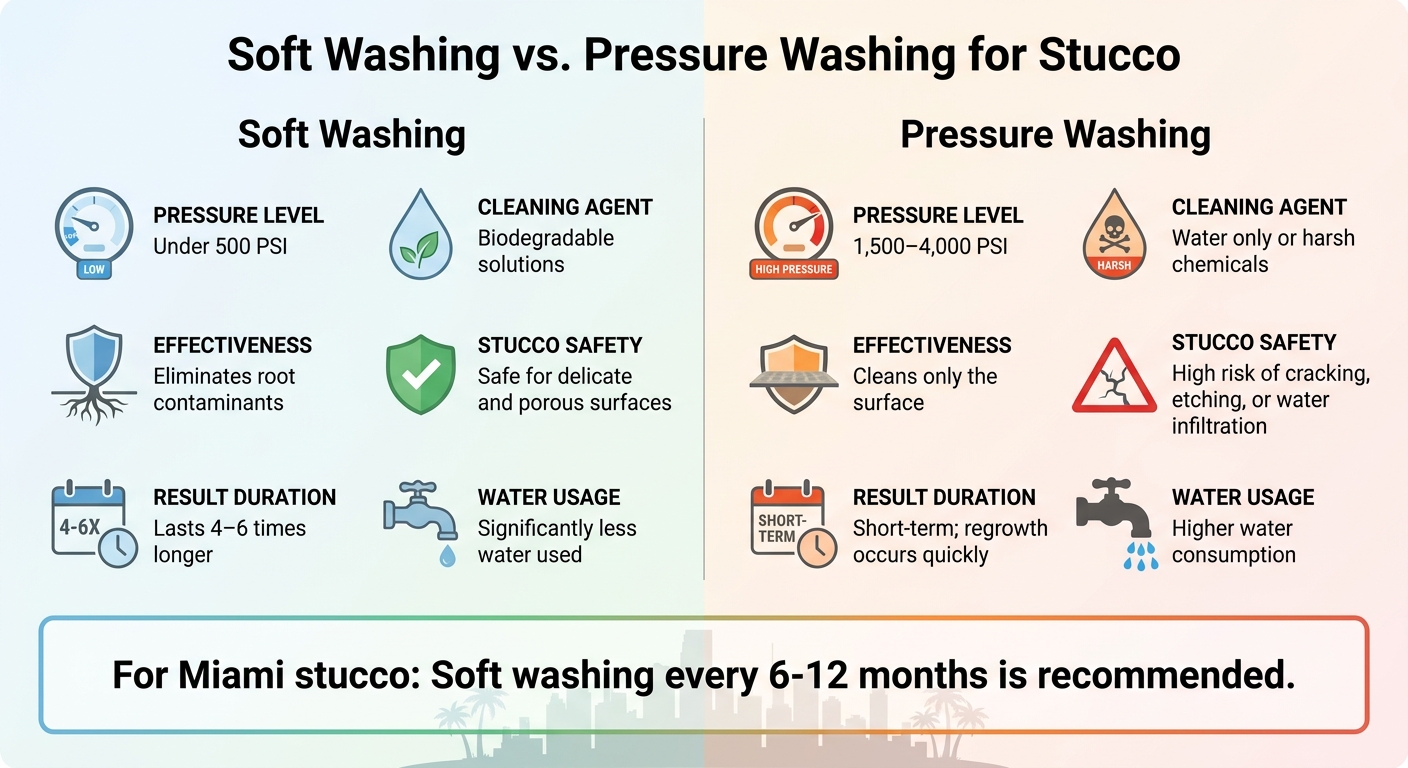
Soft Washing vs Pressure Washing for Stucco: Safety and Effectiveness Comparison
When it comes to cleaning stucco, choosing the right method can make all the difference in preserving your home's exterior. Soft washing and pressure washing offer two very different approaches, and understanding their distinctions is key to avoiding unnecessary damage.
How Soft Washing Works
Soft washing operates at water pressures under 500 PSI, which is comparable to the output of a garden hose. Instead of relying on sheer force, this method uses biodegradable cleaning solutions to break down and eliminate organic growth. As South Florida Soft Wash puts it:
"The cleaning solutions do the heavy lifting, not the water pressure. These eco-friendly chemicals are designed to break down organic growth at the root level, killing them completely rather than simply washing them away."
The process involves applying these specialized detergents to the stucco and allowing them to sit for a few minutes. This gives the solution time to seep into the porous material and tackle mold, algae, and mildew at their source. The results can last up to two years, with effects typically outlasting pressure washing by four to six times.
Why Pressure Washing Can Be Too Harsh
Pressure washing, on the other hand, uses water pressure ranging from 1,500 to 4,000 PSI. This high-pressure method is effective for durable surfaces like concrete or brick but poses significant risks for stucco. The intense force can crack or etch the material, strip protective coatings, and even force water behind the siding or into window seals.
In humid climates like Miami, where mold and mildew are common, pressure washing often leaves behind spores and roots. This allows regrowth to occur quickly, making it a less effective long-term solution. Additionally, the high pressure can damage sealants around windows and doors, creating opportunities for water infiltration and further issues.
Side-by-Side Comparison: Soft Washing vs. Pressure Washing
Here’s a quick breakdown of the key differences:
Feature
Pressure Washing
Soft Washing
Pressure Level
High (1,500–4,000 PSI)
Low (Under 500 PSI)
Cleaning Agent
Often water only or harsh chemicals
Biodegradable solutions
Effectiveness
Cleans only the surface
Eliminates root contaminants
Stucco Safety
High risk of cracking, etching, or water infiltration
Safe for delicate and porous surfaces
Result Duration
Short-term; regrowth occurs quickly
Lasts 4–6 times longer
Water Usage
Higher water consumption
Significantly less water used
For homeowners in Miami, where mold growth is a persistent challenge, soft washing every 6 to 12 months is a safer and more effective way to maintain stucco without risking damage from high-pressure cleaning methods.
How to Safely Clean Stucco in Miami
Miami's humid and salty climate can be tough on stucco, making proper cleaning methods essential. Using the right pressure, tools, and techniques ensures your stucco stays intact while looking its best.
Safe PSI Levels for Stucco
For pressure washing stucco, aim for a range of 1,500 to 2,800 PSI. This level is strong enough to remove dirt but gentle enough to avoid cracking or etching the surface. Even with the correct PSI, keep a safe distance from the wall to prevent accidental damage.
Another option is soft washing, which uses specialized cleaning solutions at low pressure. This method minimizes risks like scarring the stucco, forcing water into joints, or damaging caulk lines around windows and doors. In Miami's moisture-heavy environment, where mold and mildew are common, chemical-based cleaning can be especially effective.
Once you’ve determined the right pressure, it’s time to focus on the tools and techniques that will protect your stucco.
Tools and Methods for Safe Stucco Cleaning
To clean stucco effectively, start by inspecting the surface for cracks or gaps. Seal any problem areas with outdoor caulking or stucco patches to prevent water from seeping in during the cleaning process.
When using a pressure washer, attach a 40-degree wide-angle nozzle to spread the pressure evenly across the surface. Professional setups often include calibrated pumps and specialized fan tips tailored for soft washing, which is ideal for textured stucco.
Choose outdoor detergents designed to tackle South Florida-specific contaminants like salt spray, mineral deposits, and tree tannins. These cleaners are tough on grime but gentle on stucco and nearby plants. To protect landscaping, pre-wet surrounding vegetation and rinse the soil thoroughly after cleaning to prevent damage from runoff.
For best results, clean stucco during cooler morning hours. This gives detergents more time to work before the intense Miami sun dries them out. Apply the cleaning solution at low pressure, allow it to sit briefly to loosen dirt, and rinse from top to bottom for an even, streak-free finish.
Non-Pressure Cleaning Options
If you’re dealing with light dirt or particularly delicate stucco, a garden hose with a cleaning brush attachment can handle routine maintenance without the risks of high-pressure washing. While this method won’t deliver a deep clean, it’s perfect for keeping your stucco fresh between more intensive cleanings.
For targeted stain removal, manual scrubbing with a medium to stiff bristle brush can be effective. Use a mix of soap and water, bleach and water, or a specialized cleaner to tackle stubborn spots. Be cautious, though - scrubbing textured stucco too hard can leave swirl marks or push dirt deeper into the surface. This technique works best for spot-cleaning small areas and complements pressure washing or soft washing for a comprehensive cleaning approach.
Palm Shine Pros' Soft Washing Services for Miami Stucco
Palm Shine Pros uses safe and effective methods to provide expert soft washing services tailored specifically for Miami stucco. Recognizing the challenges posed by South Florida's climate, their approach relies on low-pressure cleaning (under 100 PSI) combined with biodegradable solutions. This method goes beyond surface cleaning, offering longer-lasting protection for your stucco.
Benefits of Professional Stucco Cleaning
With Palm Shine Pros, you can count on a fully licensed and insured team that prioritizes the safety of your property during every job. They also stand by their work with a 100% satisfaction guarantee and are known for their quick response time - usually within 24 hours. As one satisfied customer, Jason M., shared:
Palm Shine Pros made our home look brand new. The crew was punctual, courteous, and careful with our landscaping.
This meticulous attention ensures your stucco is thoroughly cleaned without damaging the delicate finish, which is often just 1/8 inch thick.
Another advantage of professional soft washing is its durability. While pressure washing typically offers protection for only 3–6 months, soft washing extends that timeframe to 18–36 months. This is thanks to specialized cleaning solutions that continue to work after application, making it harder for organic growth to return. These services align with the safe cleaning practices previously mentioned, offering both immediate and long-term benefits.
Climate-Specific Cleaning Solutions
Miami's humid, salty air creates ideal conditions for algae, mildew, and other contaminants to thrive on stucco surfaces. Palm Shine Pros tailors their cleaning techniques to address these specific challenges, effectively removing salt spray, mineral deposits, and streaks caused by heavy rain.
Their soft washing process targets the root causes of discoloration by penetrating the porous stucco to completely eliminate harmful organisms. This thorough approach is especially important for Miami properties, where warm, moist conditions can lead to rapid regrowth. The biodegradable cleaning solutions they use are tough on mold and algae but safe for plants, thanks to careful pre-soaking and rinsing procedures .
In a high-humidity environment like Miami, professional stucco cleaning every 12 to 18 months is recommended to prevent biological growth from becoming deeply embedded. This regular maintenance ensures your stucco stays protected and complements the earlier strategies discussed, keeping your property looking its best despite Miami's challenging climate.
Conclusion
Pressure washing might seem like a quick solution for cleaning stucco, but it comes with significant risks, especially in Miami's humid climate. With pressures ranging from 1,500 to 4,000 PSI, these machines can damage textured surfaces, strip away caulking, and push water into wall cavities. In South Florida, where moisture issues are already common, this can lead to mold growth and even structural problems.
Soft washing provides a much safer and more effective alternative. Operating at less than 500 PSI - similar to the pressure of a garden hose - this method uses biodegradable cleaning solutions to eliminate mold, algae, and bacteria at their source. Plus, surfaces cleaned this way stay cleaner 4 to 6 times longer compared to high-pressure methods.
For Miami homeowners dealing with salt spray, mineral deposits, and constant humidity, professional low-pressure cleaning is a smart choice. Experts understand how to adjust equipment, safeguard landscaping, and customize cleaning solutions to address the unique challenges of South Florida's environment. This approach not only removes contaminants but also prevents moisture from lingering on stucco, reducing the risk of paint failure and other issues.
FAQs
When should I avoid pressure washing stucco?
Avoid using high-pressure washing on stucco surfaces if the pressure is excessive, as it can harm the finish. Additionally, steer clear of pressure washing if the stucco is already weakened or deteriorating, as this could lead to further damage. Always evaluate the condition of the stucco beforehand and choose cleaning methods that preserve its structure and appearance.
How can I tell if my stucco has water damage after washing?
To spot water damage on stucco after washing, check for discoloration, mold or mildew, or sections that feel soft or spongy to the touch. These are clear indicators of moisture getting through the surface, and it's important to address them quickly to avoid worsening the issue.
Will soft washing harm my plants or pets?
Soft washing is a cleaning technique that relies on low water pressure combined with eco-friendly cleaning solutions. When done properly, it’s safe for plants, pets, and the environment. To keep everything safe, make sure not to over-spray the solution and rinse nearby plants with water both before and after the cleaning process.
.avif)


.avif)