Lorem ipsum dolor sit amet, consectetur adipiscing elit. Suspendisse varius enim in eros elementum tristique. Duis cursus, mi quis viverra ornare, eros dolor interdum nulla, ut commodo diam libero vitae erat. Aenean faucibus nibh et justo cursus id rutrum lorem imperdiet. Nunc ut sem vitae risus tristique posuere.
Storms in South Florida can severely damage roofs, especially due to hurricane winds, heavy rain, and storm debris. Homeowners in this region face unique challenges as the area falls within the High Velocity Hurricane Zone (HVHZ). Here’s what you need to know:
Hurricane Winds: Winds starting at 74 mph can rip shingles off, crack tiles, and weaken the roof structure.
Heavy Rain: Rain can lead to leaks, algae growth, and granule loss, accelerating roof wear.
Storm Debris: Flying debris and falling branches can puncture roofs, crack tiles, and cause sagging.
Living in South Florida means dealing with weather extremes that put roofs to the test. Nestled in the High Velocity Hurricane Zone, the region's roofs often face the brunt of hurricanes, torrential rain, and storm debris.
Hurricane Winds and Roof Damage
Hurricane-force winds don't just rattle windows - they can wreak havoc on roofs. These winds create an intense uplift that can tear off roof sheathing and cause shingles to crack, curl, or even buckle. Once shingles are damaged or missing, water can sneak in, leading to expensive structural issues. Even tile roofs, which are common in South Florida, aren't immune. Storm stress can crack or misalign tiles, leaving gaps that compromise the roof’s protective barrier.
The damage isn't just skin-deep. Severe storms can weaken the roof's structural framework, with sagging or warped areas signaling deeper problems. Older roofs, especially those over 20 years old, are at higher risk of leaks and structural failure during storms. If you notice granules piling up in your gutters, it could mean the roof is wearing out and becoming more vulnerable. And if more than a quarter of the roof’s surface is damaged, a full replacement is often the safest option.
Of course, wind damage is only part of the story. Heavy rain brings its own set of challenges.
Heavy Rain and Water Damage
After hurricane winds have done their part, heavy rain often steps in to worsen the situation. South Florida’s summer rains, paired with high humidity, speed up the growth of algae and other organic materials on roofs. Those black streaks you might see? That’s Gloeocapsa magma, an algae that feeds on the limestone filler in asphalt shingles. As it eats away at the limestone, it dislodges the protective granules, shortening the roof’s lifespan.
Clogged gutters and roof drains from heavy rain can also redirect water into soffits, fascia, or stucco walls, leading to leaks and rot. Moisture trapped by grime and organic films can break down protective coatings faster, leaving the roof more exposed. Mold often thrives in textured roofing materials, causing stains and weakening the structure further.
Certain areas, like shaded or north-facing sections, stay damp longer, making them more prone to algae and mold buildup. Regular cleaning and maintenance can help extend the life of roof coatings and paint cycles, sometimes by as much as four years. Staying on top of cleaning and repairs can prevent small issues from spiraling into costly problems.
Storm Debris Impact
Storm debris is another major culprit when it comes to roof damage. Flying debris can crack tiles, puncture roofing materials, or strip shingles entirely. Even if damage isn’t obvious at first, repeated impacts can weaken the roof over time, eventually leading to leaks.
"From winds and hail to soaking rain and falling debris, storm damage can quickly compromise your roof's ability to protect your home." – The Roof Guys
Larger debris, like tree branches, can cause even more trouble. They might tear roof edges, damage gutters, or create sagging sections. These vulnerabilities make it easier for water to seep through seams and cause further damage.
After a storm, it’s a good idea to check for visible damage from the ground. Look for branches or other debris on the roof and take photos of any issues you spot - these can be helpful for insurance claims. If you notice debris, scheduling a professional inspection is a wise next step.
Types of Storm-Related Roof Damage
Storms can wreak havoc on your roof, leaving behind specific types of damage that may compromise your home’s safety. Spotting these issues early is crucial to preventing small problems from escalating into costly repairs.
Missing Shingles and Roofing Materials
Strong winds - whether gale-force (39–54 mph) or hurricane-force (74+ mph) - can tear shingles off or lift them just enough to break their water-tight seal. Once this seal is broken, water can seep underneath, posing a serious risk. If the underlayment or roof deck becomes exposed, moisture can penetrate into your attic and ceilings, even if the damage isn’t visible from the outside.
Damage Type
Action Needed
Missing shingles
Replace immediately to avoid leaks
Cracked shingles
Repair or replace to maintain roof integrity
Curled shingles
Replace; this often indicates age or heat damage
Granule loss
Inspect for overall wear and surface degradation
Wind isn’t the only culprit - impact forces from debris can also damage the roof’s internal structure.
Damage to Roof Frames and Structure
Heavy debris, like falling tree branches, can weaken the roof’s support system. Storm impacts may loosen roof sheathing, damage deck attachments, or cause sections to warp or sag. These issues often signal deeper, hidden problems in the attic.
"If more than a quarter of your roof shows damage, it might be smarter to replace it entirely rather than patching it up." – Joseph Elshazly, President and CMO, Rapid Restoration Group
After a storm, check your roofline for sagging areas - these are critical warning signs that require professional inspection. Homes in South Florida, especially older buildings constructed before modern wind codes, are at higher risk for structural failures. Once the structure is compromised, water damage becomes an even bigger threat.
Water Leaks and Mold Problems
When water infiltrates your home, the damage often spreads quickly. Storm-related leaks can lead to pooling in the attic, which creates the perfect conditions for mold growth. This is a common progression from the physical damage caused by high winds or debris. In coastal areas like South Florida, wind-driven rain can push moisture deep into your home.
"An unexpected roof leak... can also trigger the growth and spread of mold and mildew throughout your home." – Rapid Roofing
Water damage isn’t always obvious from the outside. After a storm, inspect your attic and ceilings for water spots. Even small leaks can lead to extensive structural rot and mold over time. Emergency tarping can help prevent further water intrusion while you arrange for permanent repairs. In some cases, the cost of these temporary measures might even be covered by your insurance. Addressing leaks quickly is essential to avoiding severe structural damage and costly repairs down the line.
Steps to Take After Storm Damage
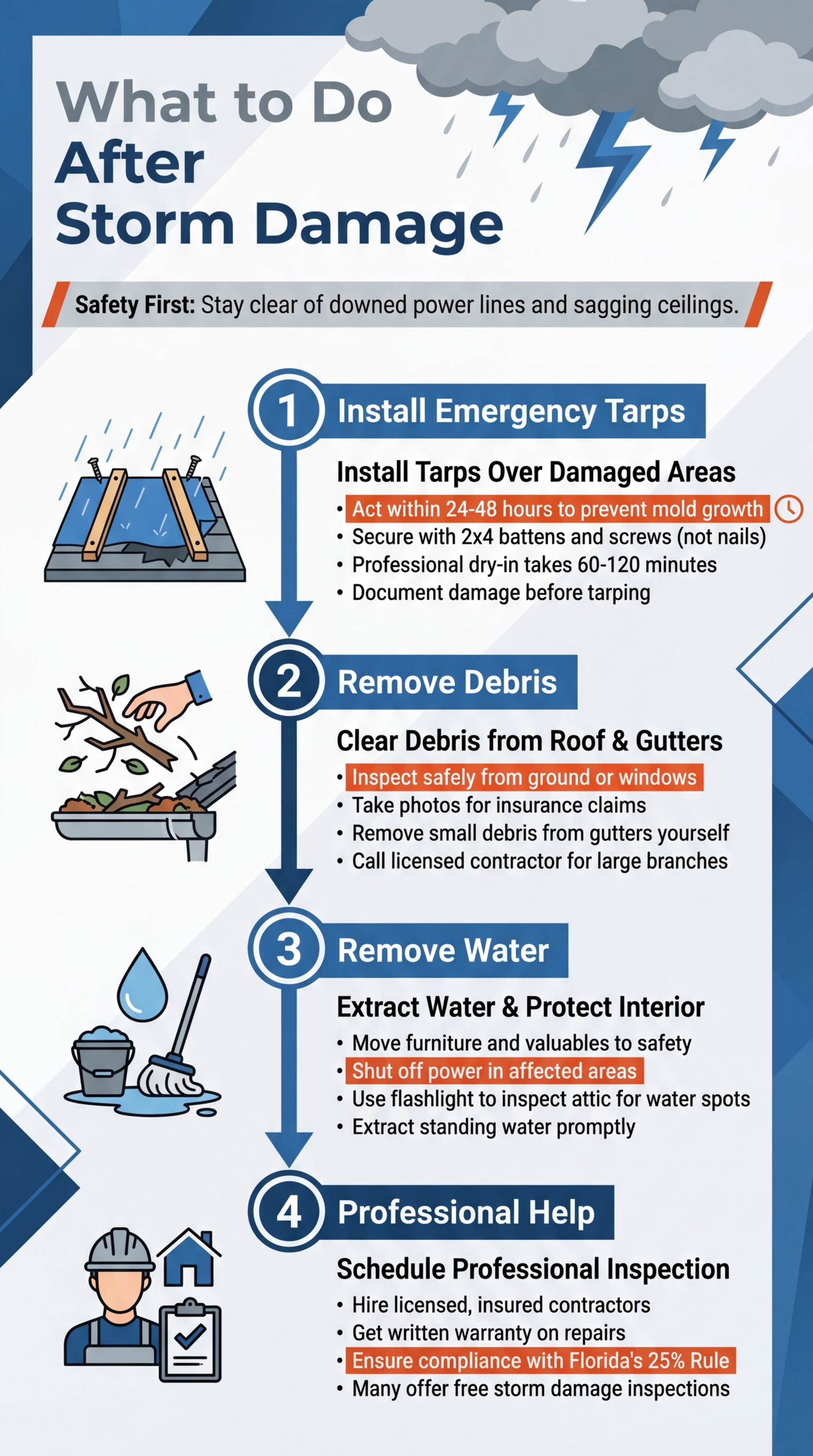
4-Step Guide to Handling Storm Roof Damage in South Florida
After a storm, ensuring safety is your top priority. Stay clear of downed power lines, fallen tree limbs on your property, or areas with sagging ceilings - they can pose serious risks. Once it's safe, taking swift action can help prevent minor damage from snowballing into costly repairs. Here's how to handle the situation effectively while waiting for professional help.
Installing Tarps Over Damaged Areas
One of the first steps to protect your home after storm damage is emergency tarping. A properly installed tarp can shield your roof from rain and prevent further water damage. Act fast - sheetrock can swell, and mold can start to grow within just 24 to 48 hours of a leak.
If you're handling the tarping yourself, use the right technique. Secure the tarp with 2x4 battens and screws, anchoring it to structural members rather than just nailing it to shingles. This reduces the risk of the tarp being dislodged by wind. That said, hiring a licensed contractor is often safer and more effective. A professional can complete an emergency dry-in within 60 to 120 minutes, depending on your roof's material and slope.
Don't forget to document the damage before tarping and contact your insurance provider quickly. Many insurers operate on a "first-in, first-out" basis after major storms, so early action can expedite your claim.
Once your roof is temporarily secured, turn your attention to clearing debris and preventing further water damage.
Removing Debris from Roofs and Gutters
Debris on your roof and in your gutters can cause water to back up, leading to leaks and structural issues. Even small twigs can trap moisture, while larger branches may damage shingles and compromise your roof's ability to keep water out.
Inspect the damage safely from the ground or through windows - avoid climbing onto the roof unless you're certain it's stable. Take photos of the debris to support your insurance claim. You can clear small debris from gutters and downspouts yourself, but for larger branches or significant roof damage, it's best to call a licensed contractor. As Owens Corning Roofing emphasizes:
"As always, safety is first. Contact a trusted, professional roofing contractor to schedule an inspection and help you with damage assessment".
Clearing debris quickly is a critical step to prevent water intrusion and maintain your roof's integrity.
Removing Water and Protecting Interior Spaces
Water removal and interior protection are equally important. Start by moving furniture and valuables out of harm's way, covering electronics, and shutting off power in affected areas.
Use a flashlight (not just your phone) to inspect ceilings and attic spaces for water spots or wet insulation - these are signs of roof failure that might not be visible from outside. Extract standing water promptly to reduce the risk of mold and further structural damage. If your home is no longer livable due to storm damage, consider boarding up windows and doors to secure the property from theft and additional weather exposure until repairs can be made.
Throughout the process, document everything with photos and measurements. This detailed evidence will be invaluable for your insurance claim and repair planning.
Professional Roof Repair and Maintenance Services
After taking emergency measures, it’s crucial to bring in licensed professionals to thoroughly assess and repair your roof. While quick fixes might hold things together temporarily, only qualified contractors can perform repairs that align with Florida building codes and prepare your roof for the next storm season.
Professional Roof Inspections and Repairs
Professional inspections uncover hidden issues like trapped moisture or structural damage. For instance, a few missing shingles might actually point to underlying problems with the roof’s underlayment or decking.
Hiring licensed contractors ensures your roof meets code requirements, including Florida’s "25% Rule." This regulation states that if over 25% of your roof is damaged, you may need to replace the entire roof to comply with current safety standards.
Make sure your contractor is licensed, insured, and provides a written warranty covering both materials and labor. Many trusted contractors offer free storm damage inspections to determine whether you need a full replacement or just minor repairs. These inspections are also invaluable when filing insurance claims.
Regular Maintenance to Prevent Damage
After professional repairs, ongoing maintenance is essential to protect your roof over the long term. South Florida’s humid, salty environment promotes mold and algae growth, which can trap moisture and weaken roofing materials. Cleaning your roof every 12 to 24 months can help prevent this kind of damage.
Routine cleaning and gutter maintenance also stop algae from taking hold and prevent water from backing up, which can lead to rotting shingles and leaks. Regular inspections can catch early signs of trouble, like cracked or missing shingles, before they escalate into major problems during strong winds. As Joseph Elshazly, President of Rapid Restoration Group, explains:
"A well-maintained roof is essential for your overall safety and comfort".
In addition to protecting your roof, consistent upkeep can extend the life of your home’s exterior. For example, regular washing can delay the need for repainting from every 8 years to as many as 12 years by preventing mold from embedding in textured surfaces.
Palm Shine Pros' Exterior Cleaning Services
Specialized cleaning services are another key to keeping your roof in top condition. Palm Shine Pros offers exterior cleaning and maintenance designed to support storm recovery and long-term roof health. Their low-pressure soft wash method is ideal for tile roofs, preventing damage like cracking or chipping. Aqua Knight Exterior Cleaning highlights the importance of this approach:
"Tile roofs, both concrete and clay, do not like high pressure. They crack, chip, and misaligned tiles can open gaps".
Additionally, their gutter cleaning services ensure proper water drainage during heavy rains and remove debris like palm fronds and leaves that can trap moisture and accelerate wear. Professional cleaning can also reveal hidden issues, such as hairline cracks or missing caulk, that might otherwise go unnoticed under layers of dirt.
For homeowners in South Florida, scheduling a roof cleaning in the fall - when the cooler sun angle allows cleaning solutions to work effectively - and a full house wash in the spring before summer rains can make a big difference. These services not only restore your roof but also bolster its ability to withstand future storms.
Conclusion
South Florida's weather demands consistent roof care to combat its unique challenges. By sticking to regular maintenance, you can extend your roof's lifespan and keep issues like mold and algae from causing damage by trapping moisture against roofing materials.
Professional cleaning plays a big role in spotting potential problems early. As Aqua Knight Exterior Cleaning explains:
"The highest quality crews finish with a short walk-around and level out hairline cracks, missing caulk, or gutter themes revealed throughout the time of the wash. That is vital suggestions you may not be aware except a leak displays up"
Addressing these small issues early on can save you from expensive emergency repairs, especially during hurricane season.
Preventative care is also a money-saver. Regular cleaning helps reduce wear on roofing materials and prevents the buildup of harmful growths. For example, scheduling roof cleanings in the fall and handling gutter maintenance before summer storms can help keep your property in top shape.
Taking action at the right times - both before and after storms - can preserve your roof's performance and protect your home's value. When paired with professional inspections, routine maintenance ensures your roof stays in good condition, helping you avoid the stress and expense of sudden repairs.
FAQs
What storm damage is easy to miss after a hurricane?
Shingle damage - like tearing, lifting, or missing pieces - can often go unnoticed after a hurricane. Why? Because these problems aren't always visible from the ground or through windows. In many cases, issues only reveal themselves upon closer inspection or as time passes. That’s why a thorough roof check after severe weather is so important.
When does roof damage require full replacement in Florida?
In Florida, if more than 25% of a roof's surface is damaged, a full replacement is typically required instead of just repairs. This rule is in place to prevent long-term problems like water leaks or structural issues. It's crucial to tackle major roof damage quickly to avoid additional complications.
How fast can a small roof leak lead to mold indoors?
A small roof leak can lead to indoor mold growth in as little as 24 to 48 hours if not addressed quickly. Acting fast is crucial to avoid extensive damage and potential health risks associated with mold exposure.
.avif)


.avif)