Commercial Gutter Cleaning in South Florida: What's Included
Lorem ipsum dolor sit amet, consectetur adipiscing elit. Suspendisse varius enim in eros elementum tristique. Duis cursus, mi quis viverra ornare, eros dolor interdum nulla, ut commodo diam libero vitae erat. Aenean faucibus nibh et justo cursus id rutrum lorem imperdiet. Nunc ut sem vitae risus tristique posuere.
A standardcommercial gutter cleaninginSouth Floridausually includes debris removal, downspout flushing, flow checks, site cleanup, and notes about visible problems.
If you manage a property, here’s the short answer: your service is usually meant to restore water flow in accessible gutters and downspouts, not fix damaged parts. In South Florida, that matters because the area gets about 52–53 inches of rain per year, and about 75% of that rain falls during the wet season and nearby months. During major storms, even a small clog can lead to overflow.
Before the crew arrives, you should expect the visit to cover:
Roof-edge and gutter cleaning for leaves, palm fronds, dirt, and roof grit
Downspout flushing from the top opening
Drainage checks to see whether water exits at visible discharge points
Ground cleanup around entrances, sidewalks, loading areas, and parking spots
Service notes or photos if that reporting is part of the scope
Visible issue reporting for things like sagging sections, loose fasteners, corrosion, or damaged elbows
You should not expect standard cleaning to include:
Repairs to leaks, seams, outlets, or end caps
Re-pitching or reattaching sagging gutter runs
Replacing gutters, hangers, elbows, or downspouts
Roof or fascia work
Clearing buried storm lines, catch basins, or underground drains
A visible flush also does not prove the buried drainage line is open. It only shows that water reached the visible outlet.
The guide below breaks down what is usually part of the visit, what crews may report during service, and what often needs separate approval.
Why Commercial Gutters Need Regular Cleaning in South Florida
Regular gutter cleaning matters even more in South Florida because heavy rain can turn a small clog into a messy overflow in no time. The region gets about 52–53 inches of rain each year, but the bigger issue is how that rain falls. About three-quarters of the yearly rainfall comes during the wet season and the months around it. That puts a lot of strain on commercial roof drainage systems.
How Heavy Rain and Storm Debris Stress Roof Drainage Systems
When a storm rolls in and runoff starts rushing across the roof, even a small blockage can back water up fast. Once that happens, it can spill over the roofline before anyone has time to react. Storms also fill gutters with palm fronds, leaves, and roof grit, and that debris can bunch up around downspout openings and choke off flow.
That risk isn't theoretical. In a June 2024 storm, the National Weather Service reported about 20 inches of rain near Hallandale Beach, Hollywood, and North Miami, along with about 13 inches in Miami Beach. Under that kind of pressure, a roof drainage system with even a minor restriction can get overwhelmed in a hurry.
The National Weather Service also notes that major flooding events happen across South Florida about three times per year on average.
How Overflow Affects Building Appearance and Water Control
When gutters can't move water away fast enough, it pours over the front edge and runs straight down the outside walls. That can leave dark streaks on stucco, rust-colored stains on painted surfaces, and wet sidewalks near entrances. For office and retail properties, those marks can make the building look poorly maintained.
The damage isn't just cosmetic. Runoff that pools near the base of a building can soak the soil, wash out landscaped beds, and increase moisture around doors and foundation edges. On coastal properties, the problem gets worse. Salt-heavy air and constant humidity keep organic debris damp, which speeds up corrosion on metal gutters, fasteners, and hangers. Cleaning clears out that wet debris and makes visible wear easier to spot before it turns into a leak.
That's why standard commercial gutter cleaning usually includes debris removal, flow checks, and visible issue reporting.
sbb-itb-20350f7
What Is Typically Included in a Commercial Gutter Cleaning Visit
That risk is why a standard cleaning visit starts at the roof edge and follows the full drainage path. In most cases, the visit covers three main tasks: debris removal, downspout flushing, and cleanup. Before any work begins, the crew should confirm the exact buildings, elevations, and gutter runs included in the job.
Roofline and Gutter Debris Removal
Technicians clear the full agreed gutter run using the method that fits the building and debris load - by hand, scoop, blower, or vacuum. That includes removing leaves, twigs, palm fragments, roof granules, dirt, and packed sediment from the gutter troughs, especially palm debris, roof grit, and storm-blown leaves. They should pay close attention to outlets, end caps, corners, and low points, because that’s usually where buildup starts slowing water first.
The aim here is simple: get water moving through the gutter system again.
One detail matters a lot. Debris should come out before flushing starts. If someone pushes water through a clogged opening too soon, that material can get forced deeper into the downspout and turn a small blockage into a tougher one.
Once the gutters are clear, the crew can check whether water flows through the downspouts the way it should.
Downspout Flushing and Drainage Flow Checks
After the gutters are cleared, each accessible downspout should be flushed with water from the upper opening. The technician watches to see whether water moves through the outlet, down the elbows, and out to the visible discharge point at ground level.
This step helps spot problems that plain debris removal may miss, such as:
Partial clogs
Slow flow
Backups
Standing water
If the discharge point is buried or hidden, the technician should note that the flow test was limited in that area. And if water still stands after flushing, the cause is usually gutter slope, damage, or a drainage issue farther down the line.
After those flow checks, the last part of the visit is clearing out whatever came from the system and cleaning the work area.
Debris Removal and Ground Cleanup After Service
Collected debris should be bagged and removed, or placed in the agreed disposal area. Technicians should also check sidewalks, entrances, loading areas, and parking spots for any material that dropped during the job.
Clean grounds do more than look good. They also help cut slip hazards. When the crew leaves, sidewalks, entrances, loading areas, and parking spots should be clear.
What Technicians May Flag During the Visit
During a cleaning visit, technicians often do more than clear out debris. They also look for visible problems that could hurt drainage the next time heavy rain hits. So the visit can double as a quick check on how the system is holding up.
Visible Gutter and Downspout Issues Worth Noting
A technician may point out loose fasteners, missing hangers, sagging sections, open seams, cracked or corroded metal, damaged elbows, and misaligned downspouts.
Sagging isn't just about looks. When a gutter section loses the pitch it was meant to have, water moves more slowly, sediment starts to settle, and overflow can happen in the wrong place instead of moving toward the downspout. During the visit, technicians may note where the sagging appears, how much area it affects, and what it does to drainage, especially if water stays behind after flushing.
Service Notes, Photos, and Condition Reporting
What gets documented depends on the agreed scope of work. Service may include verbal updates, written notes, photos, flush results, or a formal condition report if those items are part of the job. Good notes and photos should show the building or elevation, the rough location, the part involved, and what the technician saw - whether that's active staining, a gap at a downspout connection, or surface corrosion along a gutter run.
It also helps to split findings into monitor items and repair items. For example, a loose fastener or a small patch of surface corrosion may be something to watch. A disconnected downspout, leakage behind the gutter, or a badly corroded section is more urgent. That split makes it clear what falls under standard cleaning and what needs separate approval before the next storm.
What Is Included vs. What Requires Separate Authorization
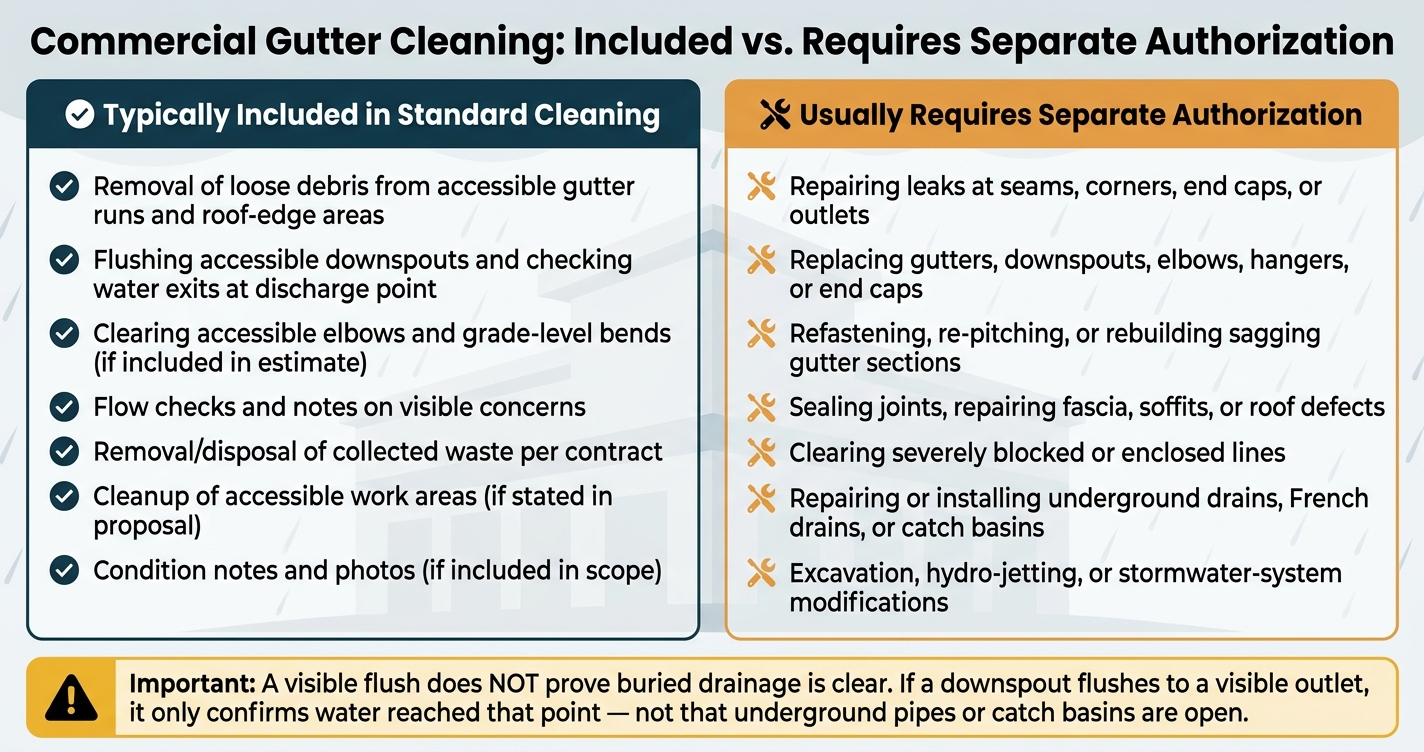
Commercial Gutter Cleaning: What's Included vs. What Requires Separate Authorization
The main thing here is simple: cleaning and repair work are not the same job.
A standard gutter cleaning is meant to restore flow through accessible gutters and downspouts. But if the crew finds corrosion, leaks, sagging sections, or broken parts, that work usually needs separate approval. For property managers, that split matters because it lets you budget cleaning apart from repair work.
Here’s where standard cleaning usually stops and extra authorization starts.
Typically included in standard cleaning
Usually requires separate authorization
Removal of loose debris from accessible gutter runs and any roof-edge areas named in the estimate
Repairing leaks at seams, corners, end caps, or outlets
Flushing accessible downspouts and checking whether water exits freely at the discharge point
Replacing gutters, downspouts, elbows, hangers, or end caps
Clearing accessible elbows and grade-level bends, if included
Refastening, re-pitching, or rebuilding sagging gutter sections
Flow checks and notes on visible concerns
Sealing joints, repairing fascia or soffits, or correcting roof defects
Removal or disposal of collected waste per contract
Clearing severely blocked or enclosed lines
Cleanup of accessible work areas, if stated in the proposal
Repairing or installing underground drains, French drains, extensions, or catch basins
Condition notes and photos, if included
Excavation, hydro-jetting, or stormwater-system modifications
Scope varies by contract, so it’s smart to confirm each item in writing before the visit.
One limit trips people up all the time: a visible flush does not prove buried drainage is clear. If a downspout flushes to a visible outlet, that only shows water made it to that point. It does not confirm that a buried pipe or catch basin is open. If the technician sees slow discharge or no flow at the outlet, that should be documented as a suspected blockage or drainage problem. Figuring out the cause, or clearing an underground line, is a separate service.
What to Expect After a Standard Commercial Gutter Cleaning Visit
Once the scope is clear, the next step is knowing what the visit actually leaves behind.
After gutter service, expect debris removed from accessible runs, accessible downspouts flushed, visible flow confirmed, and work areas cleaned. Buried drains and the full drainage system are a separate scope — don't expect those cleared as part of a standard visit.
The condition report gives property managers a record to use after Palm Shine Pros leaves. It shows what was serviced, what was found, and what needs separate approval. That paper trail helps sort follow-up work, plan maintenance, and make repair decisions without guessing.
FAQs
How often should commercial gutters be cleaned in South Florida?
In South Florida, commercial gutters should be cleaned at least twice a year, ideally in spring and fall. That timing helps remove debris before the rainy season begins in May and again after it ends in November.
Some properties need more attention. If the building sits near dense vegetation or palm trees, gutter cleaning may be needed three to four times a year. And after any major storm, gutters should be inspected and cleared to keep water moving the way it should.
What happens if a downspout flush shows slow or no drainage?
If a downspout flush leads to slow drainage, or no drainage at all, that usually points to a blockage somewhere in the system.
A professional service will find the clog and clear it so water can flow the way it should. That helps move water away from the building’s foundation, which is the whole point of the system in the first place.
If drainage still doesn’t improve after the flush, technicians may check for loose or damaged downspout sections that need repair.
How can I tell if my property needs cleaning or repairs?
Check gutters for visible debris like palm fronds, pine needles, and silt. Also look for sagging sections or runs that aren’t sloping toward the downspouts.
When it rains hard, watch for water spilling over the sides or pooling near the foundation. Inside the home, look for water stains, peeling paint, or musty smells. Those are common signs of drainage problems.
.avif)

.avif)