Why Miami Roofs Get Black Streaks (And How to Fix)
Lorem ipsum dolor sit amet, consectetur adipiscing elit. Suspendisse varius enim in eros elementum tristique. Duis cursus, mi quis viverra ornare, eros dolor interdum nulla, ut commodo diam libero vitae erat. Aenean faucibus nibh et justo cursus id rutrum lorem imperdiet. Nunc ut sem vitae risus tristique posuere.
Black streaks on Miami roofs are caused by algae, specificallyGloeocapsa magma, which thrives in the region's humid, warm climate. These streaks not only make your roof look dirty but can also damage shingles, reduce energy efficiency, and shorten roof lifespan. Here's what you need to know:
Cause: Gloeocapsa magma algae feeds on limestone in shingles and thrives in Miami's high humidity (70–90%) and frequent rain.
Impact: Algae reduces roof reflectivity by up to 30%, increases attic temperatures by 10–15°F, and can lead to higher cooling costs.
Cleaning: Soft washing with a bleach-water solution is the safest method. Avoid high-pressure washing as it damages shingles.
Prevention: Install algae-resistant shingles or metal roofing, add copper or zinc strips, trim overhanging branches, and keep gutters clear.
Cost: Professional soft washing costs $350–$650; roof replacements in Miami range from $10,000 to $25,000.
Address black streaks early to save on energy bills, extend your roof's lifespan, and protect your home. Let’s dive into the details.
Clean Black Streaks from Roof Shingles
sbb-itb-20350f7
What Causes Black Streaks on Miami Roofs?
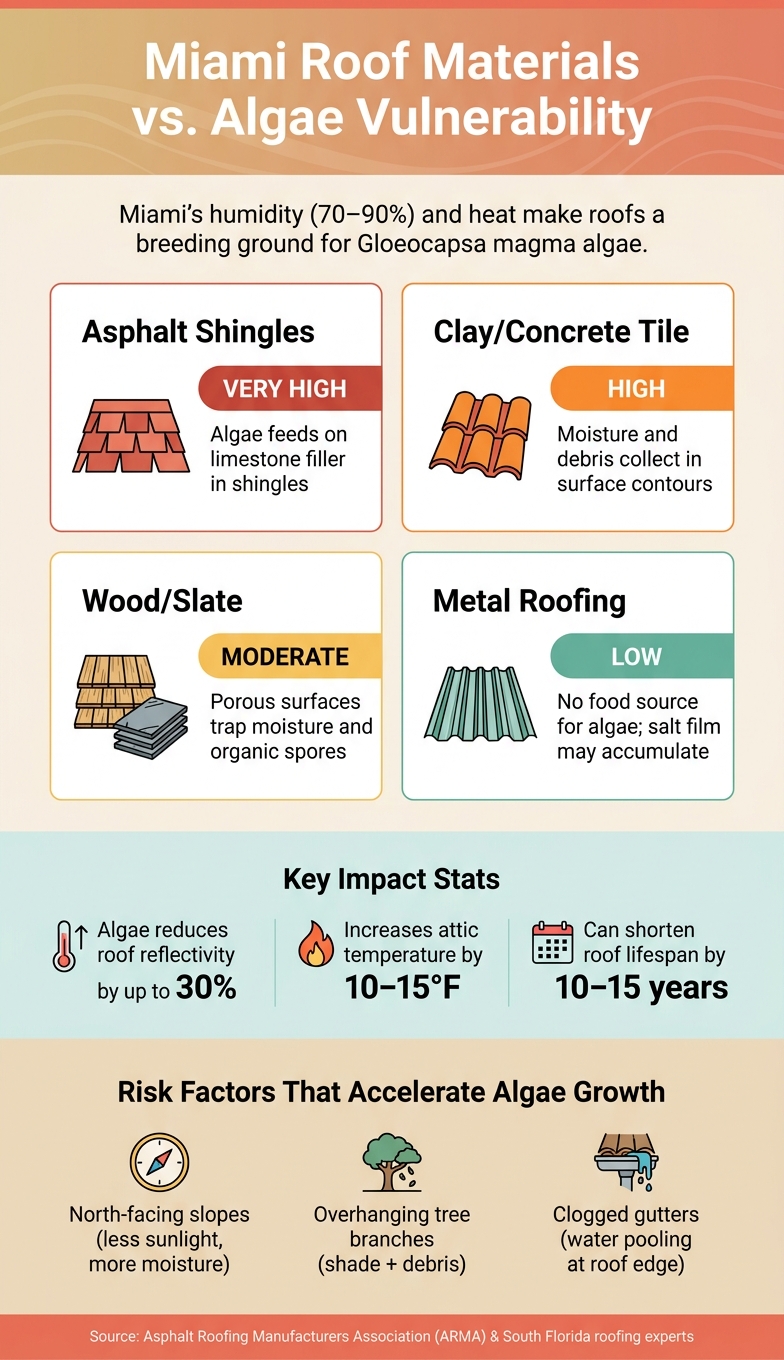
Miami Roof Materials vs. Algae Vulnerability: What You Need to Know
Let’s dig into why these dark streaks show up on Miami rooftops. Spoiler alert: it’s not dirt or pollution. Instead, the streaks come from a specific type of algae that thrives in Miami’s unique environment. The culprits? The algae itself, Miami's weather, and the type of roof you have.
The Role of Gloeocapsa Magma Algae
Meet Gloeocapsa magma, a cyanobacteria that spreads through the air as tiny spores. Once it lands on your roof, it wastes no time settling in.
Here’s the problem: asphalt shingles, a common roofing material, contain limestone filler to boost durability and weight. Unfortunately, Gloeocapsa magma loves limestone. It feeds on this filler and produces a dark pigment to protect itself from UV rays. That pigment is what creates those black or dark brown streaks you see. When it rains, the algae gets carried down the roof, leaving behind the streaking pattern that’s all too familiar.
But it doesn’t stop there. Over time, the algae develops microscopic rhizoids - essentially tiny root-like structures - that latch onto the granules protecting your shingles. These rhizoids slowly loosen the granules, which can end up as gritty debris in your gutters. If you notice this sandy buildup, it might be an early warning sign.
How Miami's Climate Speeds Up Algae Growth
Miami’s weather is the perfect breeding ground for Gloeocapsa magma. With its year-round warmth, high humidity levels (ranging from 70% to 90%), and frequent heavy rains, the algae thrives.
"South Florida's weather is basically paradise for mold, algae, and moss. We're talking about a combination of year-round heat, 70–90% humidity, and a rainy season that dumps inches of water on your roof every week." - Tino, Founder, Kleanway Cleaning Services
Coastal areas like Miami Beach and Coconut Grove face an added challenge: salt in the air. Salt exposure speeds up the wear and tear on roofing materials and changes how grime sticks to surfaces, making it even easier for algae to take hold.
Since the spores are airborne, they can quickly spread from one roof to another. That’s why you might notice entire neighborhoods with similar staining patterns at the same time.
Combine these environmental factors with certain roof features, and you’ve got a recipe for staining.
Roof Materials and Designs Prone to Staining
Not all roofs are equally affected. Asphalt shingles are the most at risk due to their limestone content, which is basically a buffet for the algae. But the design and layout of your roof are just as important as the material.
"Florida's average relative humidity runs between 74% and 90% depending on the season. That is not a climate, that is a petri dish." - A Buff & Beyond
Here’s how different materials compare:
Roof Material
Vulnerability
Why It Stains
Asphalt Shingles
Very High
Algae feeds on the limestone filler
Clay/Concrete Tile
High
Moisture and debris collect in the contours
Wood/Slate
Moderate
Porous surfaces trap moisture and organic spores
Metal
Low
No food source, but salt film can accumulate
Roof design also matters. North-facing slopes, for instance, stay shaded longer, which means moisture lingers, giving algae more time to grow. Similarly, shaded areas from overhanging trees or poor drainage - like clogged gutters and roof valleys - create damp conditions that help algae thrive.
"Roof staining in South Florida is rarely one problem. It's usually moisture, biology, debris, and climate all working together." - Paletz Roofing
How to Safely Remove Black Streaks from Your Roof
If you're dealing with black streaks on your roof, it's important to choose the right cleaning method. The wrong approach can lead to costly damage, so here’s how to remove them safely and effectively.
Professional Soft Washing Services
Soft washing is the go-to method recommended by the Asphalt Roofing Manufacturers Association (ARMA) because it cleans thoroughly without harming your roof. Unlike high-pressure washing, soft washing uses low-pressure water - similar to the strength of a garden hose - and a sodium hypochlorite-based cleaning solution. This combination kills algae at its source, with results that typically last 2 to 3 years.
"Soft washing is a low pressure method that uses cleaning solutions to remove algae and stains safely." - Tino, Founder, Kleanway Cleaning Services
For homeowners in Miami, professional soft washing services generally cost between $350 and $650 for residential roofs. These services use biodegradable solutions that not only clean algae buildup but also protect your shingles, tiles, and landscaping. Technicians often work during cooler morning hours, allowing the cleaning solution to work efficiently before it evaporates.
If you’re considering other cleaning methods, it’s important to understand why high-pressure washing isn’t a safe option.
Why High-Pressure Washing Can Damage Your Roof
High-pressure washing might seem like a quick and easy fix, but it can do more harm than good. Pressure washers can exceed 3,000 PSI, which is enough force to strip away the ceramic granules that protect asphalt shingles. These granules are essential for shielding your roof from UV damage and fire. Once they’re gone, they cannot be replaced.
"Never use a high-pressure washer on an asphalt shingle roof. It can strip away the protective granules, cause permanent damage, and may even void your roof's warranty." - Coastal Roofing of South Florida
Beyond granule loss, high-pressure washing can push water underneath shingles or tiles, leading to attic leaks, mold growth, and deck rot. These issues can quickly escalate into expensive repairs. Additionally, high-pressure washing only removes surface algae, meaning the problem will likely return within a few months.
DIY Roof Cleaning Tips
If you’re comfortable with DIY projects and working at heights, you can try cleaning your roof yourself using a simple bleach-water solution. Mix household bleach and water in equal parts - this should cost around $5 to $10 for materials. Apply the solution from the top of your roof downward, let it sit for 15–20 minutes, and then rinse gently with a garden hose.
Here are a few key tips to ensure a safe and effective cleaning process:
Protect your plants: Pre-soak nearby grass and plants with fresh water to shield them from chemical runoff. Rinse them again after cleaning to dilute any residue.
Pick the right day: Choose an overcast day to prevent the cleaning solution from evaporating too quickly.
Avoid scrubbing: Never use a stiff brush on asphalt shingles, as it can strip away the protective granules, similar to high-pressure washing.
Safety should always come first. Falls from roofs account for over 30% of construction-related deaths, so take precautions. Wear slip-resistant shoes, rubber gloves, and safety goggles, and always use a safety harness or rope when working on your roof. This approach will help you clean effectively while preserving the integrity of your roof.
How to Keep Black Streaks from Coming Back
After tackling algae, the key to keeping your roof streak-free lies in a mix of smart upgrades, controlling moisture, and sticking to regular maintenance. In Miami's hot and humid climate, these steps can make a world of difference.
Roof Material and Design Upgrades
Algae-resistant (AR) shingles are a great long-term solution. These shingles are infused with copper granules, which release ions when it rains to stop algae from growing. They last about 20 to 25 years and cost just $200 to $500 more than standard shingles during a roof replacement. That’s a small price compared to the ongoing expense of frequent cleanings.
If a full roof replacement isn’t in your near future, zinc or copper strips can help. These strips are installed just below the ridge cap, leaving 1 to 2 inches exposed. As rainwater runs over them, it carries metallic ions down the roof, preventing algae growth. Zinc strips cost around $50 to $100 for a 50-foot roll and last 10 to 20 years. Copper strips are more durable, lasting up to 40 years, but they’re pricier at $100 to $200 per roll. For homes in Miami with lots of shade or heavy tree cover, copper strips are a better long-term investment.
Managing Moisture and Debris on Your Roof
Algae thrive in damp, shaded areas, so controlling moisture is crucial. Start by trimming overhanging branches to let more sunlight reach your roof, improving airflow and reducing debris buildup. This is especially important for north-facing slopes, which get the least sunlight and tend to stay wet the longest after rain.
Keep your gutters clear, too. Clogged gutters can cause water to pool along the roof’s edge, creating the perfect conditions for algae to spread. Cleaning gutters at least twice a year - and after major storms - is a must. With South Florida getting about 50 inches of rain annually, proper drainage isn’t a luxury; it’s a necessity. These small steps go a long way in keeping your roof dry and algae-free.
Routine Roof Maintenance in Miami's Climate
Regular maintenance is the final piece of the puzzle. Algae and moss can shorten your roof’s lifespan by 10 to 15 years, and a heavily stained roof can reduce your home’s value by $5,000 to $15,000. To avoid these issues, schedule a professional soft wash every 18 to 36 months. If your property is coastal or heavily shaded, you might need to do this annually.
"Roof staining in South Florida is rarely one problem. It's usually moisture, biology, debris, and climate all working together." - Paletz Roofing
The best time for cleaning and inspections in Florida is during the drier months, from late fall to early spring. This avoids the unpredictability of summer storms and hurricane season. Plus, some Florida insurance companies offer 15% to 35% discounts for homes with well-maintained roofs. Companies like Palm Shine Pros specialize in soft washing and gutter cleaning tailored to South Florida’s unique conditions, making it easier to stick to a maintenance schedule that protects your investment.
When Cleaning Is Not Enough: Repairs and Replacement
Regular cleaning can work wonders, but sometimes those black streaks on your roof hint at more serious issues. Knowing when cleaning isn't enough can save you from expensive repairs down the line.
Signs Your Roof Has Deeper Problems
A soft wash may clear away surface algae, but it won't address structural damage. After a professional cleaning, take a close look at your shingles. If you notice bald spots - areas where the protective granules are missing - it’s often a sign that your shingles are aging and may need replacement.
Other warning signs include curling, cracking, or brittle shingles, sagging areas on the roof deck, or water stains inside your home. These issues go beyond what cleaning can fix.
"Do not let a clean, stained roof mask underlying shingle deterioration." - Paletz Roofing
Pay attention to how quickly stains return after cleaning. If algae reappears within months, it might indicate ventilation or moisture problems in the attic.
Sign of Trouble
Cleanable Issue
Damage Requiring Repair/Replace
Texture
Flat, dark streaks
Raised, spongy moss or fuzzy mold
Shingle Condition
Intact, uniform surface
Curling, cracking, or bald spots
Roof Deck
Firm and level
Sagging or soft, spongy spots
Interior
No leaks
Water stains on ceilings or walls
Metal Components
Surface dirt/salt
Visible rust or loose fasteners
Choosing Algae-Resistant Roofing Materials
If your roof inspection reveals significant damage, repairs might not be enough. In that case, replacing your roof with materials suited for South Florida's climate is a smart move. Algae-Resistant (AR) shingles from brands like GAF (Timberline HDZ), Owens Corning (Duration), and CertainTeed (StreakFighter) are excellent options. These shingles contain copper granules that release ions during rainfall, helping to prevent algae growth, including Gloeocapsa magma. The added cost - roughly $200 to $500 more for a full roof replacement - is a worthwhile investment when you consider the reduced maintenance over time.
Metal roofing is another great choice. Its surface naturally resists algae and performs well in Miami's heat and humidity. Clay and concrete tiles are also viable options. While algae might grow on their surface, these materials don’t provide the nutrients, like limestone, that algae need to thrive. In Miami, a full roof replacement typically costs between $10,000 and $25,000, depending on the material and roof size.
"Gloeocapsa magma feeds on the limestone in shingles, strips away protective granules, and shortens roof life by 5 to 10 years." - RoofScour
Palm Shine Pros can evaluate your roof’s condition and help you decide whether cleaning, repairs, or a full replacement is the best course of action.
Conclusion: Keeping Your Miami Roof in Good Shape
Taking care of black streaks on your Miami roof is more than just an aesthetic concern - it’s about protecting your home and your wallet. The algae Gloeocapsa magma thrives on shingle materials, reducing reflectivity and potentially cutting your roof’s lifespan by 10–15 years. Miami's humid climate only speeds up this damage.
To prevent algae from making a comeback, consider methods like soft washing, installing zinc or copper strips, clearing gutters regularly, and trimming back branches that cast shade on your roof. If cleaning isn’t enough, upgrading to algae-resistant shingles or metal roofing can provide more durable protection. It’s also important to distinguish between simple surface stains and deeper structural issues to avoid unnecessary replacements.
"Proper maintenance including regular cleaning can extend roof lifespan by 5–7 years, representing potential savings of $15,000–$25,000." - Asphalt Roofing Manufacturers Association (ARMA)
FAQs
Are black roof streaks a sign my roof is leaking?
Black streaks on roofs in South Florida are usually caused by Gloeocapsa magma algae. While these streaks are mostly a cosmetic issue, they can trap moisture, which might reduce your roof’s lifespan and lead to higher cooling costs. If you spot water stains on your ceilings or notice shingles that are damaged, curling, cracked, or missing, it’s a good idea to schedule an inspection to check for potential leaks.
How long will a soft wash keep my roof streak-free?
A soft wash treatment can keep your roof looking clean and free of streaks for anywhere from 12 to 24 months, depending on factors like weather conditions and nearby vegetation. In some instances, the results may last even longer - up to 2 to 4 years - since the process targets algae at its root, significantly slowing down its regrowth.
Will cleaning black streaks void my roof warranty?
Typically, no - roof cleaning won’t cause damage if you stick to a low-pressure soft washing method. This approach is designed to be gentle on your roof and is unlikely to void warranties. On the other hand, high-pressure washing can be harmful, as it may strip away the protective granules on asphalt shingles and could even void your warranty. To be safe, consider hiring professionals who specialize in soft washing or ensure the cleaning method aligns with your roof’s material.
.avif)

.avif)