Why June Is the Best Time to Power Wash Your Miami Home
Lorem ipsum dolor sit amet, consectetur adipiscing elit. Suspendisse varius enim in eros elementum tristique. Duis cursus, mi quis viverra ornare, eros dolor interdum nulla, ut commodo diam libero vitae erat. Aenean faucibus nibh et justo cursus id rutrum lorem imperdiet. Nunc ut sem vitae risus tristique posuere.
Weather Conditions: June provides moderate drying conditions between rain showers, making it easier for cleaning solutions to set properly.
Prevent Mold and Algae: Miami’s high humidity and rain create perfect conditions for mold, mildew, and algae to thrive. Cleaning now prevents buildup before the peak rainy season.
Hurricane Preparation: June offers a window to clean and inspect your home before storm activity intensifies in August.
Cost and Effort: Delaying cleaning until later in the season increases costs and difficulty due to heavier buildup and constant dampness.
Extend Surface Lifespan: Following a regular cleaning schedule can add 5–10 years to the lifespan of your home’s exterior.
How June Weather Affects Miami Home Exteriors
June’s weather in Miami creates a perfect storm for exterior damage, making early power washing a smart move for homeowners, as noted in our exterior cleaning tips. With humidity often exceeding 70%, daily afternoon storms, and high temperatures keeping surfaces damp for hours, the conditions are ripe for wear and tear. This combination not only accelerates material degradation but also encourages rapid growth of mold, mildew, and algae.
Mold and Algae Growth in High Humidity
Miami’s June humidity makes mold growth almost inevitable. Warm, damp surfaces become breeding grounds for mold, mildew, and algae, which thrive in these conditions.
"The combination of high temperatures and moisture fuels rapid mold, algae, and mildew growth on siding, roofs, and driveways." - Tru Colors Contracting
Shaded areas are particularly vulnerable. North- and east-facing walls, which don’t get enough direct sunlight, often stay damp between storms, leading to green and black discoloration. Similarly, spots under tree canopies or roof overhangs are prime targets for algae like Gloeocapsa magma, which causes those unsightly dark streaks on roofs. This algae spreads through airborne spores and thrives in Miami’s humid environment.
How Rain Deposits Debris and Pollutants on Surfaces
Rain in Miami does more than just wet surfaces - it leaves behind a gritty cocktail of pollutants. Wind-driven storms carry salt mist, sand, and organic debris like pollen and tannins, which cling to textured finishes and create a sticky layer that attracts more dirt. Salt spray, which can travel miles inland, speeds up paint oxidation and corrodes metal fixtures.
Tannins from decomposing leaves, particularly palm fronds and oak leaves, are another challenge. They can leave stubborn stains on light-colored surfaces like concrete and pavers. These stains are tough to remove, even with pressure washing, so addressing them early in June is key to preventing permanent damage.
Why Waiting Until Peak Rainy Season Makes Cleaning Harder
June offers a sweet spot for cleaning - storm activity is less intense than later in the season, and there are still stretches of dry weather between showers. This is crucial because cleaning solutions need time to work, and rain can wash them away before they penetrate effectively.
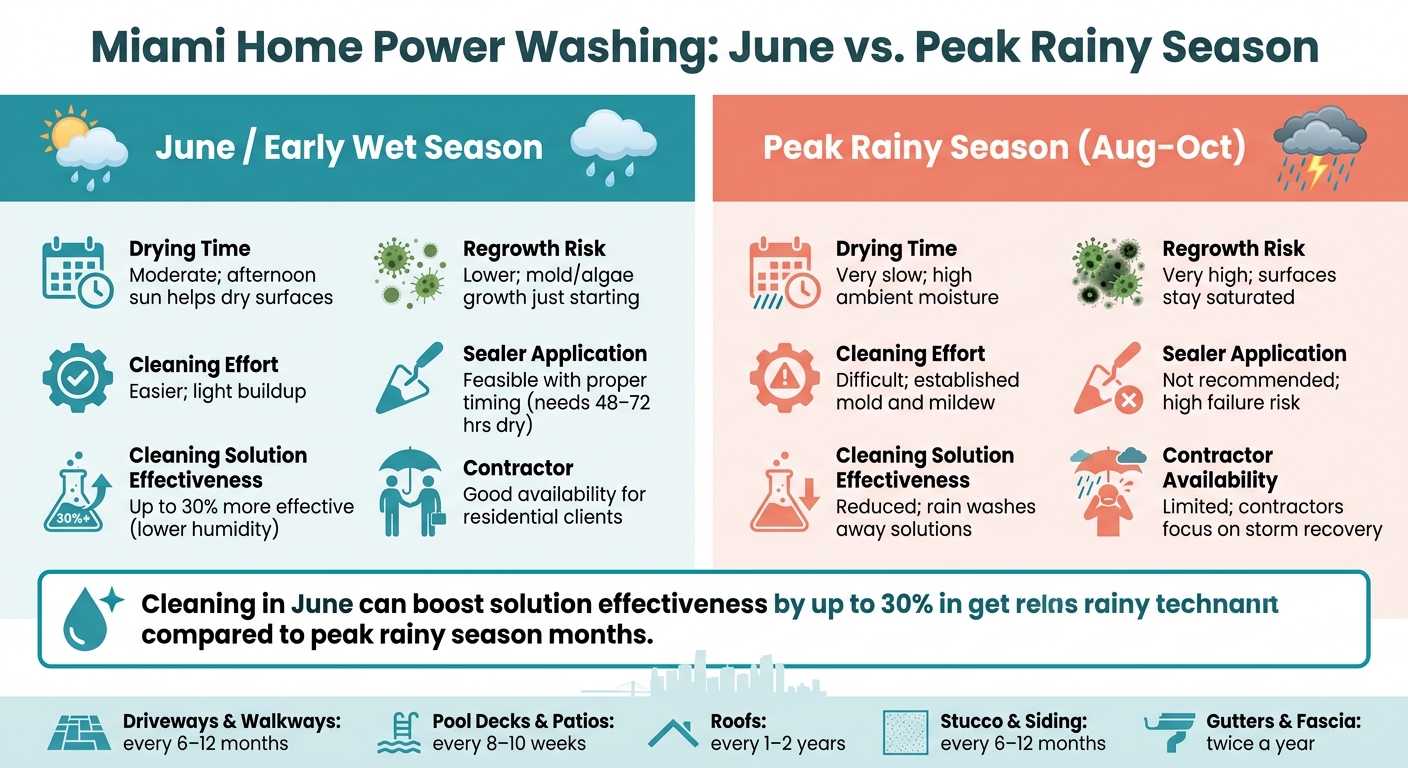
Delaying until the peak rainy season (August through October) makes cleaning much harder. Constant dampness from daily storms allows mold and algae to return almost immediately after washing. According to research from the University of Florida’s IFAS Extension, cleaning during periods of lower humidity - like June - can boost the effectiveness of cleaning solutions by up to 30%.
Here’s a quick comparison of June versus the peak rainy season:
Feature
June / Early Wet Season
Peak Rainy Season (Aug–Oct)
Drying Time
Moderate; afternoon sun helps
Very slow; high ambient moisture
Regrowth Risk
Lower; growth is just starting
Very high; surfaces stay saturated
Cleaning Effort
Easier; light buildup
Difficult; established mold/mildew
Sealer Application
Feasible with proper timing
Not recommended; high failure risk
With better drying conditions and lighter buildup, June is the ideal time to tackle power washing before Miami’s weather makes the job twice as hard.
sbb-itb-20350f7
What Power Washing in June Actually Fixes
By June, homes in Miami start to show the effects of heat, salt air, and humidity. These conditions can lead to surface damage if not addressed. Power washing during this time targets early signs of wear and buildup, helping to maintain your property before the peak of the rainy season.
Roof Mold and Mildew
Those dark streaks on your roof tiles? They’re likely caused by Gloeocapsa magma, a type of algae that thrives in Miami’s moist, warm climate. If left untreated, especially before the rainy season, this algae spreads fast and can weaken roofing materials over time.
"Roof staining in South Florida is rarely one problem. It's usually moisture, biology, debris, and climate all working together." - Paletz Roofing
Soft washing, which uses low pressure (under 500 PSI) combined with specialized cleaning solutions, tackles algae at its roots - killing it at the spore level without harming your roof. Cleaning in June gives the solution time to work effectively and helps delay regrowth during the wetter months.
Algae and Oil on Driveways and Walkways
Concrete and paver surfaces tend to soak up oil from cars and tannins from fallen palm fronds. Add in the extra moisture of the rainy season, and algae growth ramps up, creating slippery and unsafe surfaces.
Power washing at pressures between 2,500–3,500 PSI can remove embedded oil and organic stains from concrete before they become permanent. For paver driveways, June is also a great time to clean, re-sand the joints, and perform paver sealing. Once heavy rains start, sealing and re-sanding become much harder to manage.
Clogged Gutters and Overflow
Spring pollen, palm fronds, and leaf litter can quickly clog gutters, setting the stage for water damage when Miami’s heavy rains arrive. Blocked gutters force water to overflow, running down fascia boards and pooling near your home’s foundation - a recipe for trouble.
Clearing gutters and flushing downspouts in June ensures they’re ready to handle the intense downpours of the rainy season, protecting your home from potential water damage.
Salt and Mildew on Siding and Walls
Even homes that aren’t right on the beach feel the effects of coastal salt air. Salt mist can travel inland, leaving a sticky layer on stucco and painted walls. This residue attracts dirt and speeds up paint oxidation. Shaded walls, especially those facing north or east, also tend to stay damp, encouraging mold and algae growth.
"By the time you see dark streaks or green patches, mold and algae are already spreading. Regular maintenance keeps your home cleaner, longer." - Tru Colors Contracting
Soft washing at pressures between 1,200–1,500 PSI removes salt deposits, dirt, and mildew from walls without causing damage. Tackling these issues in June helps protect your home’s exterior and keeps it looking sharp before the season’s heaviest rains.
Outdoor Living Areas Before Heavy Rain Arrives
Patios, pool decks, and screened enclosures are moisture magnets. By June, these areas often show green moss or mildew, and slick pool decks can become hazardous as storms become more frequent.
Cleaning these outdoor spaces early ensures they dry completely, allowing for sealant application if needed. Materials like travertine and natural stone require dry conditions to cure properly, and once the rainy season sets in, that opportunity disappears quickly.
Why June Fits Miami's Home Maintenance Calendar
Miami Home Power Washing: June vs. Peak Rainy Season
June is a prime time for Miami homeowners to get their properties ready for hurricane season. While the official start of hurricane season is June 1, the first named storm of the year typically doesn’t appear until around June 20, and hurricanes usually hold off until mid-August. This gives homeowners a valuable window to clean, dry, and seal their home’s exterior before the intense rains arrive. Taking these steps in June helps protect both the appearance and structural integrity of your property before the season's storms take hold.
Cleaning Before Storms vs. During Peak Season
Delaying cleaning and sealing until August or September comes with major drawbacks. For starters, sealers need 48 to 72 hours of dry weather to cure properly, which is hard to achieve during the peak rainy season. On top of that, any cleaning done during those months can be undone by just one heavy storm, wasting time and effort.
"Book before hurricane season ramps up so surfaces are clean and easier to rinse after storms." - Big Green Men Landscaping & Artificial Grass Corp
June also offers better flexibility for scheduling. By late summer, contractors often focus on commercial storm recovery, making it tougher for residential clients to secure appointments. Scheduling cleanings in June ensures the work is done effectively and on time, giving your home a head start on weather protection and regular upkeep.
How Often South Florida Homes Need Exterior Cleaning
Miami’s humid, rainy climate demands more frequent exterior maintenance than most places. With nearly 60 inches of rainfall annually and humidity levels consistently above 75%, mold and algae thrive. Below is a breakdown of how often different surfaces typically need cleaning:
Surface
Recommended Frequency
Key Miami Factor
Driveways & Walkways
Every 6–12 months
Algae thrives in humid, shaded areas
Pool Decks & Patios
Every 8–10 weeks
Constant moisture speeds up mold growth
Roofs
Every 1–2 years
Humidity causes black streaks and green patches
Stucco & Siding
Every 6–12 months
Salt air and humidity lead to buildup
Gutters & Fascia
Twice a year (pre/post storm)
Ensures proper drainage for tropical storms
If you missed the ideal April–May cleaning window, June is your last chance to catch up before the wettest months make scheduling and curing conditions unreliable. Regular cleaning not only helps surfaces last longer but also keeps your home looking its best.
Protecting Curb Appeal and Property Value
Cleaning in June isn’t just about storm preparation - it’s also a smart financial move. Professional pressure cleaning can extend the lifespan of exterior surfaces by 5 to 10 years when done annually. Neglected salt deposits, mold, and algae don’t just look bad; they can also weaken materials if left unchecked through months of heavy rain.
"A clean exterior communicates that a home has been well-maintained - something every buyer is looking for. It highlights architectural features, makes colors pop, and allows your property to stand out in a competitive market." - Tropical Pressure Cleaning
In Miami’s competitive real estate market, clean homes often sell 5% to 10% faster than those with visible grime or mold. Removing buildup before it causes permanent damage is far cheaper than repainting or resealing. By tackling maintenance in June, you’re making a direct investment in your home’s long-term value and appeal.
Which Areas of Your Miami Home to Power Wash First
When prepping your Miami home for the rainy season, it’s all about prioritizing the areas that need the most attention. Not every surface requires the same level of care, so focus on cleaning the spots that are most vulnerable to damage before heavy rains and storm winds arrive.
Roof and Soffits
The roof is often the starting point because it’s a hotspot for biological growth. Miami’s humid climate is a breeding ground for organisms like Gloeocapsa magma (those black streaks on shingles) and algae, especially on damp, north-facing slopes. If ignored, these can damage roofing materials and spread to soffits and fascia.
For this, soft washing is the go-to method. It uses low pressure (under 1,000 PSI) combined with a chemical treatment to eliminate growth at its source. Avoid high-pressure washing here - it can strip protective coatings or loosen shingles and tiles.
Driveways and Walkways
Next, shift your focus to driveways and walkways. These horizontal surfaces are magnets for water, oil, and debris, which can quickly lead to slippery black algae in Miami’s heat.
Professional cleaning for a typical two-car concrete driveway ranges from $100–$175, while paver surfaces cost about $130–$220. High-pressure washing (2,500–3,500 PSI) is ideal for these areas, as it effectively lifts stubborn stains like oil and tannins that lower-pressure systems can’t handle.
Patios, Pool Decks, and Screen Enclosures
Outdoor spaces like patios and pool decks are another priority, especially as the rainy season ramps up. These shaded areas often trap moisture, leading to moss and mildew. Cleaning them early ensures they’re safe and ready for use before summer gatherings.
For a medium-sized pool deck (300–600 sq. ft.), professional cleaning typically costs $150–$275. Use low-pressure or soft washing for delicate materials like travertine and natural stone to avoid surface damage.
Exterior Walls and Siding
Your home’s siding faces its own challenges, particularly in Miami’s salt-heavy environment. North-facing stucco walls are especially at risk, as their shaded, damp conditions promote mold growth. For homes near the coast or Biscayne Bay, salt mist can accelerate paint failure and oxidation.
Soft washing at 1,200–1,500 PSI with biodegradable detergent is the safest method for cleaning stucco and painted siding. Avoid high-pressure washing, as it can push water behind stucco joints, worsening moisture issues.
Gutters and Downspouts
Finally, don’t overlook your gutters. With Miami’s annual rainfall nearing 60 inches, clogged gutters during a storm can lead to serious problems, like water overflowing toward your foundation or roof edge. Common culprits include palm fronds, roof sand, and leaves.
While the exterior of gutters can be cleaned with a pressure washer, the interior needs to be cleared manually for proper drainage. This service typically adds $150–$300 to a cleaning package. Tackling this before the first big storm is a smart way to protect your home’s drainage system.
Surface
Recommended Method
June Priority Reason
Roof & Soffits
Soft wash (under 1,000 PSI)
Stops mold spread before peak wet months
Driveways & Walkways
High-pressure (2,500–3,500 PSI)
Removes slip hazards and oil stains
Pool Decks & Patios
Low-pressure / soft wash
Clears moss and mildew before heavy use begins
Stucco & Siding
Soft wash (1,200–1,500 PSI)
Removes salt deposits and prevents paint failure
Gutters & Downspouts
Manual clear + flush
Ensures proper drainage during tropical storms
Power Washing Tips for South Florida Homes
Knowing what to clean is just the beginning. The way you clean matters just as much - especially in Miami, where the wrong technique can cause damage or allow mold and algae to return faster than you'd expect.
Power Washing vs. Soft Washing: Which One Works Best?
Miami's humid weather and frequent rain make mold and algae a constant challenge. Choosing the right cleaning method is essential. Power washing uses high-pressure water (2,500–3,500 PSI) to remove dirt and grime, making it ideal for tough, non-porous surfaces like concrete driveways or sidewalks. On the other hand, soft washing relies on low-pressure water combined with a sodium hypochlorite and surfactant solution to kill mold, algae, and mildew at their roots. This method is better suited for delicate materials like stucco, barrel tiles, asphalt shingles, and painted siding, which can be easily damaged by high pressure.
"Soft washing is a low pressure method that uses cleaning solutions to remove algae and stains safely... It does not just remove the visible stains. It helps kill the algae so it does not return quickly." - Tino, Founder and Owner, Kleanway Cleaning Services
Protecting Surfaces During the Wash
Not all surfaces can handle the same level of pressure. For instance, stucco and painted siding should be cleaned at 1,200–1,500 PSI, while natural stone like travertine needs even less - under 500 PSI - to avoid damage. Concrete driveways, however, can withstand 2,500–3,500 PSI. To prevent streaking, use a wide-angle fan tip and clean vertical surfaces from the bottom up. Afterward, rinse thoroughly to ensure no cleaning solution is left behind, as the intense Florida sun could bake it into the material.
Cleaning Solutions for Mold and Algae in South Florida
When dealing with biological growth, a mix of sodium hypochlorite and surfactant is your best bet. This solution sticks to surfaces long enough to neutralize mold and algae at their source. To protect your landscaping, soak nearby plants and grass with water before applying the cleaning solution, and rinse them afterward to dilute any runoff. Also, keep in mind that Miami-Dade regulations require wash water containing detergents to be diverted to soil or grass rather than storm drains.
These steps not only ensure effective cleaning but also help you decide whether to tackle the job yourself or hire a professional.
DIY vs. Hiring a Professional: Weighing Your Options
Choosing between doing it yourself or hiring a professional often comes down to equipment, safety, and results. Consumer-grade power washers typically max out at 1,500–2,000 PSI, while professionals use systems exceeding 3,000 PSI, which deliver better results on tough stains. Safety is another major factor - roof cleaning, for example, carries significant risks. In 2021, the roofing sector reported 59 deaths per 100,000 full-time workers, with falls and electrocutions being common hazards.
For a single-story home in Miami, professional exterior cleaning costs range from $200–$400, while a two-story home typically costs $300–$600.
Factor
Professional Service
DIY Approach
Equipment
Commercial-grade (3,000+ PSI)
Consumer units (1,500–2,000 PSI)
Chemicals
Professional-grade, eco-friendly
Limited retail products
Safety
Insured, trained technicians
High risk of personal injury or damage
Time
2–4 hours
Full weekend project
Results
Guaranteed, longer-lasting
Variable; may leave streaks or regrowth
While DIY might save you some money upfront, professional services offer better equipment, safer processes, and more reliable results - especially for roofs, stucco, and areas prone to salt and algae buildup.
Conclusion: Get Your Miami Home Ready Before the Storms Arrive
June offers a brief but critical opportunity to prepare. While hurricane season officially kicks off on June 1, the most intense storms usually occur between mid-August and mid-October. This early window is the perfect time to tackle essential tasks like cleaning surfaces, clearing drainage systems, and documenting your home's condition before severe weather strikes.
Mold can start forming in just 24–48 hours, and with Miami’s monthly rainfall averaging 6–8 inches, clogged gutters can lead to serious foundation issues. Scheduling a professional cleaning in June can address these risks before they turn into costly problems.
After cleaning, take time-stamped photos of your home to document its pre-storm condition. These can be invaluable for insurance claims if damage occurs later.
This kind of preparation not only helps prevent damage but also highlights the value of acting early.
"By investing in timely pressure washing, you stop damage before it starts and preserve both safety and curb appeal." - Tino, Founder, Kleanway Cleaning Services
Palm Shine Pros offers a full range of pre-season cleaning services, including soft washing for roofs and stucco walls, as well as gutter clearing. Their comprehensive packages ensure your home is both protected and properly documented before hurricane season intensifies. For an average Miami home, a full exterior cleaning package typically costs between $350 and $700 - a smart investment compared to the steep price of neglected maintenance.
FAQs
How do I pick a dry-enough day in June to power wash in Miami?
Finding a dry day in June can be tricky in South Florida, but it’s not impossible. Aim for a 24- to 48-hour rain-free window, as the weather here can shift rapidly. Keep an eye on local forecasts, and steer clear of days with storm or high-wind warnings. If you’re planning to hire professionals, it’s a smart move to book them early in the month when conditions might be a bit more predictable.
One thing to keep in mind: surface sealing might not be the best idea during June. It requires 48 to 72 hours of completely dry weather to cure properly, which can be hard to come by this time of year.
Is soft washing safer than pressure washing for roofs and stucco?
Soft washing is a safer and more efficient method for cleaning roofs and stucco. Unlike pressure washing, which can cause issues like cracked stucco, stripped paint, or even dislodged roof tiles, soft washing relies on biodegradable cleaning solutions paired with low-pressure water. This approach not only removes mold, algae, and mildew at their source but also protects fragile surfaces from damage and helps preserve manufacturer warranties.
Should I seal my driveway or pavers right after washing in June?
Sealing driveways or pavers is best done after the rainy season. Sealants require 48–72 hours of dry weather to cure properly, and Miami’s rainy June makes this difficult to achieve. Rain can either stop the sealant from setting or wash it away completely. To ensure durable results, plan sealing projects during the drier months when the weather is more reliably dry.
.avif)

.avif)