Lorem ipsum dolor sit amet, consectetur adipiscing elit. Suspendisse varius enim in eros elementum tristique. Duis cursus, mi quis viverra ornare, eros dolor interdum nulla, ut commodo diam libero vitae erat. Aenean faucibus nibh et justo cursus id rutrum lorem imperdiet. Nunc ut sem vitae risus tristique posuere.
Not every surface around a Miami home should be hit with high pressure. Concrete, brick, and some pavers usually can. Roofs, stucco, painted surfaces, travertine, and many wood surfaces usually need soft washing or very low pressure instead.
Miami’s mix of humidity, rain, and salt air speeds up algae, mold, and grime buildup. That means the right cleaning method matters just as much as the cleaning itself. Use too much force, and you can crack tile, strip paint, wash out paver sand, or push water behind walls and trim.
Here’s the short answer:
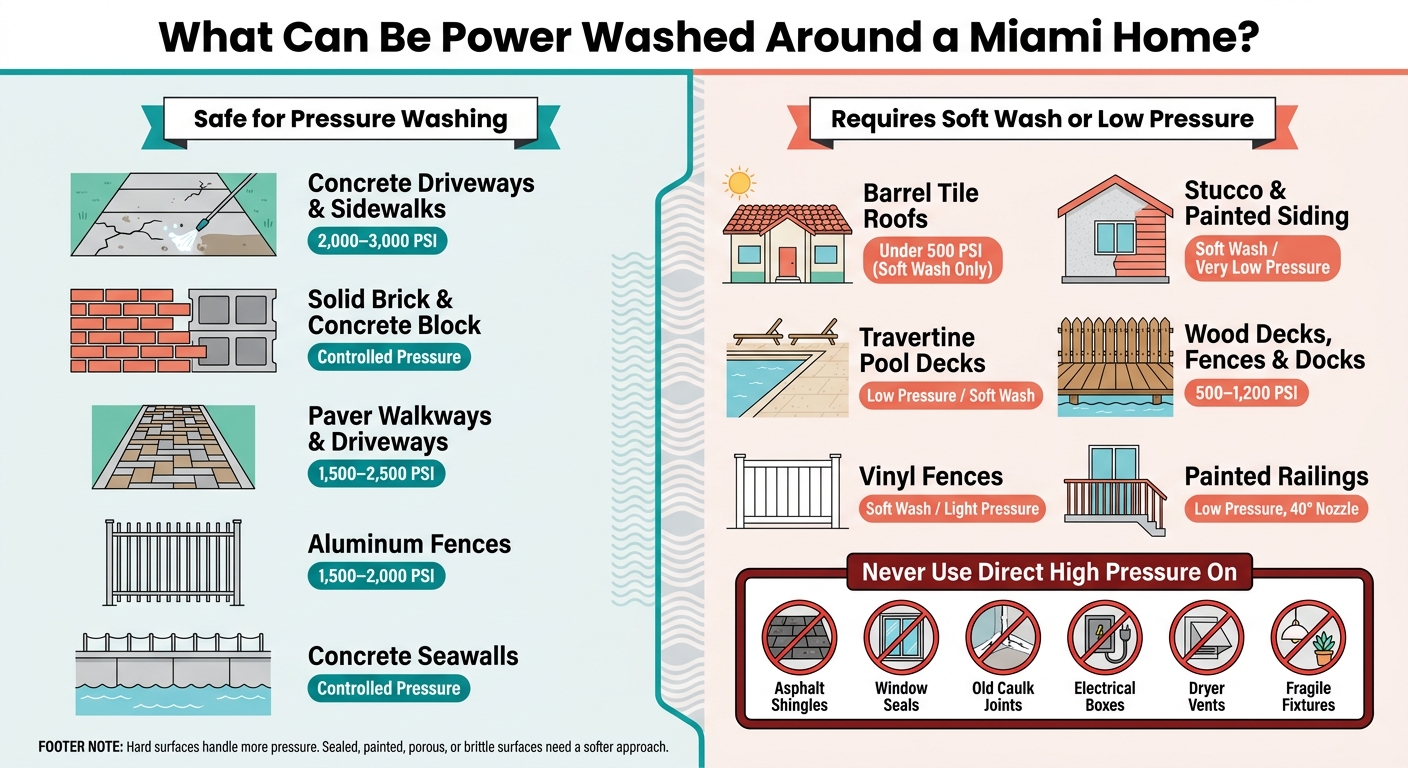
Safe for pressure washing: concrete driveways, sidewalks, solid brick, concrete block, some seawalls, and aluminum fences with controlled PSI
Better with soft washing or low pressure: barrel tile roofs, stucco, painted siding, travertine, vinyl fences, wood decks, wood fences, docks, and painted railings
Do not use direct high pressure on: asphalt shingles, window seals, old caulk, electrical boxes, dryer vents, and fragile fixtures
A few numbers help:
Concrete often handles 2,000–3,000 PSI
Pavers often fall around 1,500–2,500 PSI
Wood surfaces often stay around 500–1,200 PSI
Roof soft washing is usually under 500 PSI
The main rule is simple: hard surfaces usually take more pressure, while sealed, painted, porous, or brittle surfaces need a softer approach. The guide below breaks down each part of the home so you can match the method to the surface before any cleaning starts.
Miami Home Surfaces: Pressure Wash vs. Soft Wash Guide
Roofs and Exterior Walls: Soft Washing vs. Controlled Pressure
Roofs, walls, and trim are the riskiest surfaces on a Miami home to clean. They’re porous, layered, and often sealed. Hit them with too much pressure, and you can crack the surface, break the seal, and drive water where it should never go. That’s why it makes sense to start here: these are the surfaces most likely to get damaged fast.
Barrel Tile Roofs, Gutters, and Fascia
Barrel tile roofs made of clay or concrete should be soft washed only. In plain English, that means low pressure - usually under 500 PSI - plus a cleaning solution. High pressure can crack tiles, shift overlaps, and force water under the roofing material and into attic vents.
Those black streaks you see on many Miami roofs are usually caused by Gloeocapsa magma, an algae that feeds on the limestone filler in tiles and shingles. Soft washing doesn’t just rinse the stain off the surface. It kills the algae at the root. The Asphalt Roofing Manufacturers Association (ARMA) also says soft washing is the right method for roof cleaning if you want to avoid voiding warranties.
Gutter exteriors and fascia can take a controlled low-pressure rinse to clear away algae streaks and runoff marks. But there’s a catch: never spray upward or directly behind the trim. That can push moisture into the soffits. Pressure here should stay lower than what you’d use on the roof.
Stucco, Block, Brick, and Painted Siding
Stucco needs a light touch. Even tiny cracks can let high-pressure water into the wall cavity, and Miami’s humidity can trap that moisture long enough for mold to grow from the inside out. For that reason, stucco should be cleaned with soft washing or very controlled low pressure. Use a wide-angle fan tip, not a zero-degree nozzle. If you want the full picture, the stucco safety guide goes deeper into Miami-specific risks.
Concrete block and solid brick are tougher. They can handle controlled pressure washing, which helps remove salt deposits and deep-set grime. Painted wood siding, though, is a different story. Like any painted exterior surface, it should be soft washed. High pressure can strip paint unevenly and damage the material underneath.
Surface
Recommended Method
Barrel Tile Roof
Soft Wash Only
Stucco
Soft Wash / Low Pressure
Painted Siding
Soft Wash
Concrete Block
Controlled Pressure
Brick (Solid)
Controlled Pressure
Surfaces on This Part of the Home That Should Not Be Power Washed
Some areas on roofs and exterior walls should never get direct high pressure, no matter how dirty they look. Asphalt shingle roofs are at the top of that list. High pressure knocks off granules, shortens the roof’s life, and voids most warranties.
You should also avoid direct pressure on:
Window seals
Older caulk joints
Exposed electrical boxes
Dryer vents
Fragile decorative fixtures
Next are the harder surfaces that can take more pressure, though a few material limits still matter.
Driveways, Walkways, Patios, and Pool Decks
These hardscapes don't all take the same PSI. Set the pressure too high, and you can scar the surface or loosen material that should stay put. Pressure washing often works well here, but the setting needs to match the surface.
Concrete Driveways and Sidewalks
Concrete is one of the tougher hardscape surfaces around a Miami home. It can usually handle 2,000–3,000 PSI to clean off oil stains, tire marks, and heavy algae buildup. Regular cleaning can also cut down on slip risk.
On large flat sections, use a surface cleaner to spread pressure more evenly and help prevent streaks. Oil and rust stains should be pre-treated before washing.
Paver Walkways, Paver Driveways, and Travertine Pool Decks
Pavers can be pressure washed, but control matters. Too much pressure can blow out joint sand and make the surface less stable. Staying in the 1,500–2,500 PSI range, while keeping a steady distance from the surface, helps protect the joints and still remove grime and organic growth.
Travertine pool decks need a lighter touch. Travertine can etch or crack under high pressure. Use low pressure, a wider spray pattern, and pH-neutral products. Acidic cleaners are off the table because they can wear down the stone. If you're planning to seal after washing, the paver sealing and power washing scheduling guide lays out how to time both services.
Wood and Composite Decking
Wood and composite decking both need low pressure. This is one of those spots where more force does not mean a better clean.
Wood decking should be washed at 500–1,200 PSI, with the wand moving with the grain, never across it. Composite decking should be cleaned within the manufacturer's PSI limits. The goal is controlled cleaning, not aggressive stripping. Keep the wand moving and use only as much pressure as the material allows.
Surface
Safe PSI Range
Key Watch-Out
Concrete Driveway/Sidewalk
2,000 – 3,000 PSI
Keep wand moving; use a surface cleaner
Paver Walkway/Driveway
1,500 – 2,500 PSI
Protect joint sand between units
Travertine Pool Deck
Low pressure / soft wash
Avoid acidic products; use a wide spray pattern
Wood Decking
500 – 1,200 PSI
Wash with the grain, not across it
Composite Decking
Manufacturer-specified
Check manufacturer PSI limits
Next come fences, docks, and other mixed-material features, where coatings and hardware matter as much as the base surface.
Fences, Docks, Seawalls, and Outdoor Extras
Miami’s salt air and high year-round humidity can make fences, docks, and seawalls get dirty fast. But here’s the catch: each surface needs its own cleaning method.
Aluminum, Vinyl, and Wood Fences
These surfaces may sit side by side, but they shouldn’t all be cleaned the same way. Salt and moisture tend to build up in corners, joints, and lower sections, so the right pressure matters.
Aluminum fences usually do well with controlled pressure washing. Near the coast, they often pick up salt deposits and oxidation. A setting around 1,500–2,000 PSI is usually enough to clear that buildup without harming the finish.
Vinyl fences tend to clean best with soft washing or very light pressure. That’s often enough to remove algae without scuffing the surface.
Wood fences need a gentler hand. Use very low pressure, around 500–1,200 PSI, and keep the wand at a shallow angle so you don’t gouge the fibers. Too much pressure can splinter the wood or push water into the grain, which may lead to rot. If the boards already look gray or splintered, dial the pressure down even more and think about a post-cleaning treatment.
Boat Docks and Seawalls
Waterfront surfaces deal with constant salt exposure, so pressure alone isn’t the whole story. The material matters just as much.
Concrete or masonry seawalls can usually handle controlled pressure washing. Cleaning helps remove marine growth and salt buildup that collect over time. Wood or composite docks need the same low-pressure care used for wood fences.
A few safety points matter here:
Keep the wand away from electrical parts and light fixtures.
If you use cleaning products, go with biodegradable options to help protect nearby landscaping and the marine environment.
Outdoor Furniture, Grills, Railings, and Balcony Edges
Hard plastic and metal patio furniture can usually be cleaned with low pressure. A 40° (white) nozzle held about 12 inches from the surface is a safe place to start. Keep cushions and umbrella fabric out of the spray path.
Painted railings and balcony edges need extra care. High pressure can strip paint fast. If a test spray causes chipping or chalking, stop right away and lower the pressure. And one thing you never want to spray directly: exterior electrical outlets and gas connections on grills.
Here’s the quick breakdown by surface.
Surface
Recommended Method
Key Watch-Out
Aluminum Fences
Controlled pressure (1,500–2,000 PSI)
Salt residue and oxidation buildup
Vinyl Fences
Soft wash / light pressure
Preserve finish
Wood Fences/Docks
Very low pressure (500–1,200 PSI)
Splintering and rot from water intrusion
Concrete Seawalls
Controlled pressure wash
Marine growth and salt buildup
Painted Railings
Low pressure, 40° nozzle
Paint stripping and chipping
Outdoor Furniture
Low pressure, 40° nozzle
Avoid cushions and electrical components
Next: a quick at-a-glance checklist for which surfaces are safest to wash, soft wash, or avoid.
Checklist Summary and Next Step
Here’s the quick recap: hard surfaces can usually handle pressure washing, while roofs, stucco, and painted finishes need soft washing or very low pressure.
Surface Safety List at a Glance
Use this quick reference to pair each surface with the safest cleaning method before you schedule service.
Surface
Recommended Method
Main Risk
Concrete driveways & sidewalks
Pressure washing (2,000–3,000 PSI)
Minimal - very durable
Solid brick surfaces
Pressure washing
Low with proper technique
Paver walkways & driveways
Controlled pressure washing
Joint sand displacement
Travertine pool decks
Low pressure / soft wash
Etching and surface erosion
Barrel tile roofs
Soft washing only
Cracked tiles, voided warranty
Stucco & painted siding
Soft washing / very low pressure
Water forced into wall cavities
Wood decks & fences
Very low pressure
Splintering, gouging, wood fiber damage
Aluminum fences
Controlled pressure washing
Salt residue and oxidation buildup
Vinyl fences
Soft wash / light pressure
Stripped finish
Roof shingles
Soft washing only; no direct high pressure
Stripped granules, leaks
Before you book service, one point matters most:
Soft-wash surfaces - roofs, stucco, and painted finishes - need a cleaning solution and low pressure, not just more water force.
Homes with a mix of roof, stucco, pavers, and fencing need surface-specific treatment — not a single method applied across the board. Palm Shine Pros handles power and soft washing across material types, adjusting pressure and chemistry to match each surface. If your property has multiple surface types, request a full-property assessment before any work starts.
FAQs
How do I know if my home needs soft washing instead of power washing?
Choose soft washing when high-pressure water might strip, crack, or wear down delicate materials. It uses low pressure - usually under 500 PSI - along with eco-friendly cleaning solutions to remove mold, algae, and mildew without putting the surface at risk.
Soft washing is the better fit for roofs, stucco, painted wood, vinyl siding, screened enclosures, and pool deck coatings like Cool Deck. It also makes more sense for surfaces that are more likely to let water seep in.
Will power washing damage pavers or remove joint sand?
It can if the pressure or technique is off. Too much pressure, or the wrong spray angle, can etch the surface or wash out the joint sand that helps keep pavers in place.
That’s where pros make a big difference. They check the surface first, dial in the pressure, and switch to soft washing when needed so the pavers get a safe, thorough clean.
How often should Miami homeowners wash exterior surfaces?
In Miami, most homeowners should wash exterior surfaces at least once a year. But for many homes, every six months is a better rhythm.
Why? Miami’s mix of salt air, heavy moisture, and thick summer rain can make mold, mildew, and algae show up fast. Homes near the coast, places with lots of tree cover, and shaded areas usually need more frequent cleaning.
A common schedule looks like this:
One main wash in April
One maintenance wash after the peak rainy months
If you spot dark streaks or green buildup, don’t wait for the calendar. That’s usually a sign it’s time to clean sooner.
.avif)

.avif)