Power Washing vs. Soft Washing: Which One Do You Need?
Lorem ipsum dolor sit amet, consectetur adipiscing elit. Suspendisse varius enim in eros elementum tristique. Duis cursus, mi quis viverra ornare, eros dolor interdum nulla, ut commodo diam libero vitae erat. Aenean faucibus nibh et justo cursus id rutrum lorem imperdiet. Nunc ut sem vitae risus tristique posuere.
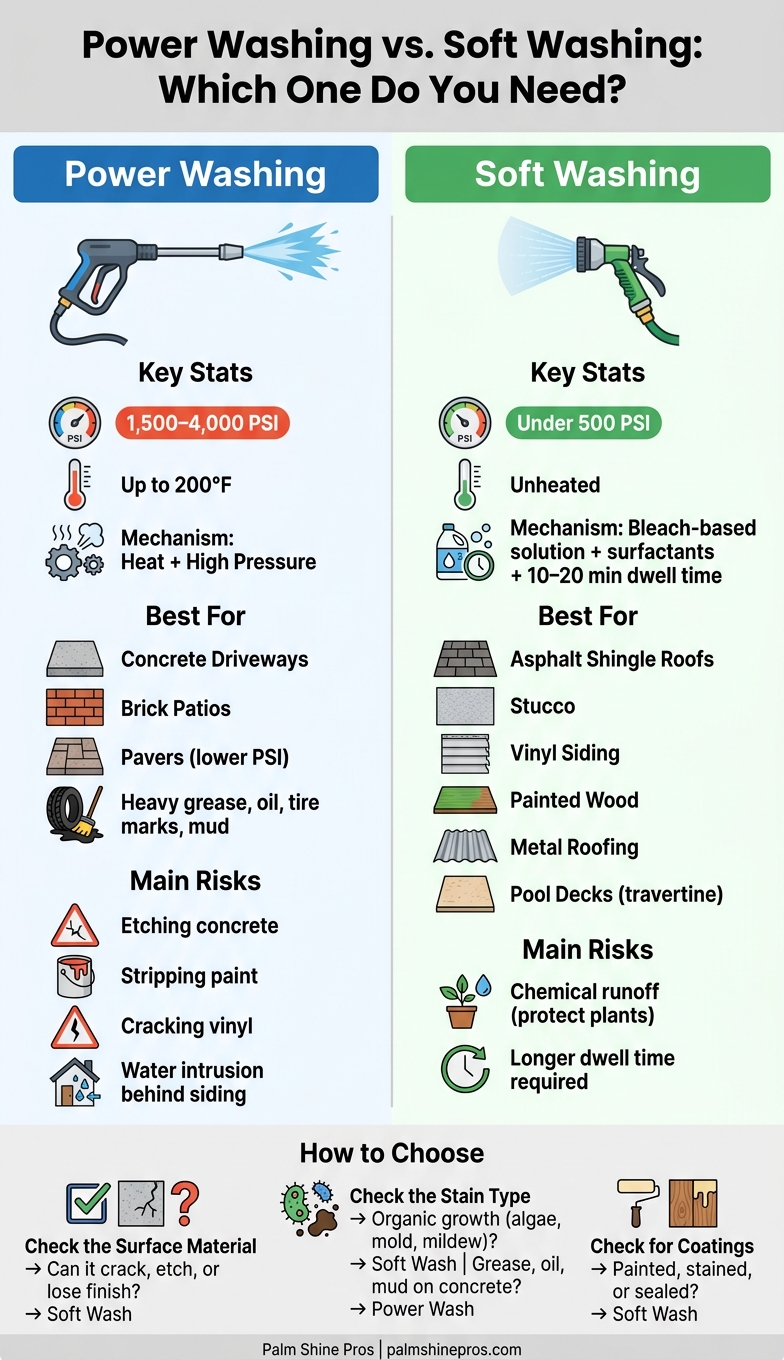
Use soft washing for roofs, stucco, painted surfaces, wood, and vinyl. Use power washing for concrete and other hard ground surfaces.
If your surface has algae, mold, mildew, or lichen, soft washing is usually the right pick because it treats the growth instead of just knocking off the stain. If your surface is bare concrete with oil, tire marks, mud, or heavy grime, power washing is often the better fit because it uses hot water and high pressure.
Here’s the short answer:
Soft washing: under 500 PSI, low pressure, cleaning solution, best for surfaces that can crack, chip, strip, or take in water
Power washing: about 1,500 to 4,000 PSI, often up to 200°F, best for dense, hard surfaces with stuck-on buildup
Roofs: soft wash
Driveways: power wash
Pavers: lower-pressure power wash, with care around joint sand
Pool decks: depends on the material; travertine usually needs a softer approach
Wrong pressure can turn a cleaning job into a repair bill. High pressure can strip shingle granules, pit stucco, crack vinyl, and push water behind siding. That’s why the right question is not just what looks dirty? It’s also what can your surface handle?
Power Washing vs. Soft Washing: Which Method Does Your Surface Need?
Soft Washing Vs Pressure Washing
sbb-itb-20350f7
Quick Comparison
Method
Best For
Pressure
Main Job
Main Risk
Power Washing
Concrete driveways, some patios, some pavers
1,500–4,000 PSI
Blasts off grease, grime, mud, and surface buildup
Etching, paint removal, cracked surfaces, water intrusion
Soft Washing
Roofs, stucco, siding, painted wood, vinyl
Under 500 PSI
Kills algae, mold, mildew, and lichen at the source
Plant damage if runoff is not controlled
This guide gives you a simple way to match the cleaning method to your roof, driveway, pavers, pool deck, stucco, or siding.
How Power Washing and Soft Washing Work
The difference comes down to pressure and cleaning chemistry.
Power washing relies on heated, high-pressure water to blast away dirt and grime. Soft washing takes a different path: it uses a cleaning solution and low pressure, about as strong as a garden hose.
Power washing runs at 1,500 to 4,000 PSI and can heat water to 200°F. That mix helps cut through grease, oil, and heavy grime on hard surfaces. Soft washing stays under 500 PSI and uses a bleach-based solution with surfactants to kill algae, mold, mildew, and lichen at the root.
That gap matters. The same force that cleans up concrete can also damage shingles, stucco, or vinyl. So the main question isn’t just what’s dirty? It’s also what can the surface handle?
Equipment, Pressure, and Safety Differences
The safety tradeoff is pretty simple: high pressure cleans fast, but it can also wreck surfaces that aren’t dense and hard.
Used the wrong way, power washing can etch concrete, strip paint, crack vinyl panels, and push water behind siding into wall cavities. Once water gets trapped there, rot or mold can follow. Soft washing avoids that kind of surface damage, but the chemical side needs care too. Nearby plants and landscaping have to be protected from runoff.
Method
Pressure Range
Water Temperature
Cleaning Mechanism
Common Use Cases
Main Risks
Power Washing
1,500–4,000 PSI
Hot (up to 200°F)
Heat + pressure
Grease, oil, gum, heavy grime
Warping, paint stripping, surface etching
Soft Washing
Under 500 PSI
Unheated
Cleaning solution + dwell time
Roofs, stucco, vinyl siding, painted wood
Chemical runoff if plants aren't pre-rinsed
Professional soft wash rigs usually use either a 12V pump system or a downstream chemical injector. That setup applies solution through a wide-aperture soap nozzle at low pressure. The solution then needs about 10 to 20 minutes of dwell time on the surface so it can fully neutralize organic growth before rinsing.
So yes, soft washing takes longer. But it goes after the growth causing the stain instead of just blasting off the top layer. That’s why the right method depends on the surface.
Next, match each method to roofs, driveways, pavers, pool decks, stucco, and siding.
Which Method to Use for Each Surface Type
Pick the method based on the surface itself, not just how dirty it looks.
Roofs: Shingles, Tile, Metal, and Flat Roof Systems
Roofs almost always need soft washing, not power washing. That’s the safer call for most roof materials because high pressure can strip shingles, crack tile, and damage metal or membrane systems.
Pressure washing a roof can damage shingles, tile, metal coatings, and membrane systems.
Helps protect delicate membranes from puncture or lifting
Hardscape surfaces can take more force, but the material and the joints still decide how much pressure is safe.
Ground Surfaces: Driveways, Pavers, Patios, and Pool Decks
Some ground surfaces can handle power washing. Others need lower pressure so you don’t damage joints, finishes, or coatings.
Concrete driveways are a good fit for power washing. When you’re dealing with oil stains, tire marks, and deep grime, plain chemicals usually aren’t enough on their own. You often need mechanical force to break that mess loose. A surface cleaner attachment works better than a wand here because it helps avoid uneven striping from hitting one spot harder than another.
With pavers, the main issue usually isn’t the paver itself. It’s the joint sand. Too much pressure can blow that sand out, which can make the surface less stable and leave you needing paver sealing and re-sanding after the job.
Pool decks are a mixed case. Coated concrete can often take pressure, but travertine and stamped concrete are much more delicate. In those cases, low-pressure soft washing is the safer move. Runoff matters too, especially around pools, because you don’t want cleaning residue throwing off pool chemistry.
Surface
Material Type
Common Problems
Preferred Method
Precautions
Driveway
Concrete
Tire marks, oil stains, deep grime
Power Wash
Use a surface cleaner for even results
Pavers
Brick or Concrete
Weeds in joints, moss, algae
Power Wash (Lower PSI)
Avoid blowing out joint sand; re-sand if needed
Patio
Stone or Concrete
Food spills, mildew, dirt
Power Wash
Check for loose mortar or fragile stone types
Pool Deck
Coated Concrete or Travertine
Body oils, algae, salt buildup
Low-Pressure Soft Wash
Protect pool chemistry from runoff; travertine is sensitive
Walls and siding call for the opposite approach. Lower pressure helps protect coatings, seams, and the material underneath.
Walls and Siding: Stucco, Painted Masonry, Wood, and Vinyl
For stucco and painted masonry, soft washing removes algae and mold at the source without pitting or gouging the finish. For stucco-specific risks, see the stucco safety guide for Miami homes.
Wood and vinyl siding follow the same rule. High pressure can raise the wood grain, crack vinyl panels at the seams, and strip paint off in sheets. What starts as a simple wash can turn into an expensive repair fast.
"High pressure on vinyl siding can crack the panels at their seams, force water behind the siding into the substrate, and tear caulking." - Sonlight Window Cleaning
Surface
Power-Washing Risk
Soft-Washing Benefit
Recommended Approach
Stucco
Pitting, gouging, water intrusion
Kills algae at the root without surface erosion
Soft Wash
Painted Block
Paint stripping and moisture absorption
Preserves coating integrity and color
Soft Wash
Wood Siding
Raised grain, splintering, paint peeling
Gently lifts mold without scarring wood
Soft Wash
Vinyl Siding
Cracking panels, water behind siding
Prevents panel lifting and internal mold
Soft Wash
Next, use these surface rules to decide when to request soft washing or power washing.
How to Choose the Right Service
Use these three checks when the surface type is clear but the stain or coating isn't.
When to Request Soft Washing vs. Power Washing
Start with the material. Then look at the stain. Then check for coatings.
If a surface can crack, etch, or lose its finish, go with soft washing. If it's bare concrete or dense stone, power washing usually makes more sense.
Organic growth like algae, mold, mildew, and lichen should be soft washed. The cleaning solution kills it at the root, while pressure alone often removes only what you can see.
Mud or clay on concrete is a better fit for power washing. Grease or oil is different. In that case, you need hot water power washing because cold water often spreads grease instead of breaking it down.
Painted, stained, or sealed surfaces should be soft washed. High pressure can strip the finish, and that's a headache no one wants.
Some surfaces sit in the gray area. Aged travertine and weathered wood are good examples. Those need an on-site inspection. If the surface still seems borderline after that, use the gentlest method and inspect it on site before going further.
Conclusion: Match the Cleaning Method to the Surface
After looking at each surface, the rule is simple: match the method to the material.
Use the wrong approach, and the damage can get expensive fast. Too much pressure can harm roofing, stucco, siding, and protective coatings. Soft washing kills growth at the source and helps surfaces stay clean longer.
Palm Shine Pros Services at a Glance
Use this quick guide to pair the right cleaning method with the job.
If you’re still not sure, check the service page to find the best fit for your surface. Palm Shine Pros can help you choose the right method for the job.
FAQs
How do I know if my surface is too delicate for power washing?
Ask whether the surface is hard and dense enough to handle high-pressure force without cracking, etching, delaminating, or eroding.
As a general rule, painted, coated, porous, or softer surfaces should not be power washed. If you’re not sure, soft washing is the safer option and can help avoid damage like stripped paint or water intrusion.
Can soft washing remove stains that keep coming back?
Yes - soft washing works very well on recurring stains, especially the kind caused by organic growth like algae, mold, mildew, and lichen.
Here’s the big difference: pressure washing can remove what you see on the surface, but it may leave the root system behind. That means the staining often comes back before long.
Soft washing takes a different approach. It uses specialized cleaning solutions to kill the growth at the cellular level. As a result, regrowth is slowed down, and the results tend to last longer.
What should I ask before booking a washing service?
Ask how they choose between power washing and soft washing for each part of your property. A good contractor should pair the method with the surface.
For example:
Soft washing works best for roofs, siding, and stucco
Power washing makes more sense for concrete driveways
It’s also smart to ask how they protect your landscaping from chemical runoff. And make sure they’re licensed and insured.
Using the right method can help you avoid damage, water intrusion, stripped finishes, and even voided roofing warranties.
.avif)


.avif)