Should You Pressure Wash Before Painting a South Florida Home
Lorem ipsum dolor sit amet, consectetur adipiscing elit. Suspendisse varius enim in eros elementum tristique. Duis cursus, mi quis viverra ornare, eros dolor interdum nulla, ut commodo diam libero vitae erat. Aenean faucibus nibh et justo cursus id rutrum lorem imperdiet. Nunc ut sem vitae risus tristique posuere.
Yes - your South Florida home should be cleaned before exterior paint goes on, but high pressure is not right for every surface.
If your home has salt film, mildew, algae, dirt, or chalky old paint, painting over it can lead to peeling, weak adhesion, bubbling, and shorter paint life. In many cases, soft washing under 500 PSI is the safer choice for stucco, vinyl, wood trim, andEIFS, while 2,000 to 4,000 PSI fits hard surfaces like unpainted concrete, brick, and stone.
Before painting, you should focus on four things:
Clean off buildup like salt, mold, algae, and chalky residue
Match the wash method to the surface
Avoid forcing water behind siding or into cracks
Wait long enough for the surface to dry - often 24 to 72+ hours in South Florida humidity
Paint sticks best to a surface that is clean, dry, and sound. That is why the main job is not just washing - it is using the right wash method, then giving the surface enough time to dry before primer and paint.
Should you pressure wash house before painting? | Hyde Tools
sbb-itb-20350f7
Why South Florida Homes Require Extra Prep Before Painting
Painting in South Florida isn't just about color. Prep has to deal with salt film, humidity, UV wear, and active organic growth all at once. That’s why cleaning isn’t optional before painting.
How Salt Air, Humidity, and UV Exposure Damage Paint Prep
South Florida weather is rough on exterior surfaces. Salt film settles on siding, stucco, and trim, and that layer can keep primer from bonding the way it should. Humidity makes things worse by slowing dry time and trapping moisture under new coatings, which can lead to bubbling, peeling, and patchy coverage.
UV exposure adds another problem. It breaks down paint binders and leaves behind a chalky residue that gets in the way of adhesion. It can also fade colors up to 50% faster than in cooler climates. Put all that together, and surface type matters just as much as surface condition.
How Mildew, Algae, Dirt, and Chalky Paint Reduce Adhesion
Shaded walls, thick landscaping, and South Florida’s warm, damp air make it easy for mildew and algae to spread. Black algae like Gloeocapsa magma feeds on limestone-based surfaces. If it isn’t killed at the root before painting, it can shorten the life of the surface itself.
Dirt, mildew, algae, and chalky oxidation all create the same basic problem: new paint may stick to the residue instead of the wall. And that’s a bad bargain. Untreated mildew and algae can cut a paint job’s effective lifespan by up to 3 years.
There’s an easy field check here. Rub your hand across the old paint. If a chalky powder comes off on your hand, the surface needs cleaning before any primer goes on. Once you know what’s sitting on the surface, you can make the right call on the cleaning method.
When Pressure Washing Is the Right Choice Before Painting
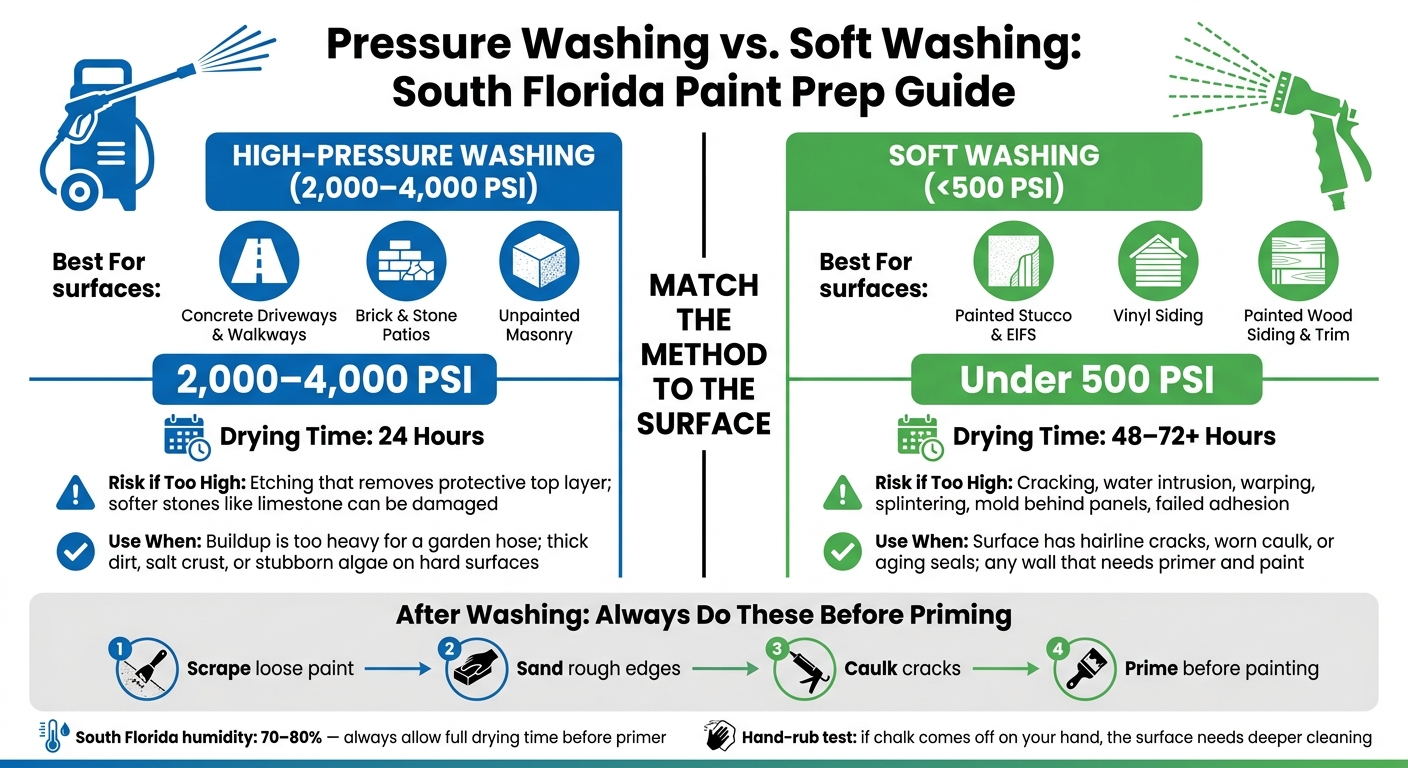
Pressure Washing vs. Soft Washing Before Painting: Surface Guide for South Florida Homes
Once you spot heavy salt, algae, or chalking, the next move is simple: pick a wash method that fits the surface. When that kind of buildup is stuck on, pressure washing makes sense on hard surfaces where the grime is bonded in place.
Surfaces That Handle Pressure Washing Well Before Painting
Unpainted concrete, brick, stone, and masonry hold up best under high pressure. This approach works when buildup is too heavy for a garden hose or a soft wash to remove, like thick dirt, salt crust, or stubborn algae.
Professional equipment can deliver 2,000 to 4,000 PSI for hard surfaces such as unpainted concrete and masonry.
Safe Pressure Levels, Spray Angles, and Damage Risks
Even tough surfaces have limits. Too much pressure, or a nozzle held too close, can etch the surface. On siding and trim, it can also push water behind the wall. Once you go above 1,500 PSI, vinyl and wood can get damaged fast.
Painted stucco and painted wood trim need even more care. In those cases, stay under 500 PSI and use a wide 40-degree fan tip. High pressure near seams, seals, or thresholds can force water behind the wall and lead to mold.
For paint prep, the main thing is matching pressure to the strength of the material:
Surface Type
Pressure Level
Risk if Too High
Concrete Driveways / Walkways
2,000–4,000 PSI
Etching that removes the protective top layer
Brick & Stone Patios
2,000–4,000 PSI
Etching on softer stones like limestone
Painted Stucco
Under 500 PSI
Cracking, water intrusion, coating damage
Vinyl Siding
Under 500 PSI
Water forced behind panels; mold growth
Painted Wood / Trim
Under 500 PSI
Splintering, grain raising, failed adhesion
High pressure is for hard surfaces, not walls that still need primer and paint. If the surface can’t take that kind of force, switch to a softer wash.
When Soft Washing or Low-Pressure Cleaning Works Better
After hard surfaces, the next step is figuring out which exterior areas need a gentler wash before painting. In most cases, walls, trim, and siding do. Soft washing is the safer option for most exterior surfaces.
Surfaces That Need Gentle Cleaning Before Painting
Painted stucco with hairline cracks is one of the easiest surfaces to damage. Vinyl siding, painted wood trim, EIFS, and delicate masonry also need care. Too much pressure can crack them, warp them, or push moisture where it shouldn’t go.
Older homes come with another problem. Worn caulk and aging seals can give way under pressure, which lets water slip into the wall cavity.
How Soft Washing Removes Mildew, Algae, and Salt Safely
Soft washing uses low pressure plus a cleaning solution, usually under 500 PSI - about what you’d get from a standard garden hose. After applying the solution, let it sit for 5 to 10 minutes before rinsing. That dwell time helps break down Gloeocapsa magma, salt film, mildew, and algae, all of which can get in the way of primer adhesion.
The aim is simple: leave the surface clean and ready for primer.
For small areas, hand-scrub first, then rinse gently before priming.
Pressure Washing vs. Soft Washing for Paint Prep: A Side-by-Side Look
Use pressure washing on hard surfaces only. Use soft washing on anything that might crack, warp, or hold water.
Surface Type
Contamination Type
Recommended Method
Typical Risk Level
Best Use in South Florida
Stucco / EIFS
Mildew, Salt Film, Algae
Soft Wash (<500 PSI)
Medium
Cleans without forcing water into hairline cracks
Vinyl Siding
Algae, Oxidation, Mold
Soft Wash
High (if using pressure)
Helps prevent water intrusion behind panels
Wood Siding / Trim
Mold, Dirt, Old Paint
Soft Wash
High (if using pressure)
Avoids splintering and grain-raising before priming
Once you’ve picked the right wash method, the surface still needs enough drying time before primer.
Cleaning Steps, Drying Time, and When to Get Professional Help
Once you've picked pressure washing or soft washing, the job isn't done yet. You still need to clear off residue and let the surface dry long enough before primer goes on.
How to Clean Chalky Paint, Mildew, and Salt Before Priming
Start with a simple hand-rub test. Run your hand across the painted surface. If a powdery film comes off on your hand, the paint has chalked from sun damage and needs a deeper cleaning before primer will bond well.
If you find chalk, mildew, algae, or other buildup, wash the surface with a mild bleach solution or a biodegradable detergent. Let it sit for 5 to 10 minutes so it can help kill mildew and algae. Then rinse well with fresh water. If the house is near the coast, make sure all salt residue is removed before priming.
After cleaning, move on to the prep work:
Scrape loose paint
Sand rough edges
Caulk cracks
Prime before painting
How Long Surfaces Need to Dry in South Florida Weather
Cleaning is only half the job in South Florida. Drying time often makes the difference between primer that sticks and primer that fails. Humidity in South Florida usually sits between 70% and 80%, which slows drying a lot compared with drier areas.
Surface Type
Recommended Cleaning Method
Typical Drying Time (South Florida)
Vinyl Siding
Soft Wash
24–48 Hours
Concrete / Brick
High-Pressure Power Wash
24 Hours
Stucco & Masonry
Soft Wash
48–72 Hours
Wood Siding / Decks
Soft Wash / Gentle Scrub
48–72+ Hours
Before you start an exterior paint job, check the local forecast and try to get at least a 48-hour stretch of clear weather. The surface should feel dry to the touch, show no moisture in cracks or pores, and pass a clean hand-rub test before primer is applied.
When to Call Palm Shine Pros for Exterior Paint Prep Cleaning
Multi-story homes, heavy buildup, or fragile siding are situations where professional washing makes more sense before priming. Many rental washers put out up to 4,000 PSI — far more force than most home exteriors handle without damage.
That much pressure cracks stucco, tears wood grain, breaks window seals, and drives water behind siding. Palm Shine Pros adjusts pressure and method to the surface on every power and soft washing job — the right settings per material help primer bond and paint last longer.
FAQs
Can I paint without washing first?
No. Clean the surface first to remove dirt, mildew, algae, salt, and chalky residue that can keep new paint from sticking.
If you skip this step, the new paint can peel or fail much sooner than expected. The key is using the right cleaning method. High-pressure washing can harm delicate surfaces like stucco and siding, so soft washing is often the safer choice.
How do I know if my home needs soft washing instead?
Choose soft washing for delicate surfaces like stucco, painted siding, asphalt shingle roofs, and painted wood.
It works better than high-pressure washing when you need to remove algae, mold, or mildew without damaging the surface. Soft washing uses less than 500 PSI plus biodegradable cleaning solutions, which helps prevent cracked stucco, stripped paint, or water getting pushed behind siding.
What happens if I paint before the surface is fully dry?
Painting before a surface is fully dry traps moisture. That trapped moisture can make new paint blister and peel.
In Florida’s climate, surfaces need time to dry all the way out, usually at least 24 hours.
When moisture sits under paint, the coating can’t bond the way it should. That often leads to early paint failure. Giving the exterior enough time to dry helps the paint stick better and leaves you with a finish that lasts longer and looks professional.
.avif)

.avif)