Pressure Washing in Boca Raton: What Coastal Homes Need
Lorem ipsum dolor sit amet, consectetur adipiscing elit. Suspendisse varius enim in eros elementum tristique. Duis cursus, mi quis viverra ornare, eros dolor interdum nulla, ut commodo diam libero vitae erat. Aenean faucibus nibh et justo cursus id rutrum lorem imperdiet. Nunc ut sem vitae risus tristique posuere.
Boca Raton homes need more than a basic wash. Salt air, high humidity, strong sun, and heavy rain wear down roofs, stucco, pavers, pool decks, fences, and seawalls — which makes cleaning method as important as cleaning frequency.
For coastal homes, the short answer: use soft washing for roofs, stucco, painted surfaces, vinyl, fences, and screens; use higher pressure for concrete, driveways, some pavers, and seawalls. Most exteriors hold up on a 12-to-18-month schedule, or every 6 to 8 months closer to the water. Palm Shine Pros handles both approaches through its power and soft washing services, adjusting pressure and chemistry to the surface.
What to know:
Coastal weather accelerates wear. Humidity feeds mold and algae. Salt spray degrades paint, sealers, and metal. UV exposure can fade unsealed pavers by up to 25% per year.
Some stains signal deeper problems. Black roof streaks typically come from algae, and untreated growth can cut roof life by up to 30%.
Pressure mismatches cause damage. Too much force strips paint, cracks tiles, washes out paver joints, scars pool decks, and tears screen mesh.
Warning signs are visible early. Green or black streaks, slick walkways, chalky pavers, missing joint sand, mildew on screens, and water soaking into pavers instead of beading up all point to cleaning that's overdue.
Timing varies by exposure. Coastal homes often need washing every 6 to 8 months. Most other homes do well on a 12-to-18-month cycle.
Some jobs should stay with a licensed pro. Roof cleaning, fragile stucco, worn seawalls, and recurring mildew are not reliable DIY territory.
Quick Comparison
Surface
Best Cleaning Method
Main Problem to Watch For
Typical Cleaning Timing
Roofs
Soft wash
Black algae streaks, moss
Every 18–36 months
Stucco / painted walls
Soft wash
Mildew, algae, salt film
Every 12–18 months
Driveways / concrete
Pressure wash
Oil, tire marks, slick growth
About every 12 months
Pavers
Lower to mid pressure
Efflorescence, joint sand loss, weeds
As needed; inspect often
Pool decks
Low pressure
Algae, chemical residue, slippery areas
About every 12 months
Screens / fences
Soft wash
Green or black mildew
About every 12 months
Seawalls
Surface-matched pressure
Marine growth, salt wear
Based on condition
The main point is clear: your home lasts longer when the cleaning method matches the surface and the coastal conditions around it.
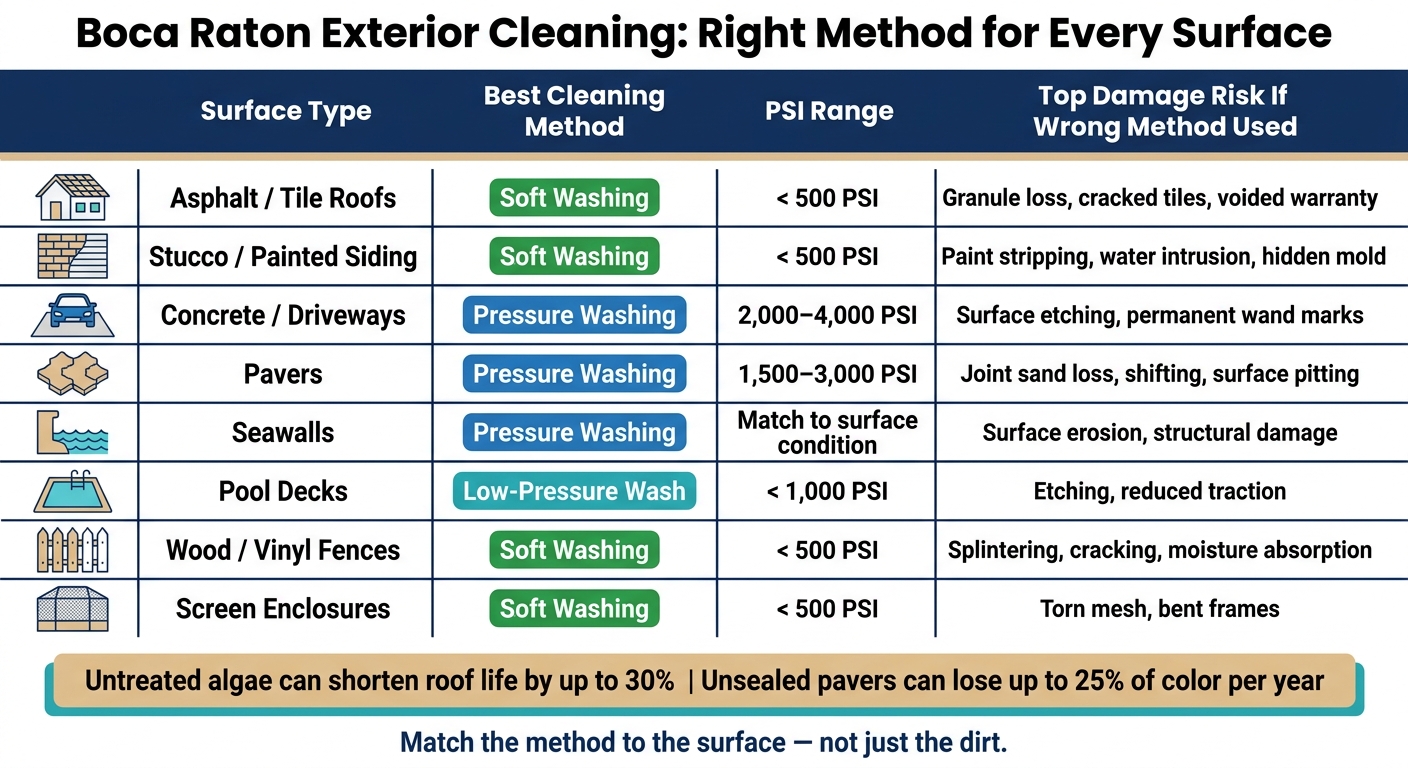
Boca Raton Home Exterior Cleaning: Right Method by Surface
How to Soft Wash a 3-Story Beach House (Step-by-Step Tutorial) | Navarre Beach FL
sbb-itb-20350f7
2. How to Tell When Your Boca Raton Home Needs Washing
Visible buildup on Boca Raton homes usually points to more than plain surface dirt.
2.1 Warning Signs on Stucco, Roofs, Driveways, and Pool Areas
The clearest roof warning sign is thick black streaking that rain doesn't remove. That's Gloeocapsa magma. If you see moss growing between roof tiles, treat that as a bigger problem. Moss can push tiles up and let water work its way underneath.
Stucco and siding usually show trouble a little differently. A dull, dirty look or green and black streaks are common in humid conditions. It can creep up slowly, so the change is easy to miss until the wall starts looking worn out.
Driveways and walkways tend to make the issue plain. If the surface looks slick or dark green, that's not just ugly - it can be a slip hazard. Stubborn oil stains, deep tire marks, and lines left behind by uneven pressure cleaning are also signs the area needs proper service.
Pavers and pool decks have an easy tell. Pour a cup of water on the surface. If the water soaks in and darkens the material, the protective seal is likely gone. When that happens, the surface is exposed to salt, chlorine, and organic growth. You may also notice:
Sand washing out of the joints
Weeds pushing up between stones
Ant hills forming in the gaps
Screen enclosures and fences show buildup in their own way. Green or black mildew on screen mesh, vinyl fencing, or wood fencing that blocks views or cuts airflow is a clear sign it's time for cleaning.
Once those signs show up, the next move is simple: use the right cleaning method for the surface.
2.2 How Often Coastal Homes Need Exterior Cleaning
For most homes in Palm Beach County, a professional exterior cleaning every 12 to 18 months helps stop mildew and algae from taking hold. Homes closer to the water often need washing every 6 to 8 months because salt air and humidity speed up mildew growth.
South Florida humidity often runs above 75%, so mildew doesn't take long to show up. Shaded spots usually go first, especially north-facing walls and areas under thick tree cover. Those are smart places to check between scheduled cleanings.
Timing matters too. A wash before the wet season starts removes existing spores before heat and rain help them spread. A cleaning after the dry season can also help, since months of sun and salt air can bond grime into surface pores and make removal harder.
Surface
Recommended Frequency
Primary Threat
Coastal home exterior
Every 6–8 months
Salt air & humidity
Standard home exterior
Every 12–18 months
Mildew & algae
Tile/Shingle Roofs
Every 18–36 months
Gloeocapsa magma
Driveways/Walkways
About every 12 months
Oil stains & slippery algae
Pool Enclosures
Every 12 months
Green and black mildew
In HOA communities, visible streaks or driveway buildup can lead to violation notices. Taking care of those issues early helps keep the property in line with community rules.
3. How to Choose the Right Cleaning Method for Each Surface
In Boca Raton, one cleaning method does not fit every surface. Salt air, humidity, and strong sun wear materials in different ways. So the right move is to match the method to the surface itself, not just to what looks dirty.
Use the method below based on surface durability, not just visible buildup.
3.1 Soft Washing for Stucco, Painted Surfaces, Roofs, and Vinyl
For Boca Raton roofs, stucco, painted siding, and vinyl, soft washing uses low pressure and a cleaning solution to remove organic growth without harming the surface. The mix includes a diluted cleaner with surfactants that breaks down mold, algae, and mildew instead of trying to blast them away with force.
Black roof streaks from Gloeocapsa magma are one of the most common issues on Boca Raton homes. On asphalt shingles, high pressure can strip off protective granules, shorten the life of the roof, and void most manufacturer warranties. Tile roofs have a different problem. If water gets forced under cracked or lifted tiles, it can soak the underlayment and open the door to leaks. Soft washing removes Gloeocapsa magma without direct force on the tile surface.
Stucco and painted siding react in much the same way. Too much pressure can push water behind the surface, where hidden mold can start to grow. Soft washing cleans the outside and kills the growth causing the staining, all without stripping paint or weakening the wall's moisture barrier.
3.2 Pressure Washing for Concrete, Pavers, Driveways, and Seawalls
Hard surfaces can take more force, but only up to the point where the finish stays intact.
Concrete driveways and similar surfaces can usually handle pressure washing in the 2,000 to 4,000 PSI range. That is enough to remove oil stains, tire marks, and built-up grime without cutting into the material when done the right way.
Pavers need a lighter touch. The range drops to 1,500 to 3,000 PSI, and technique matters just as much as pressure. Too much force can wash out the joint sand that keeps pavers locked in place, which can lead to shifting and sinking over time. Efflorescence should be removed before sealing because sealing over it traps the residue.
Seawalls deal with constant saltwater exposure, marine growth, and corrosion. Pressure washing works well here too, but the PSI should match the condition of the surface instead of being pushed to the max. On worn concrete, too much force can speed up erosion.
3.3 Lower-Pressure Cleaning for Pool Decks, Fences, and Screened Areas
Surfaces that stay wet or have texture usually need a gentler rinse. Push too hard, and you can leave behind etching or reduce traction.
Pool decks need enough pressure to clear away algae and pool chemical residue, but not so much that the surface gets scarred. Keeping pressure under 1,000 PSI helps protect the texture that makes the area safer under wet feet, which matters a lot around South Florida pools where chlorine and moisture wear surfaces down faster.
Wood and vinyl fences need that same kind of care. High pressure can splinter wood grain or crack vinyl, leaving the surface more likely to take on moisture later. A soft wash applied at under 500 PSI cleans the surface and kills the mold behind mildew stains and weathering without causing physical damage.
Screen enclosures call for the same soft-wash approach: treat first, then rinse lightly so you don't tear the mesh or bend the frame.
4. A Step-by-Step Exterior Cleaning Plan for a Boca Raton Home
Method matters, but the order of the work matters just as much. So does protecting the property before you start.
4.1 Inspect the Property and Protect Plants, Fixtures, and Problem Areas
Start with a full inspection before any cleaning begins. On the roof, check for cracked caps, lifted flashing, soft spots in the decking, and low areas where water tends to sit. On the walls, look for loose paint, cracked stucco, and shaded sections where salt air and humidity have helped algae spread. On pavers and pool decks, pour a small amount of water on the surface. If it darkens right away, the sealer has failed.
After that, protect the area around the work zone. Pre-soak all landscaping with fresh water before applying any detergent. For sensitive plants, use tarps and flush the soil during and after cleaning to help manage runoff from salt-laden surfaces. Cover outdoor electrical outlets, wrap exterior cameras, and shut down the pool pump for the time being. If the pool sits close to a wall being treated, cover the water surface to block overspray and help protect water chemistry.
Once the property is protected, clean from the top down.
4.2 Clean in the Right Order Using Surface-Appropriate Settings
Begin with the roof and other upper surfaces. Then move to soffits, walls, fences, and screens. Save ground-level areas for last, including driveways, pavers, and pool decks. This top-to-bottom flow helps keep runoff from streaking areas you already finished.
If you're using detergents, let the solution stay wet long enough to do its job, but rinse it off before it dries. That's a bigger deal in South Florida, where heat can dry surfaces fast. Keep the wand moving at a steady distance and angle so you don't leave wand marks or etch the surface.
After cleaning pavers, replace any joint sand that washed out. That helps keep the pavers in place and lowers the chance of trip hazards. If the surface seems delicate, or if the job involves the roof, stop there and call a pro.
4.3 When to Call a Professional Instead of Doing It Yourself
Some exterior cleaning jobs just aren't safe for DIY. Roofs are the clearest example. Wet roofs get slippery, and high-pressure equipment can hit with enough force to throw someone off balance.
Fragile stucco, waterfront seawalls, and surfaces with algae that keeps coming back are also warning signs. If algae returns soon after a wash, the treatment likely didn't reach the root of the problem.
And if the work calls for a ladder, or the screened enclosure has mildew or oxidation buildup, bring in a professional. That's the safer move and can help prevent screen damage.
5. How Routine Professional Cleaning Protects Your Home Long-Term
After you choose the right cleaning method, the next step is sticking to a maintenance schedule. In Boca Raton, salt air, humidity, and UV exposure work on exterior surfaces all year. If you let buildup sit, small issues can snowball into bigger damage.
Untreated algae can shorten asphalt shingle life by up to 30%, and unsealed pavers can lose up to 25% of their color each year. Routine cleaning helps slow that wear, keeps up curb appeal, and can extend the life of the surface itself. In plain terms: this is about protecting the home, not just making it look nice.
Pavers should be resealed every 2 to 3 years to help preserve color, stabilize joint sand, and keep surfaces slip-resistant. A bundled maintenance plan can help keep services like paver sealing, window washing, gutter cleaning, and seawall or dock cleaning on track, so each surface gets attention before problems build up.
The table below shows the main differences between DIY equipment and professional service:
Feature
DIY Equipment
Professional Service
Surface Risk
Etching, blown window seals, shredded wood
Surface-specific techniques that help preserve material integrity
Liability
Homeowner assumes all risk
Licensed and insured; protects the homeowner
Results
Uneven lines and faster regrowth
Uniform finish and longer-lasting protection
5.1 Key Takeaways for Boca Raton Homeowners
For Boca Raton homeowners, the big takeaway is simple: coastal surfaces need regular care, and that care has to match the material. Homes near the coast deal with harsher buildup than inland properties. Salt air, biological growth, and UV exposure hit at the same time, and they don't let up just because the season changes.
A few points matter most:
Each surface needs the right method. Soft washing works best for stucco, roofs, and painted surfaces. High-pressure washing fits concrete, driveways, and seawalls. Use the wrong method, and you can damage the surface.
Routine cleaning extends exterior life. It helps prevent organic growth from rotting fascia boards, slows wear on roof tiles, and helps reduce microcracking in concrete.
Professional equipment gets better results. At 4 to 8 GPM versus the 1 to 2 GPM a residential unit puts out, commercial equipment flushes contaminants out instead of pushing them around. Palm Shine Pros carries liability coverage on every power and soft washing job — if something goes wrong, that matters.
Routine service also protects curb appeal, helping the home's exterior stay in better shape in a competitive coastal market.
The goal isn't only a cleaner-looking home. It's a home that lasts longer, stays safer to walk around, and holds its value in a coastal market.
FAQs
What time of year is best for washing a coastal home in Boca Raton?
In Boca Raton, early spring - mainly March and April - is the best time to pressure wash a coastal home. The weather is milder, the air is less humid, and conditions are usually easier to plan around. That makes it a smart window for washing away winter dust, pollen, and salt before the rainy season starts in May.
Fall, from September through November, is another good option. Humidity starts to drop, and hurricane season is usually beginning to settle down.
Can pressure washing remove salt buildup without damaging exterior surfaces?
Yes. Professional power washing and soft washing can remove salt buildup without damaging your home’s exterior when the right method is used for each surface.
Durable surfaces like concrete can be cleaned with heated power washing. More delicate materials are better suited to soft washing, which uses low-pressure water and specialized cleaning solutions. That mix of pressure and cleaning agents helps remove corrosive salt and grime safely.
Should pavers be sealed after cleaning?
Yes. Cleaning gets rid of dirt and algae, but pavers without sealer are more exposed to moisture, sun damage, and stains. Sealing also helps protect the joint sand and keep it in place.
For the best results in Boca Raton and South Florida, let the pavers dry fully for 24 to 48+ hours after pressure washing. Then apply the sealant and plan to reseal every 2 to 3 years.
.avif)

.avif)