How Often Miami Homes Need Professional Window Cleaning
Lorem ipsum dolor sit amet, consectetur adipiscing elit. Suspendisse varius enim in eros elementum tristique. Duis cursus, mi quis viverra ornare, eros dolor interdum nulla, ut commodo diam libero vitae erat. Aenean faucibus nibh et justo cursus id rutrum lorem imperdiet. Nunc ut sem vitae risus tristique posuere.
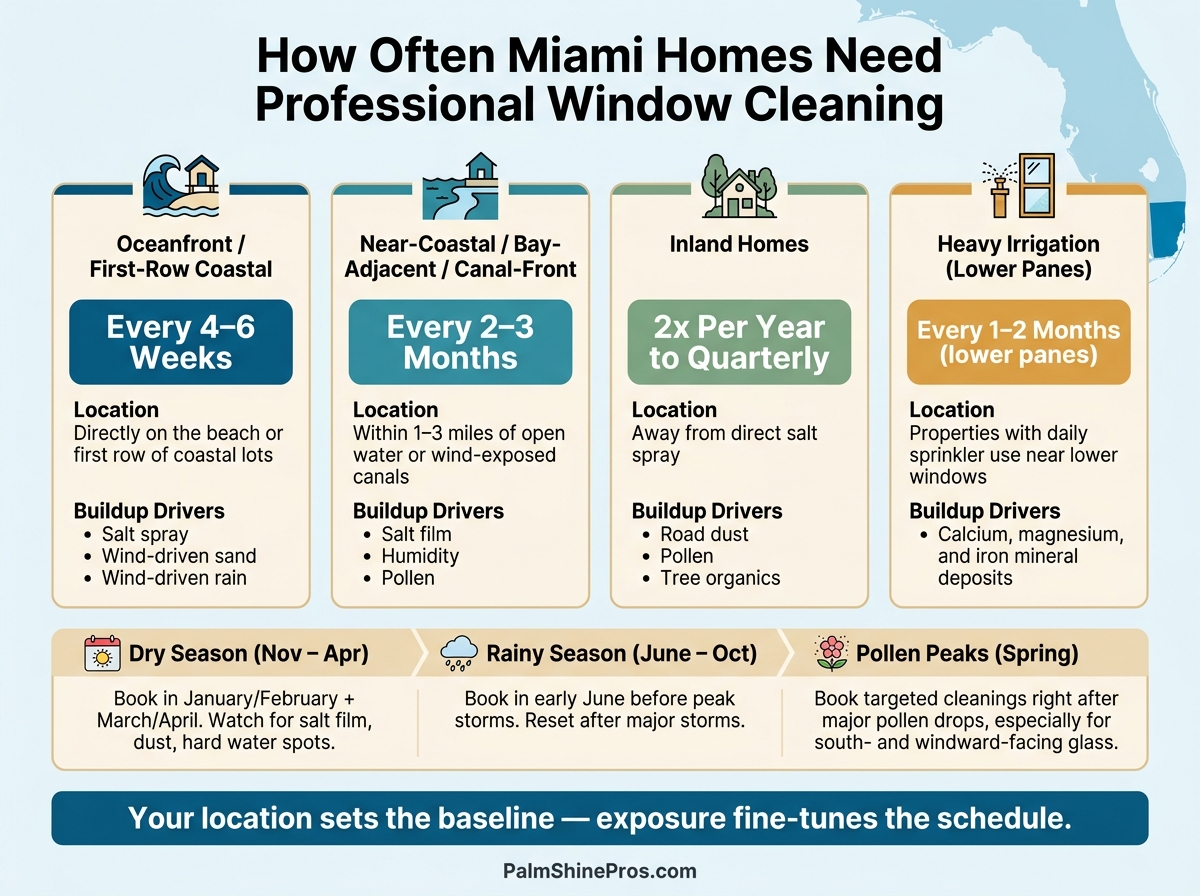
MostMiamihomes need professional window cleaning anywhere from every 4–6 weeks to twice a year, based on salt, sprinkler spray, pollen, storms, and which side of the home takes the hit.
If your home sits on the ocean or right by open water, windows can start showing salt film again in 7–10 days, so service often lands around every 4–6 weeks. If your home is near the bay, a canal, or within 1–3 miles of open water, every 2–3 months is a common schedule. Inland homes often do fine with 2 cleanings per year, though heavy pollen, road dust, or sprinkler overspray can push parts of the home to quarterly or even every 1–2 months.
Here’s the short version:
Oceanfront / first-row coastal: every 4–6 weeks
Bay-adjacent / canal-front / near coast: every 2–3 months
Inland homes:twice yearly to quarterly
Lower panes hit by sprinklers: every 1–2 months
Best times to book:early June, March or April, and after major storms or pollen drops
How Often Miami Homes Need Window Cleaning by Location
How Often Should I Have My Windows Cleaned?
sbb-itb-20350f7
Quick Comparison
Home type
Typical schedule
Main cause of buildup
Oceanfront / first-row
Every 4–6 weeks
Salt spray, sand, wind-driven rain
Near coast / bay / canal
Every 2–3 months
Salt film, humidity, pollen
Inland
2x per year to quarterly
Dust, pollen, tree debris
Heavy irrigation on lower glass
Every 1–2 months
Hard water spots, mineral deposits
The main point is simple: your location sets the baseline, but exposure fine-tunes the schedule. Upper floors often catch more airborne salt, lower panes often get more sprinkler spray, and south-facing or windward glass may need service sooner than the rest.
What Affects Cleaning Frequency in Miami
In Miami, window cleaning schedules come down to exposure. The issue isn't whether buildup shows up. It always does. What changes is how fast each thing brings it back.
Distance from the Ocean, Bay, and Canals
Distance from open water is the biggest factor. Oceanfront and first-row homes deal with steady salt aerosol and wind-driven spray, so a visible salt film can come back within 7 to 10 days after cleaning. Bay-adjacent and canal-front homes still pick up salt film too, just at a slower pace.
Coastal location sets the starting point. But pollen and irrigation can make that timeline even shorter.
Pollen, Irrigation Overspray, and Hard Water Spotting
Spring pollen and hard water spots both cut down the time between cleanings. Pollen leaves a sticky film on glass, and that film grabs dust and other particles. It's a bit like a magnet for grime.
Irrigation can make things worse. Miami irrigation water is often hard enough to leave chalky spots when it dries on glass. When that mist hits windows and then sits in the sun, it can leave hard water spots that may etch the glass over time. Lower-floor windows usually take the biggest hit from overspray, which is why sprinkler aim matters more than most people think.
Seasonal weather changes how fast all of this comes back.
Rainy Season, Dry Season, and Window Orientation
Miami's rainy season, from June through November, brings afternoon storms that can rinse surfaces for a moment, then leave streaks and mineral spots as the water dries. During the dry season, from December through May, there's no rain to wash much away, so salt, dust, traffic residue, and spring pollen keep building.
Window direction matters too. South-facing and bay-facing windows usually need cleaning more often. Upper floors get more airborne salt from sea breezes, while lower floors deal with more irrigation overspray. Windward sides also collect deposits faster, so even on the same house, one side may need attention well before another.
Those exposure patterns are what shape the cleaning intervals in the next section.
Cleaning Intervals by Home Type
Start with the table below, then tweak the timing based on the sides of the home that take the biggest hit. It’s a good baseline, not a hard rule. If you have windward glass, south-facing panes, bay-facing windows, or glass that gets hit by sprinklers, you’ll usually want a shorter cycle. If you’re looking for repeat visits, see our window washing service.
Exposure Type
Typical Location
Suggested Exterior Interval
Main Buildup Drivers
Oceanfront / First-Row
Directly on the beach or in the first row of coastal lots
Every 4–6 weeks
Salt spray, wind-driven sand, wind-driven rain
Near-Coastal / Bay-Adjacent / Canal-Front
Within 1–3 miles of open water or on wind-exposed canals
Every 2–3 months
Salt film, humidity, pollen
Inland
Away from direct salt spray
Twice yearly to quarterly
Road dust, pollen, tree organics
Homes with Heavy Irrigation
Properties with daily sprinkler use on lower panes
Lower panes: every 1–2 months
Calcium, magnesium, and iron deposits
Oceanfront and First-Row Coastal Homes: Every 4–6 Weeks
Homes right on the beach, or in the first row of coastal lots, usually need the shortest cleaning cycle. For the most exposed glass, every 4–6 weeks is a practical starting point.
Why so often? Salt spray, blowing sand, and wind-driven rain can dirty glass fast. And after storms or stretches of strong wind, that timeline can get even shorter.
Near-Coastal, Bay-Adjacent, and Canal-Front Homes: Every 2–3 Months
For most of these homes, every 2–3 months works well, with the windward and bay-facing sides often needing attention first.
In plain English: the side facing open water usually sets the pace. One side of the house may look fine, while the other starts showing film much sooner.
Inland Homes and Properties with Heavy Irrigation: Twice Yearly to Quarterly
Inland homes that sit away from direct salt spray usually do fine with two professional cleanings per year. If pollen, road dust, or tree organics build up faster than usual, quarterly service can make more sense.
Heavy irrigation changes the picture. Daily overspray can push lower panes into a 1–2 month cycle, even if the rest of the home only needs service twice a year or quarterly. In those cases, the lower panes drive the schedule, not the whole house.
When to Schedule Cleanings Through the Year
The intervals from the previous section tell you how often to clean. This section shows when to book those visits during Miami's calendar year. Think of these seasonal windows as a layer you place on top of the exposure-based timing above.
Season
What to Watch For
Recommended Scheduling Move
Dry Season (Nov – Apr)
Salt film, dust, and hard water spots from increased irrigation
One mid-season cleaning in January or February + a cleaning in March or April
Rainy Season (June – Oct)
Storm debris, mineral spots, and mildew in tracks
Clean in early June; reset after major storms
Pollen Peaks (Spring)
Sticky pollen film on south- and windward-facing glass
Targeted cleaning right after major pollen drops
Dry Season: Clear Lingering Stains and Watch for Dust Buildup
Salt, dust, and mineral residue build up steadily through the dry season. If you clean twice a year, March or April is the key visit to book before the heat starts baking that residue onto the glass.
Coastal homes on shorter cycles may need cleanings every 4 to 8 weeks during the dry season. This is also the right time to check sprinkler heads for overspray. Hard well water can leave stains that get tougher to remove once they sit in the sun.
Rainy Season and Storm Periods: Time Cleanings Before and After Storms
Storm timing matters most for coastal and windward glass, where buildup comes back fast. Book a full cleaning in early June, before the rainy season peaks, so you're starting with clear glass instead of playing catch-up in the middle of the season. Coastal homes often need a second wash in mid-summer.
After a major storm, don't wipe the glass right away. Wind-driven rain can leave sand and salt on the surface, and dragging a cloth across dry glass can scratch it. Rinse first with low-pressure fresh water to float the grit off, then schedule a professional cleaning once the air has settled.
October and November often leave behind dried mineral rings and drip lines from summer storms. A full reset cleaning then gets the glass back into shape before the dry season starts.
Pollen Peaks and Wind Exposure: Clean the Affected Sides More Often
Spring pollen in Miami leaves a sticky film that grabs dust and other particles. If your home sits under heavy tree cover, like live oaks or pines, it's smart to book targeted cleanings right after big pollen drops so the residue doesn't stick to the glass for long.
Not every side of the home needs the same timing. Windward and south-facing glass usually need attention sooner than sheltered sides. That changes how you space bookings through pollen season. For more context on coastal homes, see best exterior cleaning methods for coastal homes.
Those exposure patterns carry straight into the schedule-building approach in the next section.
How to Set the Right Schedule for Your Home
Build a Simple Exposure Profile for Your Home
Start by placing your home into one of three exposure profiles. That gives you a simple starting point instead of guessing.
High Salt + Irrigation - salt film or sprinkler contact near the glass → every 4 to 8 weeks
High Pollen, Low Salt - inland with heavy tree cover → every 3 months
Low-Exposure Inland - few direct threats, little to no overspray → twice a year
Once you know your profile, use that as your baseline schedule.
Start with a Baseline Interval, Then Adjust by Floor Level
Choose the interval that fits your profile, then check the glass halfway through that cycle. If you already see haze, salt crust, or mineral spots, the gap between cleanings is too long.
It also helps to look at where the glass sits. Upper-floor windows facing the bay or ocean take more wind and usually collect salt faster. On the same house, sheltered sides or windows facing inland can often go longer between cleanings. That means you don't need one blanket schedule for every pane. You can adjust by floor and by direction as you see what builds up first.
There’s also a simple way to judge what you’re looking at. If a spot fades when the glass is wet, it’s a deposit. If it stays there, the glass may be etched.
Conclusion: Cleaning Frequency Depends on Exposure, Not One Fixed Rule
Oceanfront homes usually need cleaning every 4 to 6 weeks. Near-coastal, bay-adjacent, and canal-front homes often land on a 2-to-3-month cycle. Inland homes typically start with twice-yearly cleaning, unless pollen, sprinkler overspray, or dust push that higher.
In Miami, it also makes sense to reset the schedule after major storms, heavy pollen drops, or repeat hard water spotting. Exposure can shift from one block to the next, so one fixed rule doesn't hold across the city. Palm Shine Pros builds schedules around what each property actually faces, then adjusts over time.
FAQs
How do I know which cleaning schedule fits my home?
Your ideal schedule depends on Miami-specific exposure. If you're looking at the "why hire" question, check the companion benefits article.
In general, coastal or bayfront homes often need exterior cleaning every 8 to 12 weeks. Inland homes can usually go 3 to 6 months between cleanings.
Your timing should shift based on a few local factors:
Proximity to the coast
Building orientation
Pollen, irrigation overspray, and other deposits
Rainy vs. dry season patterns
Should all sides of my house be cleaned on the same schedule?
No. Different sides of your house may need cleaning at different times because exposure isn’t the same all the way around.
For example, windows that face the bay or coastal winds often pick up salt spray and moisture more quickly. South-facing or shaded sides can build up different kinds of residue over time. Because of that, one set schedule for the whole house may not match how fast buildup forms on each side.
What should I do after a storm or heavy pollen drop?
After a heavy pollen drop, flush the frames, sills, and screens well before you touch the glass. Pollen can turn into a sticky yellow paste, and if you drag that across the pane, it may scratch the surface.
Start with the frames and sills. Brush or vacuum them first. Then rinse the screens from the inside out so trapped particles wash away instead of ending up on freshly cleaned glass.
Lorem ipsum dolor sit amet, consectetur adipiscing elit, sed do eiusmod tempor incididunt ut labore et dolore magna aliqua. Ut enim ad minim veniam, quis nostrud exercitation ullamco laboris nisi ut aliquip ex ea commodo consequat. Duis aute irure dolor in reprehenderit in voluptate velit esse cillum dolore eu fugiat nulla pariatur.
.avif)

.avif)