Does Pressure Washing Increase Home Value in South Florida
Lorem ipsum dolor sit amet, consectetur adipiscing elit. Suspendisse varius enim in eros elementum tristique. Duis cursus, mi quis viverra ornare, eros dolor interdum nulla, ut commodo diam libero vitae erat. Aenean faucibus nibh et justo cursus id rutrum lorem imperdiet. Nunc ut sem vitae risus tristique posuere.
Yes -pressure washingcan help your home look worth more, but it does not guarantee a higher appraisal or sale price.
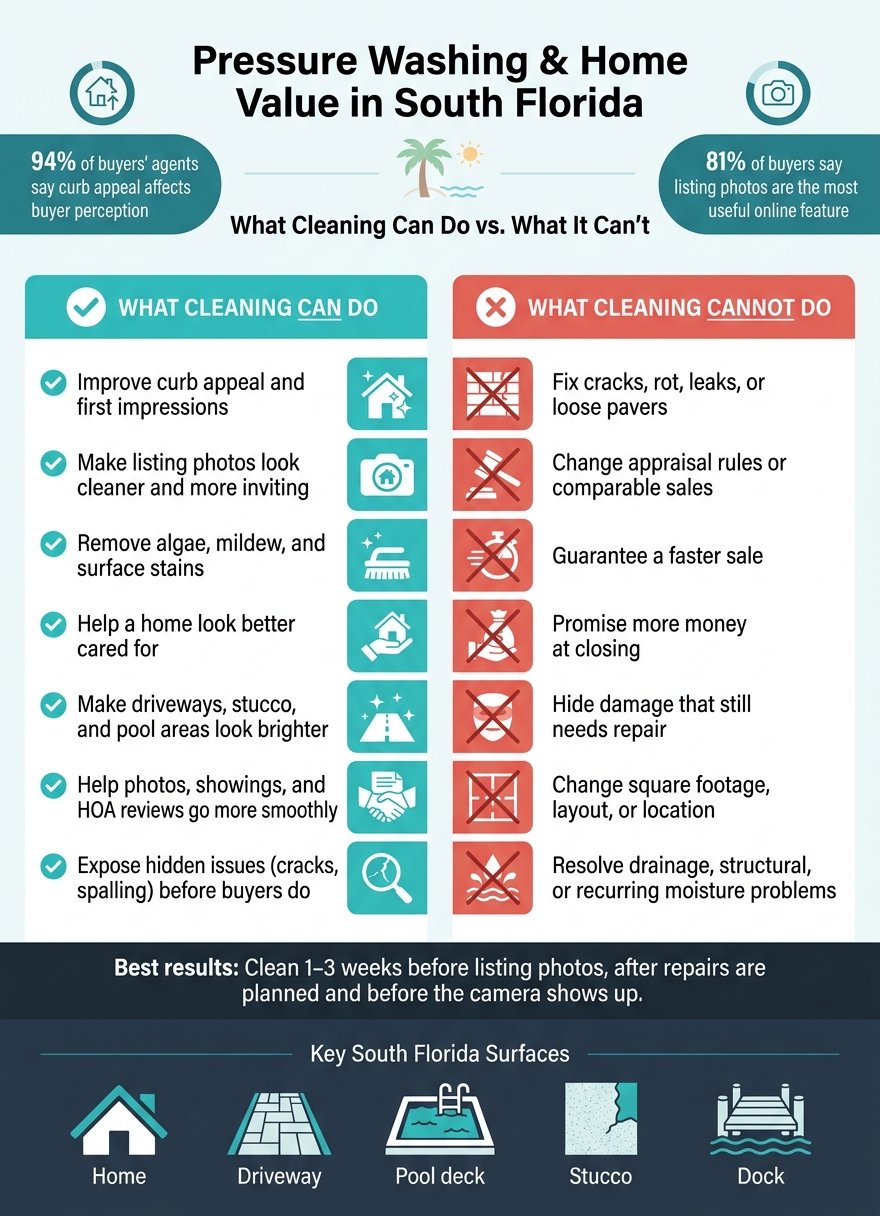
If you're selling in South Florida, this usually comes down to one thing: presentation. Humidity, rain, heat, and salt air can leave mold, algae, mildew, roof streaks, and driveway stains on a home fast. And that matters because 94% of buyers' agents say curb appeal affects buyer perception, while 81% of buyers say listing photos are the most useful online feature.
Here’s the short version:
Pressure washing helps most with first impressions
It can make photos, showings, and HOA reviews go more smoothly
It does not change square footage, layout, location, or repair needs
It works best on sound surfaces with surface-level grime
It needs the right method for stucco, roofs, pool decks, screens, pavers, docks, and seawalls
DIY can work for small concrete areas, but mixed surfaces often need a pro
Runoff control matters near storm drains, pools, canals, and waterfront areas
A clean exterior can make buyers feel better about a property. A dirty one can make them think maintenance has been ignored. That’s the main value.
What cleaning can do
What cleaning can’t do
Improve curb appeal
Fix cracks, rot, leaks, or loose pavers
Help listing photos look cleaner
Change appraisal rules
Remove algae, mildew, and surface stains
Promise a faster sale
Help a home look better cared for
Guarantee more money at closing
Make driveways, stucco, and pool areas look brighter
Hide damage that still needs repair
The rest of the article breaks down where cleaning helps most in South Florida, when to do it, and where the line is between cosmetic cleanup and repair work.
What Pressure Washing Can vs. Cannot Do for Your Home's Value
Why Exterior Cleaning Affects Perceived Value
South Florida weather can make a solid home look worn out in a hurry. Humidity, rain, and salt air leave behind algae, mildew, and grime. That layer can cover up sound surfaces and send a maintenance-first signal. To buyers, appraisers, and HOA reviewers, that can look like neglect.
Exterior cleaning can improve how a home's condition is perceived, but it doesn't change formal valuation on its own. Appraisers look at comparable sales, location, size, and overall condition, not whether a house was just washed. At the same time, Fannie Mae guidance says appraisers must note visible maintenance issues that could affect marketability. So if the exterior looks stained or dirty, it can invite those comments. That's why a clean exterior can help, even when it doesn't move the official value.
Curb Appeal, Listing Photos, and Buyer Confidence
Most buyers meet a home online before they ever pull into the driveway. The 2025 NAR Profile of Home Buyers and Sellers found that 81% of buyers rated listing photos as the most useful online feature during their home search. That's a big deal. If the outside looks rough in photos, many buyers may form an opinion before the showing is even booked.
Clean surfaces tend to photograph better. A washed driveway can look wider and more welcoming. Clean stucco shows its actual color instead of dark streaks or green blotches. A cleaned pool deck and lanai can read as living space, not a weekend chore list. That first impression starts on the screen, not at the front door.
Agents see this every day. NAR's 2025 staging report found that 88% of agents recommend sellers clean the entire home before listing, and 77% recommend improving curb appeal. When buyers see a neat exterior, they're less likely to assume deferred maintenance. They're more likely to feel at ease about the rest of the property.
That visual bump matters even more in places where appearance is watched closely.
Visible Upkeep in HOA and High-Appearance Neighborhoods
In HOA communities - and South Florida has a lot of them - exterior appearance isn't just part of marketing. It's often an expected standard. A clean exterior helps a home stay in step with neighborhood norms and may help limit compliance trouble.
These neighborhoods also put visual comparison front and center. If one house has a dark, streaked facade and the homes around it look clean, buyers will spot the difference fast. Even if the property matches nearby homes in size or layout, that contrast can hurt the listing. Cleaning helps narrow that visual gap between the home and the rest of the block. It doesn't promise HOA approval, remove association duties, or lead to any set dollar gain.
The next step is knowing which South Florida surfaces tend to get the most from cleaning.
sbb-itb-20350f7
South Florida Surfaces Where Cleaning Makes the Biggest Difference
In South Florida, the surfaces that help sell a home are often the first ones to show grime. And not every surface should be cleaned the same way. The right pressure, tools, and cleaning mix depend on the material and the kind of buildup you're dealing with.
Stucco, Driveways, Walkways, and Pavers
Start with what buyers notice first.
Stucco often picks up green or gray discoloration from algae and mildew, even when the wall underneath is still in good shape. It needs low-pressure cleaning and a mild solution. Too much pressure can scar or chip the finish.
Driveways and walkways tend to hold onto tire marks, oil residue, and ground-in dirt near the front of the home. Water pressure alone usually isn't enough for oily spots. Pre-treating those areas first gets a better result.
Pavers are a little trickier. Cleaning can bring back the contrast between the pavers and the joints, which helps the whole surface look sharper. But washing can also remove joint sand. Re-sanding only makes sense when the joints are loose after cleaning.
Roofs, Pool Decks, Lanais, and Fences
Higher up, roof stains can make a home look older almost right away. In listing photos, dark streaks stand out fast. They're often caused by Gloeocapsa magma, a cyanobacteria that thrives in humid conditions.
For shingles, tile, painted metal, and older roof finishes, soft washing is the right method. That means lower pressure plus a cleaning solution. High pressure can knock off granules, damage coatings, or push water under tiles. What starts as a surface stain can turn into a repair problem.
Pool decks can build up a slick film from algae and mildew. Cleaning helps bring back a safer, cleaner outdoor area, but the method should match the material. Concrete, pavers, painted coatings, and stone don't all handle cleaning the same way.
Lanai screens and fences also need a careful approach. If the cleaning is too aggressive, you can end up with torn screens, bent frames, or damaged finishes.
Surface
Main visible problem
Appropriate approach
Stucco
Algae, mildew, discoloration
Low-pressure cleaning with mild solution
Concrete driveway/walkway
Dirt, tire marks, oil residue
Surface cleaner, spot pre-treatment
Pavers
Algae, washed-out joints, weeds
Controlled cleaning; re-sand only if joints are loose
Roof
Black algae streaks, organic buildup
Soft washing or low-pressure method
Pool deck
Slippery algae, mildew, staining
Material-specific gentle cleaning
Lanai and screens
Dust, pollen, cobwebs, grime
Gentle low-pressure or hand cleaning
Seawalls, Docks, and Marine-Facing Exterior Areas
Waterfront homes add one more layer.
Salt residue, algae, bird waste, and repeated wetting can affect seawalls, dock surfaces, steps, railings, and nearby concrete or pavers. Cleaning does more than improve appearance. It can expose problems that buildup hides, like cracks, spalling, loose hardware, or corrosion - issues a buyer or inspector might spot right away once the surface is clear.
Wastewater control matters a lot in these areas. Detergents, sediment, paint chips, and heavy algae residue should not end up in canals, bays, or other surface waters. Florida guidance states that pressure-washing wastewater should not be discharged to surface waters, storm drains, or septic systems without proper authorization, and marina guidance emphasizes containing or properly routing wash water.
Before work starts near a seawall or dock, a professional should check where runoff could go and use containment methods such as berms, drain covers, or recovery equipment to keep wastewater out of the water. Ask how wastewater will be contained before the job starts. On a waterfront listing, hidden corrosion and staining can hurt buyer confidence fast.
When Professional Exterior Cleaning Delivers the Most Value
Once you know which surfaces matter most, timing is what decides the payoff.
Clean at the right point, and you can change how a property looks to buyers, appraisers, or HOA reviewers. Wait too long - or skip it - and the same dirt and buildup that could've been removed without much fuss can start working against you.
Before Listing Photos, Showings, Appraisals, or HOA Reviews
The sweet spot is 1 to 3 weeks before listing photos, after repairs are planned and before the camera shows up. That gap matters. It gives surfaces time to dry all the way, and it gives you a chance to catch anything cleaning brings to light - cracked stucco, failed caulk, a torn screen, loose pavers, or peeling paint - before those flaws end up in the photos.
In plain terms: clean first, then fix what shows up. That usually leads to a result that's both more accurate and better-looking.
Before an appraisal, cleaning can help a sound surface look the way it should. But it won't change comparable sales, location, or market conditions. And it should never be used to cover up cracks, leaks, settlement, rot, or other structural issues that need to be disclosed.
For HOA reviews, check the association's governing documents before you book the work. Some communities spell out approved soft wash or pressure washing methods, cleaning schedules, contractor insurance rules, and runoff requirements. It's also smart to keep before-and-after photos along with the contractor invoice for your HOA records.
After Rainy Periods or When Buildup Is Hiding Sound Surfaces
The same idea applies after weather-driven buildup: clean when the grime is cosmetic, not when it's masking damage.
In South Florida, heat, humidity, shade, and frequent rain can speed up algae, mold, and mildew growth. After a long wet stretch, it's common to see green buildup on north-facing stucco, black streaks on roofs, slick pool decks, and darkened pavers - even on homes that looked clean only a few months earlier.
A simple rule of thumb works here: if a surface looks neglected but is still in good shape underneath, cleaning will often pay off visually.
For example:
A driveway that looks evenly dark and brightens up evenly after washing was probably just stained.
A pool deck that comes out cleaner and less slippery after cleaning was likely dealing with surface algae, not structural trouble.
If washing exposes cracks, spalling, loose pavers, or failing coatings, those move out of the cleaning bucket and into the repair bucket.
Use the timing below to match the work to the likely return.
Timing
What cleaning addresses
What it doesn't change
Before listing photos
Staining, algae, mildew on visible surfaces
Sale price, underlying defects, appraisal methodology
Before showings
Entry, driveway, pool area, lanai appearance
Unresolved repairs or structural concerns
Before appraisal
Visible condition of otherwise sound surfaces
Appraiser's valuation formula or comparable sales
After rainy or humid periods
Newly visible organic growth and dark staining
Drainage issues, shade conditions, or recurring moisture problems
Before HOA review
Appearance compliance on exterior surfaces
Association's governing rules or required repair items
Professional Service vs. DIY and the Realistic Impact on Value
Once you've nailed down the timing, the next call is pretty simple: Can you handle this yourself, or is the property complicated enough to bring in a pro?
Why Professional Cleaning Is Safer for Stucco, Roofs, Screens, and Coastal Properties
DIY can be fine for a small concrete walkway. But most South Florida homes aren't that simple. Many have a mix of surfaces, and each one needs a different approach.
That's where a professional helps. They match the cleaning method to the material. On stucco, roofs, screens, and waterfront features, that step matters a lot. The difference isn't only how the home looks after the job. It's also about avoiding damage across the mixed surfaces that are common in South Florida.
Consideration
DIY Washing
Professional Cleaning
Surface assessment
Often treats most surfaces similarly
Identifies surface types before starting
Pressure selection
Risk of using excessive pressure or the wrong nozzle
Adjusts pressure and cleaning agents by material
Runoff control
Easy to overlook near pools, drains, and seawalls
Plans containment and diversion, especially on waterfront lots
Risk of damage
Lower for simple concrete; higher for roofs, stucco, and screens
Reduced through surface-specific methods, though no service is risk-free
If a property has a screened lanai, second-story stucco, or waterfront features, the gap between DIY and pro results is often pretty big. A qualified provider will usually offer a mix of services, such as:
That matters because many South Florida homes need more than one type of exterior cleaning.
What Pressure Washing Can Improve and What It Cannot Guarantee
Once the method is clear, it comes down to the bottom line: cleaning can improve presentation, but it has limits.
Professional exterior cleaning can help a property show better when first impressions count. What it can't do is promise a higher appraisal, a faster sale, or a set dollar bump. And no amount of washing fixes cracked stucco, failing seawalls, damaged pavers, or rotten wood. Palm Shine Pros flags those problems during service rather than working around them — a responsible provider points them out instead of trying to hide them.
The best payoff usually comes when cleaning removes obvious buildup from a surface that's still in good shape.
FAQs
How often should a South Florida home be pressure washed?
Most South Florida homes do best with professional exterior cleaning every 6 to 12 months. The reason is pretty simple: the area’s high humidity helps algae, mold, and grime build up fast. That’s why twice-yearly cleanings are often the right call if you want to keep that buildup from getting out of hand.
Some homes need attention even more often. If your property is near the coast or sits under heavy shade, service every 3 to 6 months may make more sense. Dark walls, mold that keeps coming back, and slick walkways or patios are also clear signs it’s time to book a cleaning.
Can pressure washing damage stucco, roofs, or pavers?
Yes. Used the wrong way, pressure washing can crack stucco, strip the protective granules off asphalt shingles, etch pavers, or push out joint sand. It can also drive water behind siding or roofing materials, which can lead to moisture intrusion.
For delicate surfaces like roofs and stucco, soft washing is the safer choice. For pavers, use a fan-tip nozzle at 1,200–2,000 PSI and keep the wand 6–12 inches away.
Should I pressure wash before selling my home?
Yes. Pressure washing or soft washing before selling can help curb appeal and how buyers see the home's value. A clean exterior gives buyers and appraisers a better first impression by getting rid of salt, mold, algae, and grime.
Use the right method for each surface. Go with soft washing for stucco, roofs, and painted siding. Use pressure washing for concrete driveways and brick pavers. Before sealing, make sure the surface is clean and fully dry.
.avif)

.avif)