Roof Cleaning in Pompano Beach: What Homeowners Need to Know
Lorem ipsum dolor sit amet, consectetur adipiscing elit. Suspendisse varius enim in eros elementum tristique. Duis cursus, mi quis viverra ornare, eros dolor interdum nulla, ut commodo diam libero vitae erat. Aenean faucibus nibh et justo cursus id rutrum lorem imperdiet. Nunc ut sem vitae risus tristique posuere.
In Pompano Beach, the wrongroof cleaningmethod can damage your roof and lead to leaks, HOA trouble, and extra cost.
If your roof has black streaks, the short answer is simple: match the cleaning method to the roof type, check HOA rules before booking, and avoid high-pressure roof cleaning. In this area, coastal humidity and salt air help algae return in about 6 to 24 months on many roofs. Tile roofs often need cleaning every 1 to 2 years, shingles about 2 to 3 years, and low-slope roofs need yearly inspections.
Before booking, focus on these points:
Tile roofs: use low-pressure soft washing, not high pressure
Shingle roofs: avoid pressure that can strip granules
Flat or low-slope roofs: protect drains, seams, and rooftop equipment
HOA communities: check approval rules, vendor lists, and deadlines
Contractors: ask for licensing, insurance, roof-type experience, and a written method
Budget: expect price to depend on roof size, height, material, buildup, and access
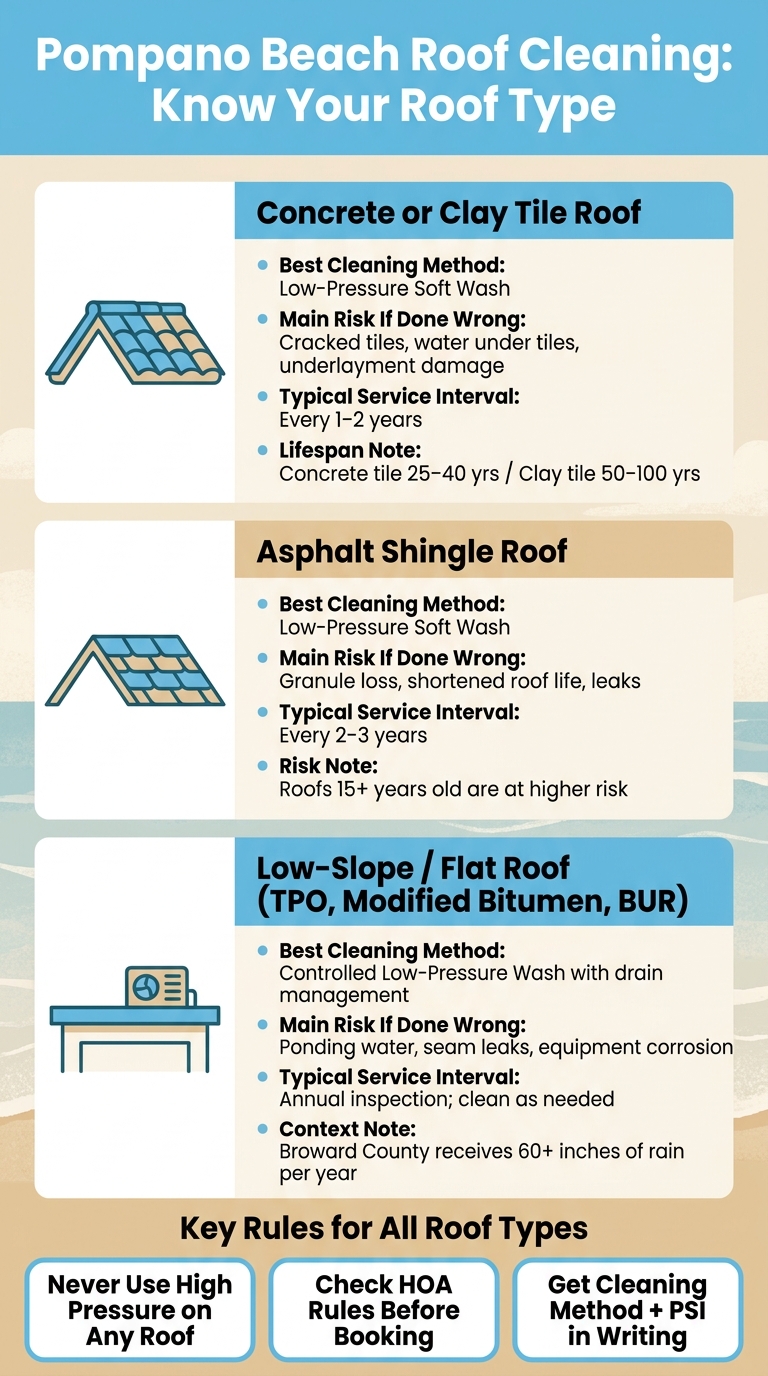
Pompano Beach Roof Cleaning: Roof Type vs. Method vs. Risk vs. Schedule
Quick Comparison
Roof type
Best cleaning approach
Main risk if done wrong
Usual service timing
Concrete or clay tile
Low-pressure soft wash
Cracked tiles, water under tiles, underlayment issues
Every 1–2 years
Asphalt shingles
Low-pressure soft wash
Granule loss, shorter roof life, leaks
Every 2–3 years
Low-slope / flat roofs
Controlled low-pressure cleaning
Ponding water, seam leaks, equipment issues
Annual inspection; clean as needed
You do not need a long checklist to start. You need the right method, a roofer or cleaner who knows your roof type, and HOA clearance before the truck shows up. The rest of this guide breaks down those choices in plain English.
sbb-itb-20350f7
Roof Types in Pompano Beach and How They Affect Cleaning
Most roofs in Pompano Beach fall into three buckets: tile, shingles, and low-slope membranes. And once you know what the roof is made of, the next step is simple: use the right cleaning method for that material.
Tile Roofs in HOA Neighborhoods
Concrete and clay tile roofs are common in communities like Deer Creek, Palm Aire, and Cypress Bend. They match the Mediterranean-style look you see across many South Florida neighborhoods, handle the local climate well, and can last 25–40 years for concrete tile and 50–100 years for clay tile when they’re maintained the right way.
That said, tile can fool people. It looks tough, but it’s easier to damage than many homeowners expect. High pressure can crack tiles or push water underneath them. When that happens, the water can reach the underlayment and lead to leaks. For a full breakdown of why soft washing is the standard approach for tile, see the roof cleaning method guide.
Shingle and Low-Slope Flat Roofs Require a Different Approach
Asphalt shingles protect a roof with embedded mineral granules. Those granules help shield the asphalt from UV exposure and weather wear. In Pompano Beach’s coastal setting, shingles may already have some granule loss from sun, wind-driven rain, and airborne salt before any cleaning even starts. Older roofs - especially those 15 years or older - are at higher risk.
That’s why asphalt shingles usually need low-pressure soft washing. Pressure washing can strip away granules and cut down the life of the roof. See the method guide for more on how that works.
Flat and low-slope roofs on condos and multifamily buildings bring a whole different set of issues. These roofs are often made from TPO, modified bitumen, or built-up roofing, and they rely on drains, scuppers, and gutters to move water off the surface. Broward County gets more than 60 inches of rain per year, so ponding water is often already putting stress on the membrane before cleaning begins.
There’s also the hardware on top of the roof to think about. HVAC units, satellite mounts, and utility conduits are often attached to or pass through these roof systems. If water isn’t controlled during cleaning, it can work its way into penetrations, cause leaks, or corrode metal parts. Low-pressure cleaning, drain management, and equipment protection matter a lot here - especially on condo and multifamily roofs, where drainage and penetrations tend to be the main trouble spots.
Roof Type, Cleaning Method, and Main Risks at a Glance
Roof type
Typical cleaning method
Main risks if cleaned incorrectly
Concrete or clay tile
Low-pressure soft wash with roof-safe detergents
Tile cracking, glaze loss, water forced under tiles, underlayment damage
Asphalt shingles
Low-pressure soft wash with a roof-safe cleaning solution
Granule loss, shortened shingle life, leaks from lifted or damaged tabs
Low-slope / flat (TPO, modified bitumen, BUR)
Controlled low-pressure wash with drainage management and equipment protection
Ponding water, membrane damage, leaks at seams and penetrations, equipment corrosion
Intervals reflect typical coastal conditions in Pompano Beach. HOA rules, roof age, shading, and manufacturer recommendations may shorten or extend these cycles.
Those differences set up the next section, which looks at soft washing versus pressure washing.
Soft Washing vs. Pressure Washing: What to Expect on a Roof
Roof type usually tells you which cleaning method should be quoted. After that, the big test is simple: can the contractor explain the method in plain English?
Why Soft Washing Is the Standard for Most Roofs
Soft washing uses a low-pressure cleaning solution to remove algae without harming the roof. Instead of only rinsing away the dark stains you can see, the solution kills the organic growth at the root.
That matters a lot on different roofing materials.
On tile roofs, low pressure helps protect the tile surface and mortar joints from cracking. On asphalt shingles, it helps prevent the loss of granules that give the shingle its UV resistance. ARMA advises against pressure washing or brushing algae off roof surfaces. For process details, see the soft-washing method guide.
In Pompano Beach, algae tends to come back faster than it does farther inland. So the method a contractor uses isn't a small detail. It can make a big difference.
Where High Pressure Belongs and Why It Does Not Belong on a Roof
High pressure has its place. It works well on driveways, pavers, and masonry. It does not belong on a roof.
On shingles, high pressure can strip granules, lift tabs, and push water underneath the roofing system. On tile, it can crack tiles, strip protective coatings, knock ridge caps loose, and create openings for leaks. Manufacturers often treat this kind of damage as owner-caused, which can lead to a denied warranty claim.
The rule here is pretty direct: use soft washing on roofs, and save higher pressure for hardscapes. Ask for the PSI in writing. A vague promise like “low pressure” doesn’t tell you much.
Soft Washing vs. Pressure Washing: Side-by-Side Comparison
Use this table to check whether a contractor’s claims line up with the job.
Factor
Soft Washing
Pressure Washing
Method
Low-pressure cleaning solution kills organic growth at the root
High-pressure water strips surface growth
Best use
Shingle and tile roofs, delicate siding, painted surfaces
Concrete, pavers, some masonry, heavily soiled hardscapes
Roof risk
Low when done correctly
High - granule loss, cracked tiles, and water intrusion
How long it lasts on roofs
Often 2–4 years before regrowth
Shorter-lived; spores and roots may remain, accelerating regrowth
PSI ranges reflect industry guidance for roof surfaces. Results vary based on roof age, shading, and coastal conditions.
With the method narrowed down, the next step is checking HOA rules and contractor credentials before booking.
HOA Rules, Contractor Screening, and Job-Day Prep
In Pompano Beach, HOA approval and site access can matter just as much as the roof cleaning itself. That’s especially true in Deer Creek, Palm Aire, Cypress Bend, and other communities with a lot of HOA oversight.
Check With Your HOA or Condo Association Before Booking
Many associations keep an approved vendor list. They may also require roof cleaners to submit proof of licensing, insurance, and sometimes workers' compensation before any work can begin on the property. Some communities also limit work hours and may not allow weekend service.
Many South Florida CC&Rs also require roofs to stay free of visible staining or organic growth, and associations often expect cleanup within 30–60 days after a violation notice. If you’ve already received a notice, check the compliance deadline and the hearing process before you schedule anything.
Before you book, pull your community’s CC&Rs and architectural guidelines. Then call or email the property manager to confirm whether you need a formal approval form or work order.
Once the association gives the green light, move on to screening the contractor for licensing, insurance, and experience with your roof type.
Questions to Ask a Roof Cleaning Contractor Before You Book
Start with the basics: ask whether the contractor is licensed and insured for roof work.
Request a certificate of insurance that shows at least $2 million in general liability coverage, along with workers' compensation. Make sure the policy clearly covers roof cleaning and work at height.
You’ll also want to ask how the crew handles coastal algae and how they protect tiles, shingles, and roof edges during rinsing.
If you have a tile roof, get specific. Ask whether technicians will walk the roof or work mainly from ladders and approved access points. Also ask what training they have for stepping on ridges instead of tile fields. If you have a low-slope flat roof, confirm that the crew checks drains and scuppers before starting.
It also helps to ask for before-and-after photos of similar roofs in nearby Pompano Beach neighborhoods, plus at least two recent local references. If the company is already an approved vendor for your HOA, that can make life easier since their paperwork has likely already been reviewed.
Pre-Booking Checklist: HOA Approval, Site Access, and Property Protection
Use this checklist to sort out access, parking, and property protection before the crew shows up.
Item to Confirm
Why It Matters
HOA or condo approval
Skipping this can lead to the job being stopped in the middle of the day or a violation notice for using a vendor the association hasn’t approved
Gate access arranged
Gated communities often need advance notice for security; if this gets missed, the crew can be delayed on job day
Parking for truck and trailer
HOA rules may limit where large vehicles can park, so confirm this ahead of time
Water access (exterior hose bibs)
Soft-wash equipment needs a working water supply; make sure spigots are easy to access and not locked
Landscaping protection plan
Roof cleaning chemicals can harm sensitive plants, so confirm the contractor will pre-wet, cover, and rinse landscaping
Vehicles moved from overspray zones
Overspray can reach driveways and parked cars, so clear those areas before work starts
Pets secured indoors
Keeping pets inside or away from the work area can cut stress and chemical exposure
Written weather-delay policy
Coastal Pompano Beach often gets afternoon storms, so get the contractor’s rain-delay terms before you book
If you’re working against an HOA deadline, tell the contractor when you book and get the weather-delay policy in writing.
Budgeting and Maintenance Cycles for Pompano Beach Roof Cleaning
What Drives Roof Cleaning Cost
Once you know the right cleaning method, the next step is pricing the job the right way.
In Pompano Beach, roof cleaning quotes usually come down to five things: roof size, height and pitch, roof material, buildup level, and access. Bigger roofs in HOA communities like Deer Creek and Palm Aire take more time and more cleaning solution. Taller, steeper roofs usually cost more because they need extra safety setup and take longer to clean.
Roof type matters too. Tile roofs often cost more than shingle roofs because they need a gentler approach and often have heavier algae growth. Access can also change the price fast. Tight side yards, screened enclosures, and waterfront access can all make the job harder. And multi-unit condo buildings usually involve extra paperwork and scheduling that single-family homes don’t.
Pompano Beach pricing usually lines up with Miami-area rates, so the 2026 Miami pressure washing pricing guide can work as a directional benchmark, not a final quote. It’s a good gut check. The exact price should come after an on-site inspection.
After cost, most homeowners ask the next obvious thing: how often will the roof need to be cleaned?
How Often Coastal Pompano Beach Roofs May Need Cleaning
Homes near the Intracoastal or the ocean, or homes under heavy tree canopy, should plan around the shorter end of the cleaning range. In coastal conditions, a shaded section of roof can show regrowth in as little as 6–12 months. Salt air, moisture, and shade can speed things up.
As a general guide, tile roofs in HOA neighborhoods often need service every 1–2 years. Shingle roofs can often go 2–3 years, though sun-facing slopes near the coast may show streaking earlier. Low-slope and flat roofs should get annual inspections, with cleaning scheduled as needed based on drainage issues and organic buildup.
The big idea is simple: roof cleaning should sit in your home maintenance budget as a recurring line item, not a one-and-done expense. It’s usually cheaper to stay ahead of algae and staining than to pay for a heavier cleanup after years of neglect.
Conclusion: Good Roof Cleaning Decisions Start Before the Service Date
With cost and timing mapped out, the last piece is deciding when to book the work.
Pompano Beach roofs deal with algae pressure and salt exposure that many inland homes just don’t face. That means the most important choices happen before the crew ever shows up: checking HOA rules early, making sure the contractor has the right licensing and insurance, confirming the cleaning method, and planning for repeat service instead of waiting until the roof looks bad.
In Pompano Beach, start with the roof’s material and shape. Two common local roof types are tile roofs and low-slope flat roofs.
Asphalt shingle roofs often show wear through granule loss or curling shingles. Flat roofs tend to have membrane seams and broad, level-looking surfaces.
It also helps to check for roof details like flashing, vents, and chimneys. Then look inside the home for water stains or sagging areas, which can point to certain structural problems.
Will roof cleaning affect my warranty or insurance?
Proper roof maintenance, including professional cleaning, usually helps your insurance standing instead of hurting it. Insurance companies can deny claims when damage could have been avoided with basic upkeep, so cleaning your roof before problems build up is a smart move.
For cleaning, use soft washing. High-pressure washing can harm roofing materials and may affect your warranty coverage. It’s also a good idea to keep records of all maintenance and cleaning services in case you need to file an insurance claim later.
What should I do before the crew arrives?
Before we arrive, please make sure all windows and doors are securely closed to help prevent water intrusion.
Please also move patio furniture, potted plants, and other personal items away from the roofline so our crew has clear access. And for the day of service, turn off automatic sprinklers so the area stays dry during and right after our work.
.avif)

.avif)