What Tile Roof Cleaning Involves in South Florida Homes
Lorem ipsum dolor sit amet, consectetur adipiscing elit. Suspendisse varius enim in eros elementum tristique. Duis cursus, mi quis viverra ornare, eros dolor interdum nulla, ut commodo diam libero vitae erat. Aenean faucibus nibh et justo cursus id rutrum lorem imperdiet. Nunc ut sem vitae risus tristique posuere.
Tile roof cleaning inSouth Floridameans more than washing off stains.
If you own a clay or concrete tile roof, the job usually includes cleaning field tiles, ridge caps, valleys, and flashing, while also checking for cracks, loose tiles, worn mortar, blocked drainage, and signs of leaks. In most cases, crews use soft washing, not high pressure, because strong pressure can crack tiles, strip finishes, and push water under overlaps.
Here’s the short answer:
Your roof is cleaned with low pressure
The wash mix often uses 1% to 3% sodium hypochlorite plus surfactants
Crews focus on algae, mildew, lichen, grime, and debris
They inspect tiles, caps, valleys, flashings, and vent areas during the job
Nearby plants are usually pre-wet and rinsed after cleaning
Many South Florida homes need service once or twice a year
What gets cleaned and checked:
Main roof surface: dark streaks, mold, algae, and grime
Flashings and penetrations: salt film, rust, worn seals, seam gaps
This article breaks down what the service covers, why soft washing is used, what goes on the roof, and what crews look for before small roof issues turn into water damage.
How to Safely Soft Wash a Tile Roof #roofcleaning #howto
sbb-itb-20350f7
What parts of a tile roof get cleaned
A professional tile roof cleaning focuses on the spots where debris, moisture, and wear tend to build up first. Most of the work starts on the field tiles, since they make up the main roof surface and usually show the most staining.
Field tiles across the main roof surface
Field tiles cover most of the roof, so they usually take the biggest hit. This is where you’ll often see the darkest stains and the most visible buildup. Algae, mildew, and lichen are the most common sources of that buildup on tile roofs.
After that, technicians move to the other trouble spots: ridge caps, valleys, and flashings.
Ridge caps, valleys, and flashings
Ridge caps sit at the top of the roof and are often set in mortar. They need a careful touch because moisture and wear tend to collect around the mortar joints and along the cap edges.
Valleys are the channels where two roof slopes meet. If anything on the roof is going to collect leaves, palm fronds, and other organic debris, it’s usually the valleys. That debris holds moisture and feeds biological growth. On barrel tile roofs, the troughs can also hold runoff and debris.
Flashings around skylights, vent stacks, and chimneys get cleaned during the same process. These roof penetrations can trap salt film and grime against the seams, which is why they need close attention.
What technicians look for while cleaning
Cleaning isn’t just about appearance. It’s also a chance to spot roof issues before they turn into leaks or broken tiles.
Technicians look for:
Cracked, loose, or hollow-sounding tiles, which can mean the tile is no longer seated the way it should be
Shifted ridge caps, cracked mortar, and wind-lifted caps, all of which can let water in during a storm
Worn vent boots, corroded flashing, and rust streaks from old antenna mounts around roof penetrations
They also walk the crowns, not the pans, to help avoid cracking brittle tiles.
Why soft washing is the right method for tile roofs
How Tile Roof Cleaning Works in South Florida
Tile roofs need soft washing because clay and concrete tiles, ridge caps, and underlayment can all get damaged by high pressure. These roofs have brittle surfaces and sealed details, so the goal is to remove moss, algae, and grime without putting the roof under stress.
How soft washing cleans tile without excess force
Soft washing uses low pressure and a roof-safe cleaning solution to loosen growth without stressing the tile. That matters because roof cleaning needs to treat the growth itself, not just spray off what’s sitting on top.
Roof-safe sodium hypochlorite and surfactants kill growth and help the solution stick to curved tile instead of running off too fast. For more on what gets applied to tile, see this breakdown of soft wash chemicals used on Miami-area homes.
What pressure washing can damage on a tile roof
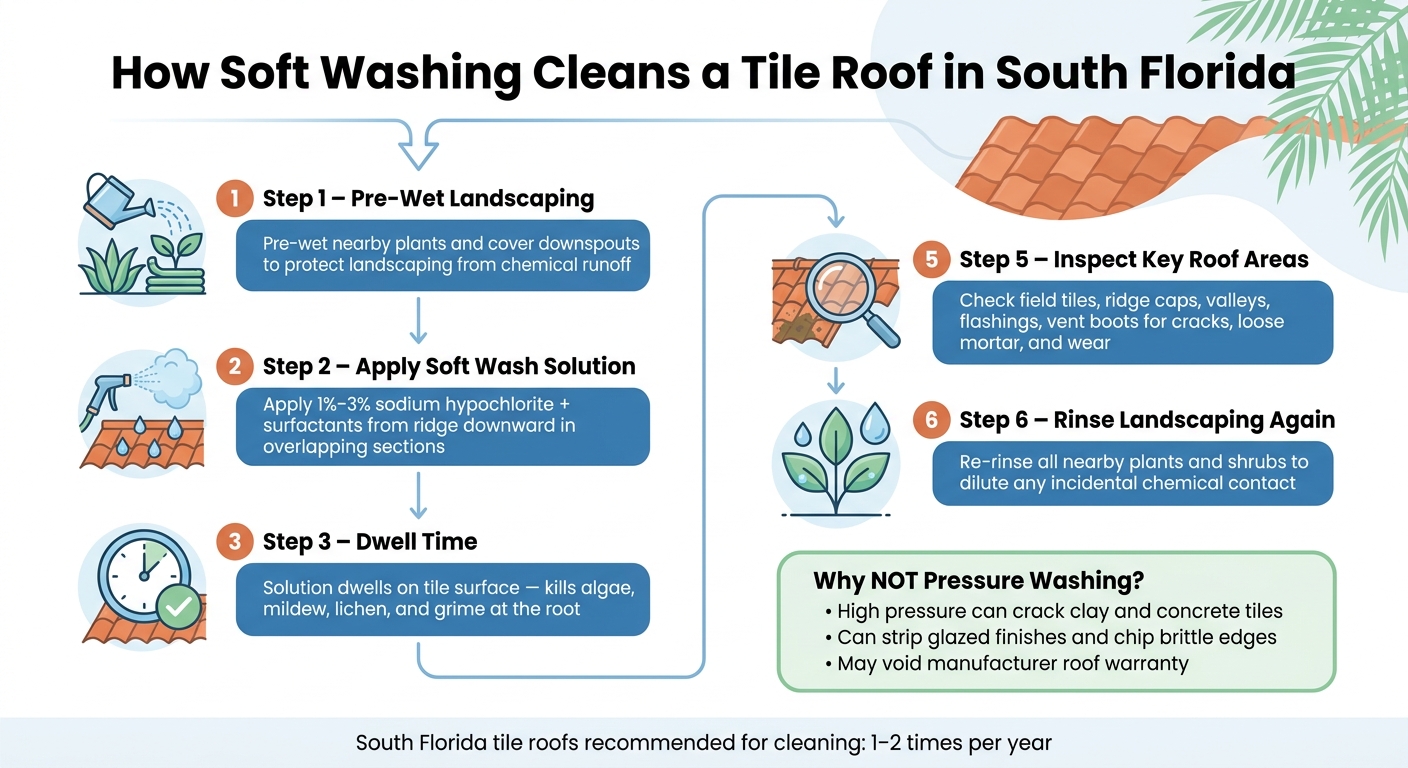
High pressure can etch clay and concrete tile, strip glazed finishes, and chip brittle edges. It can also crack ridge caps and force water into cap seams. Once that moisture gets in, it can rot the underlayment. Manufacturers often warn that high-pressure cleaning can void the warranty.
That’s why tile roof cleaning depends on controlled pressure, not brute force. For more detail on why pressure washing is inappropriate for tile, see soft washing vs. pressure washing for Miami roofs.
What gets applied and what technicians check
After the roof gets cleaned with low pressure, the next step is the wash mix and the final roof check.
Roof-safe cleaning solutions for algae and grime
The main job here is dealing with the algae behind South Florida’s black streaks. Pros use a soft wash mix that breaks down that growth without relying on high pressure.
The solution usually combines sodium hypochlorite at a 1% to 3% concentration with surfactants and water. Surfactants help the mix stick to curved tile instead of sliding off too fast. Techs apply it from the ridge downward in overlapping sections, so gravity pulls it across the tile surface instead of forcing it up under the overlaps. The mix sits for a short dwell time before a low-pressure rinse. If you want the full ingredient breakdown, see this guide on soft wash chemicals used on Miami-area homes.
Before any chemicals touch the roof, technicians pre-wet nearby landscaping and cover the downspouts to control runoff. Tropical plants and flowering shrubs get soaked with fresh water both before and after the job to dilute any incidental contact.
As the solution does its work, technicians keep an eye on the roof areas most likely to shift, crack, or leak.
Condition checks on tile, ridge caps, valleys, and flashings
While the mix dwells, technicians check that the roof’s weak spots are still in good shape and draining the way they should.
On field tiles, worn or abraded edges can be a sign of past aggressive cleaning. Faint lichen outlines may stick around for a few days after treatment. Ridge caps are checked for mortar or adhesive integrity. Valleys are cleared so water can drain and the wash mix can reach the tile underneath. Flashings around vents, skylights, and other penetrations are also inspected for separated flashing or worn boots.
They also step with care. Instead of walking on the high points of the tiles, where brittle clay or concrete can crack more easily, technicians move along the lower thirds where the tiles overlap and can handle more load.
Tile roof cleaning as part of a Florida home maintenance plan
Once the roof is clean and inspected, keep it on a steady maintenance schedule.
In South Florida, tile roofs need routine cleaning. Once or twice a year keeps algae from building up and pairs well with gutter clearing, which limits overflow and staining. Palm Shine Pros technicians check for cracked tiles, failing vent seals, and flashing issues during service — the same spots that cause leaks when they go unnoticed on a dirty roof.
Trimming overhanging branches helps too. More sunlight on the surface slows algae growth and reduces how quickly lichen and moss settle into tile pores.
The time it takes to clean a tile roof depends on the size of the roof and how complex the layout is. In many cases, a standard soft wash job is finished in just a few hours.
That speed comes from how the process works. Soft washing uses a cleaning solution that sits on the roof for a short dwell time - usually three to five minutes - before technicians rinse it off with low pressure. This lets them clean the roof thoroughly without dragging the job out.
Will soft washing damage my plants?
Professional soft washing is safe for landscaping when the crew follows the right protection steps.
Before any cleaning starts, technicians pre-wet nearby plants with fresh water. That simple step matters because it helps limit how much of the cleaning solution the plants absorb.
They also apply the solution with control to cut down on overspray. And in some cases, they neutralize runoff to help protect your garden.
How do I know if my tile roof needs cleaning?
Consider professional cleaning if you notice visible organic growth on your roof, like black streaks, patchy lichen, or roof tiles that look dull and stained. In Florida’s humid coastal climate, algae and mildew often cause these marks.
Regular maintenance is also a smart way to protect your investment. Check your roof twice a year. And if you’re not sure what you’re seeing, have a professional assess the buildup and suggest safe soft washing.
Lorem ipsum dolor sit amet, consectetur adipiscing elit, sed do eiusmod tempor incididunt ut labore et dolore magna aliqua. Ut enim ad minim veniam, quis nostrud exercitation ullamco laboris nisi ut aliquip ex ea commodo consequat. Duis aute irure dolor in reprehenderit in voluptate velit esse cillum dolore eu fugiat nulla pariatur.
.avif)

.avif)