Why Boca Raton HOA Communities Need Sidewalk Cleaning
Lorem ipsum dolor sit amet, consectetur adipiscing elit. Suspendisse varius enim in eros elementum tristique. Duis cursus, mi quis viverra ornare, eros dolor interdum nulla, ut commodo diam libero vitae erat. Aenean faucibus nibh et justo cursus id rutrum lorem imperdiet. Nunc ut sem vitae risus tristique posuere.
InBoca Raton, dirty sidewalks are more than a looks issue - they can become a slip risk, hide damage, and make an HOA look poorly maintained.
If you manage or live in an HOA community, sidewalk cleaning helps deal with three main problems: slick algae and mildew, stains and grime, and hidden surface damage. That matters in a place that gets 55.4 inches of rain per year, where damp, shaded walkways can stay wet long enough for buildup to spread fast.
Here’s the short answer:
Cleaning helps cut slip-and-fall risk on shared walkways
It improves curb appeal for residents and buyers
It makes cracks, lifting, and wear easier to spot
It supports HOA upkeep records with service dates and photos
It works best on a set schedule, not as a one-time job
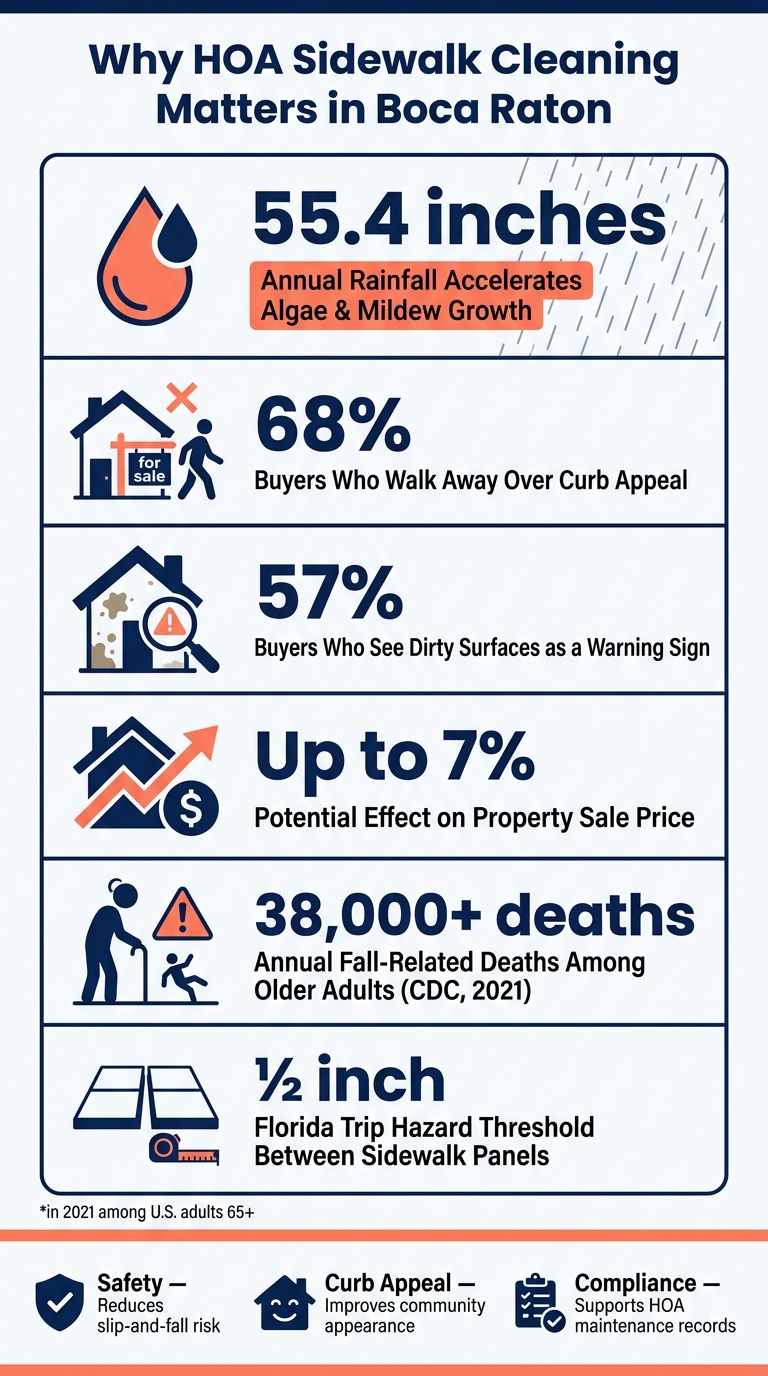
A few numbers stand out:
Boca Raton gets 55.4 inches of rain each year
68% of buyers say poor curb appeal can be a dealbreaker
57% see a dirty exterior as a warning sign
Curb appeal can affect sale price by up to 7%
Falls caused 38,000+ deaths in 2021 among U.S. adults age 65 and older
Commercial exterior cleaning for Boca Raton HOA communities works best on a recurring schedule, not as a reactive call when something looks bad. For a broader look at what HOA exterior cleaning rules typically require across South Florida, that article covers the compliance side in detail.
Why HOA Sidewalk Cleaning Matters: Key Stats for Boca Raton Communities
36 HOA Driveways & Sidewalks Cleaned FAST | GX690 8GPM + Whisper Wash 31" Mini Mondo
sbb-itb-20350f7
Common Sidewalk Problems in Boca Raton HOA Communities
It’s not just dirt. In Boca Raton HOA communities, sidewalks pick up algae, mildew, rust stains, gum, leaf stains, and ground-in grime. Each one causes a different issue, but they usually show up in three main ways.
How Mold, Algae, and Mildew Create Slip Hazards
The growths you’ll see most often on Boca Raton HOA sidewalks are green algae, black mildew, and dark mold streaks. They tend to show up on shaded walkways, pool decks, clubhouse paths, mail routes, and areas near irrigated beds.
This goes beyond looks. Algae and mildew can leave a slick film on concrete and pavers, which cuts traction when the surface gets wet. That makes sidewalks and other shared paths more dangerous after rain or irrigation. For HOA boards, that creates a real slip-and-fall risk on common property.
Not all buildup comes from organic growth. Some of the roughest-looking surfaces are caused by stains and heavy debris.
Rust Stains, Gum, and Dirt That Make Walkways Look Neglected
Rust stains are common in Boca Raton communities. Irrigation systems that use well water or water with high iron content can leave orange-brown streaks anywhere overspray hits the concrete. Rust from metal fixtures can also stain nearby surfaces.
Gum, leaf tannin stains, and traffic grime often collect near building entrances, pool gates, clubhouse doors, and other busy spots. Over time, the walkway starts to look poorly kept. That first impression matters, especially for residents and prospective buyers walking the property.
There’s another issue here: once the surface gets dirty enough, it can mask bigger problems underneath.
How Dirty Surfaces Can Hide Larger Maintenance Problems
Dark surface buildup can hide cracks, spalling, and uneven slabs. Lifted edges caused by tree root intrusion may blend into mottled discoloration, and small hairline cracks that let water in - and speed up wear - can be hard to see under mildew or traffic grime.
Florida guidance often treats about 1/2 inch of vertical displacement between adjoining sidewalk panels as a trip hazard. But when sidewalks are coated with algae and staining, those changes are much harder to catch during a routine walk-through. Cleaning first makes cracks, lifting, and spalling easier to spot before the damage gets worse - and before delayed repairs turn into avoidable liability for the HOA.
How Regular Cleaning Protects Safety, Appearance, and Property Values
Cleaner Sidewalks Lower Risk for Residents and Visitors
Removing algae, mildew, and grime helps bring back traction on concrete and pavers. In Boca Raton’s wet, humid climate, that matters a lot. Slick walkways can turn into a hazard fast, especially for older adults, children, and delivery drivers. So sidewalk cleaning isn’t just about looks. It’s a basic safety measure.
The CDC reports that falls among adults 65 and older caused over 38,000 deaths in 2021 in the U.S. Florida law also requires HOAs to maintain common sidewalks for residents and guests. Put those two facts together, and the case is pretty clear: regular sidewalk cleaning is a practical maintenance task, not an optional add-on.
Clean Walkways Improve Curb Appeal
Sidewalks are one of the first things people see when they enter a community. Clean, bright walkways send a simple message: this place is being looked after. Stained or dingy sidewalks can do the opposite, even when the landscaping and buildings are in good shape.
A buyer-focused curb appeal survey found that 68% of buyers consider poor curb appeal a dealbreaker and 57% view a dirty exterior as a red flag. Clean sidewalks help support the sense that the whole community is well managed.
Consistent Upkeep Supports Property Values and HOA Standards
A study published in The Journal of Real Estate Finance and Economics found that curb appeal can account for up to 7% of a home's sale price. In Boca Raton, sidewalk condition plays a direct role in how buyers size up the community.
Regular cleaning also helps HOAs show that they’re meeting their governing documents and maintenance standards. When there’s a set cleaning schedule and clear service records, the association can show it is managing common areas in a steady, organized way, instead of only stepping in after complaints. That kind of record helps build resident trust and makes it easier to answer questions about how shared spaces are being maintained. Regular professional cleaning makes that standard much easier to keep.
How Professional Sidewalk Cleaning Addresses These HOA Problems
Once algae, stains, and grime show up, the fix starts with the soft wash vs pressure washingfor the surface. Not every sidewalk issue should be treated the same way. In Boca Raton HOA communities, the best results come from matching the method to the material and the stain.
Pressure Washing and Soft Washing for Concrete and Pavers
Sound concrete can usually handle pressure washing. Pavers, older slabs, and decorative entry areas often need soft washing instead, since high pressure can wash out joint sand and damage the surface.
That choice isn't made in a vacuum. Irrigation overspray, moisture near pool areas, and past cracking all affect what should be used and where. A professional should inspect the surface type and its condition before any work begins.
Surface cleaning removes the top layer of grime. Then, if needed, spot treatments handle the stuff that pressure alone can't remove.
Targeted Treatments for Algae, Rust, Gum, and Stains
There isn't a one-size-fits-all fix here. Algae needs an algaecide treatment. Rust calls for a specialty remover. Gum usually needs heat and agitation. Oil needs a degreaser before washing.
When the method matches the stain, the surface takes less wear and the cleaning works better.
Scheduled Service Plans Help HOAs Stay Ahead of Buildup
After the first cleaning, regular service helps keep the same problems from creeping back. A set schedule makes a big difference. High-traffic areas often need quarterly service, while lower-use walkways may only need semiannual cleaning.
Paperwork matters too. Before-and-after photos, service dates, and chemical records give HOA boards a clear maintenance log. That log helps with reserve planning, gives boards something concrete when residents complain, and shows due care if a slip-and-fall claim ever comes up.
Conclusion: A Practical Maintenance Step for Boca Raton HOAs
For Boca Raton HOA communities, sidewalk cleaning is routine maintenance, not an optional add-on.
South Florida's humid climate cycles algae, mold, mildew, and grime back fast. Untreated walkways turn slippery, and surfaces that fall out of HOA compliance tend to stay that way once buildup takes hold. Commercial exterior cleaning on a set schedule stops that cycle and makes upkeep predictable. Palm Shine Pros runs recurring service across Boca Raton communities, adjusting method and frequency to what each property actually needs.
The record-keeping matters too. Service dates and before-and-after photos support maintenance files and give boards documentation when a liability question comes up.
A site walk is the fastest way to build the right cleaning plan. Clean sidewalks protect safety, curb appeal, and HOA compliance standards without making it a bigger project than it needs to be.
FAQs
How often should HOA sidewalks be cleaned?
In South Florida, Boca Raton HOA communities should plan professional sidewalk cleaning at least once a year.
That said, the local climate changes the math. High humidity and fast organic growth often mean twice a year makes more sense, especially if the goal is to keep mold, algae, and slippery surfaces under control.
For waterfront properties, the schedule may need to be tighter. Cleaning every 3 to 6 months is often needed to deal with salt and dust buildup.
A few signs usually make the need pretty obvious:
Dark stains
Algae that keeps coming back
Slippery walkways
When those issues show up, it’s time to bring in a professional cleaning service.
What cleaning method is safest for pavers and older concrete?
Use a pressure washer set to 1,200 to 2,000 PSI with a 25- to 40-degree fan-tip nozzle. Hold the wand 6 to 12 inches from the surface.
For more delicate areas, use soft washing instead. That means biodegradable detergents and pressure below 500 PSI to clear away mold and algae without causing etching, cracks, or joint sand loss.
One line you don’t want to cross: 3,000 PSI.
Can sidewalk cleaning help reduce HOA liability?
Yes. Professional sidewalk cleaning can help lower HOA liability by removing safety hazards like mold, algae, mildew, and debris. In South Florida’s humid climate, those buildup issues can make sidewalks slippery and unsafe fast.
Regular cleaning helps HOAs cut down on accidents, reduce tripping risks, and keep walkways clear. It also supports community maintenance and safety standards.
Lorem ipsum dolor sit amet, consectetur adipiscing elit, sed do eiusmod tempor incididunt ut labore et dolore magna aliqua. Ut enim ad minim veniam, quis nostrud exercitation ullamco laboris nisi ut aliquip ex ea commodo consequat. Duis aute irure dolor in reprehenderit in voluptate velit esse cillum dolore eu fugiat nulla pariatur.
.avif)

.avif)