Pressure Washing in Coral Gables: What Historic Homes Need
Lorem ipsum dolor sit amet, consectetur adipiscing elit. Suspendisse varius enim in eros elementum tristique. Duis cursus, mi quis viverra ornare, eros dolor interdum nulla, ut commodo diam libero vitae erat. Aenean faucibus nibh et justo cursus id rutrum lorem imperdiet. Nunc ut sem vitae risus tristique posuere.
HistoricCoral Gableshomes need different treatment than newer construction. Old stucco, coquina, coral rock, lime mortar, painted wood, and clay barrel tile are softer and more porous than modern finishes. High pressure on any of them risks cracked surfaces, stripped paint, loose mortar, hidden water intrusion, and roof leaks.
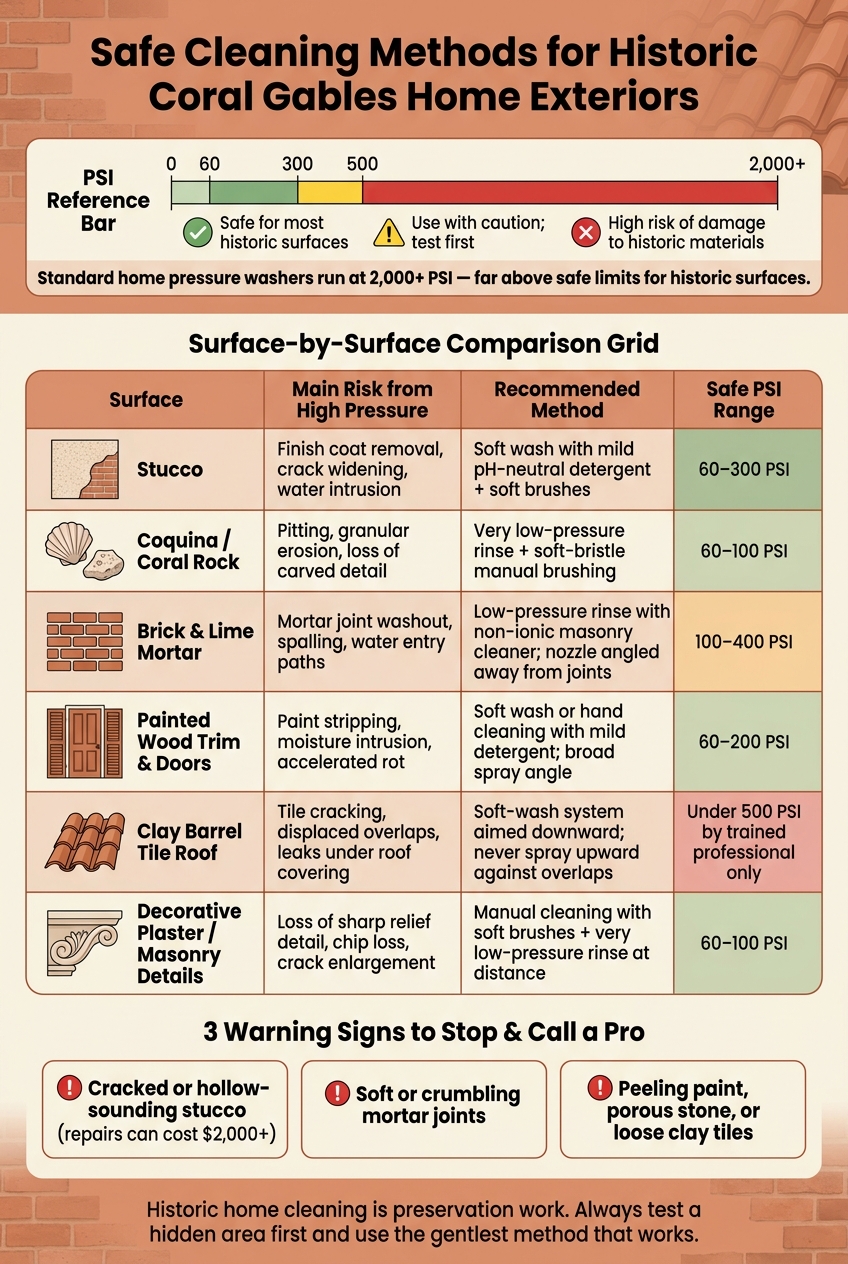
Use the gentlest method that gets the surface clean. For most of these materials, that means soft washing under 500 PSI, sometimes as low as 60 to 80 PSI. Standard home pressure washers run at 2,000 PSI or more. Preservation guidance for old masonry starts near 100 PSI and stays below 300 to 400 PSI. Force water past that range and it damages surfaces and soaks into wall systems.
Before cleaning, three things apply:
Older materials are softer and more porous than modern finishes
Don't run one pressure setting across the whole house
Cracked stucco, soft mortar, peeling paint, porous stone, or loose roof tiles mean stop and bring in a licensed pro
Coquina and coral rock: strong spray pits the surface and dislodges shell fragments
Brick and lime mortar: spray washes out mortar joints and opens paths for moisture
Painted wood trim and doors: water under paint edges accelerates rot
Clay barrel tile roofs: direct force cracks tiles, shifts overlaps, and sends water under the roof covering
Coral Gables properties carry material age and architectural detail that newer homes in the same climate don't. That changes the job.
Historic 100-Year-Old Home Gets a Softwash Makeover using Softwashing
sbb-itb-20350f7
Quick Comparison
Surface
Main Risk From High Pressure
Safer Cleaning Choice
Stucco
Finish loss, crack spread, trapped moisture
Soft wash with mild cleaner
Coquina / Coral rock
Pitting, surface wear, loss of detail
Very low-pressure rinse and soft brushing
Brick / Lime mortar
Mortar loss, spalling, water entry
Low-pressure rinse, avoid direct spray at joints
Painted wood
Peeling paint, moisture in seams
Soft wash or hand cleaning
Clay barrel tile
Cracked tiles, leaks under overlaps
Low-pressure roof cleaning by a trained pro
Decorative plaster / masonry
Lost edges, chipped details
Hand cleaning and light rinse
You should also know when not to do it yourself. If your home is two or three stories, has mixed materials, or shows cracks, peeling, hollow stucco, or weak mortar, the job can get expensive fast. The article notes stucco repair can run $2,000 or more, and pressure washer injuries send people to the ER every year.
The rest of this article breaks down what each historic surface needs, what damage to watch for, and what to ask before hiring a Coral Gables exterior cleaning service.
The Problem: What High-Pressure Washing Can Damage on Historic Homes
On a 1920s or 1930s Coral Gables home, high pressure can strip finishes and damage original materials fast. The right cleaning method depends on the historic surface you're dealing with.
The Most Common Damage Risks on Older Exteriors
The four main risks are surface etching, water intrusion, paint failure, and mortar washout. And in many cases, they don't happen alone. One problem can trigger the next.
Surface etching starts when pressurized water removes the outer protective layer of stucco or soft stone. After that, the surface turns rougher, more porous, and more likely to stain or hold moisture.
Water intrusion is harder to spot, but it's often the more serious issue. Pressure can drive water through hairline cracks and around windows and doors, soaking the wall behind the finish. In older wall systems with original materials and aging repairs, that moisture can take a long time to dry in South Florida's humid climate. That creates room for mold, rot, and corrosion in hidden metal fasteners before anything looks wrong from the outside. A National Park Service brief notes that:
high-pressure water blasting over 400 psi can damage historic masonry by forcing large quantities of water into the material and causing corrosion of hidden metal elements.
On painted wood trim, shutters, and doors, high pressure can get under loose paint edges and pull off large sections. Once bare wood is exposed in Coral Gables' heat and humidity, sun damage and moisture absorption can move in fast.
On brick and mortar, the spray can gouge out joint lines, remove fine material, widen gaps, and create direct openings for water to enter the wall.
Which Coral Gables Materials Are Most at Risk
Not every material on a historic home reacts the same way, but several common Coral Gables materials are especially sensitive to pressure damage.
Coquina and coral rock are soft and porous, made from natural shell and coral fragments. A strong stream of water can knock loose those fragments, pit the surface, and wear away carved or tooled edges that give the home much of its look.
Aged brick has a similar weakness. Older bricks are softer and more porous than modern brick, and the lime-based mortar joints are usually the weakest part of the wall.
Painted wood on trim, fascia, and shutters often has several old paint layers over aging wood. If there's a gap or cracked edge, high pressure can catch it and start peeling.
Clay barrel tiles can be brittle. Even tiles that seem fine may already have small cracks from age and weather. A direct blast can snap a cracked tile, shift overlaps, and force water beneath the roof covering.
Decorative plaster and stucco details like moldings, medallions, and window surrounds are also at high risk. Once those fine profiles lose sharp edges or relief detail, repair usually takes specialized restoration work.
Comparison Table: Historic Materials, Pressure-Washing Risks, and Safer Cleaning Methods
The damage changes by material, but the core issue stays the same: too much force.
Material
Typical Historic Issues
Risks From High-Pressure Washing
Preferred Cleaning Approach
Stucco
Hairline cracks, surface chalking, minor delamination
Finish coat removal, crack widening, water intrusion behind wall
Soft washing with mild detergent and soft brushes as needed
Coquina
Surface softness, weathering, prior patch repairs
Granular erosion, pitting, loss of carved detail
Soft washing with masonry-safe cleaner; targeted manual brushing
Coral rock
Enlarged pores, weathered surface, salt exposure
Increased porosity, fragment loss, accelerated staining
Soft washing at very low pressure; gentle rinse only
Brick and mortar
Eroded joints, efflorescence, spalled corners
Joint washout, brick face spalling, deeper water penetration
Low-pressure rinse after a masonry-safe cleaner; avoid direct spray at joints
Painted wood
Peeling edges, minor rot, cracked paint layers
Paint stripping, water intrusion into end grain, faster rot
Soft wash or manual cleaning with a brush and hose
Clay tile
Brittle aged tiles, minor cracks, lichen or mildew
Tile cracking, displaced overlaps, leak risk under roof covering
Low-pressure roof cleaning or controlled soft wash by a trained professional
Decorative masonry/plaster
Hairline cracks, chip loss, past patchwork
Loss of sharp detail, relief removal, crack enlargement, patch loss
Manual cleaning with soft brushes and gentle cleaner; very low-pressure rinse at a distance
Those risks lead straight to the gentler cleaning methods covered next.
The Solution: Safe Cleaning Methods for Stucco, Coquina, Brick, Wood, and Clay Tile
Historic Home Exterior Cleaning: Safe Pressure Levels & Methods by Surface
Historic Coral Gables exteriors need material-specific cleaning. The safest method is the least aggressive one that removes buildup. In plain English: each surface needs its own approach.
When Low-Pressure and Soft-Wash Methods Work Better Than Standard Pressure Washing
Soft washing cuts spray force to under 500 psi. In some cases, it drops to about 60–80 psi, which is close to garden-hose pressure. Instead of force, it uses diluted cleaners to loosen dirt, mold, and algae.
Low-pressure washing runs a bit higher, but it still aims to protect the surface. The method uses wide fan tips and more nozzle distance so the spray doesn’t hit fragile materials too hard.
Surface-by-Surface Cleaning Guidance for Coral Gables Historic Homes
Use the least aggressive method that still removes the buildup. The table below works as a practical guide for matching the method to the material.
Historic stucco and decorative plaster usually do best with low-pressure washing and a pH-neutral detergent. Start with the lowest pressure that works, use a wide fan tip, and pre-wet the wall before any solution goes on. Test a hidden area first. Apply a diluted cleaner, brush lightly, and rinse while watching for softening, etching, or paint lift. If you notice granular loss, hairline cracking, or color change, back off the pressure or switch to hand cleaning.
Coquina and coral rock need the gentlest treatment on this list. These shell-based stones are soft and porous, and they’re made mostly of calcium carbonate. That matters because acidic cleaners can dissolve the binder that holds the surface together. Use pH-neutral or slightly alkaline cleaners, keep pressure as close to hose level as possible, and depend on soft-bristle brushing to clear biological growth. In some cases, lightly cleaning coquina is safer than pushing for a spotless finish, since each wash can remove original material you can’t get back.
Historic brick and lime mortar joints need tight nozzle control. Use the lowest pressure that clears grime without cutting into the mortar. Angle the nozzle away from the joints, and stay far enough back that water flows over the surface instead of digging into it. Non-ionic masonry cleaners are preferred. If joints are badly worn, repoint them with compatible mortar before washing starts.
Painted wood trim and doors should be cleaned from top to bottom with a soft-wash setup or by hand, using mild detergent and a broad spray angle. Never aim the nozzle into seams, under laps, or at window frames. Low pressure helps reduce the risk of water intrusion and paint damage.
Clay and barrel tile roofs call for low pressure aimed downward along the tile surface, never upward against overlaps. Many Florida roof-cleaning pros use soft-wash systems with carefully controlled algae-killing cleaners to remove growth without leaning on spray force. Carved or ornamental masonry details need the same kind of care as decorative plaster: hand cleaning with soft brushes and a light rinse is safer than powered spray on fine profiles or tooled edges.
Comparison Table: Low-Pressure Washing vs. Soft Washing vs. Manual Cleaning
Method
Typical Pressure Range
Best For
Key Advantages
Primary Risks in Historic Context
Low-pressure washing
500–1,500 psi at surface
Brick, aged stucco, clay tile roofs
Faster coverage; effective rinsing of loosened soils; can work across different materials
Surface etching on stucco/coquina if too high; mortar erosion on brick joints; water intrusion if concentrated
Soft washing
Under 500 psi; often 60–300 psi
Painted wood, stucco, coquina, coral rock, decorative details
Chemical damage if the wrong detergent is used; oversaturation if dwell time is too long; needs correct dilution
Manual cleaning
No mechanical pressure; usually a hose rinse or carefully poured water
Carved masonry, ornamental plaster, fragile mortar joints, fine woodwork
Safest for delicate details; localized and controlled; easier to catch and stop mistakes
Labor-intensive; slower; may not fully remove heavy biological growth without follow-up treatment
Coquina, lime mortar, and thin decorative plaster often need the gentlest option. That’s why the next step is knowing when a job should be handled by a pro.
When to Call a Professional for Historic Home Exterior Cleaning
Even the safest cleaning method gets risky when a historic home has wear, height, or a mix of surface types.
Signs a Historic Home Should Not Be a DIY Cleaning Project
If a historic Coral Gables home has cracked stucco, failing mortar, peeling paint, porous stone, or hard-to-reach areas, skip the DIY route and call a professional.
Cracked or hollow-sounding stucco is one of the clearest warning signs. If water gets pushed into hairline fractures, it can blow out sections of the finish. And repairs for failed stucco can cost $2,000 or more. Soft or crumbling mortar around brick or decorative masonry is just as serious. Pressure can blast out the joints and create direct paths for water intrusion.
Peeling or alligatoring paint on wood trim is another red flag. High pressure can strip the coating and push moisture deeper into the boards. Soft stone like coquina is also easy to damage. It can etch, gouge, and wear down much faster than many homeowners expect.
Access matters too. Two- and three-story facades, steep clay tile rooflines, and narrow side yards call for equipment and safety training that most homeowners simply don't have. Wet, algae-covered surfaces are slippery, and pressure washers lead to thousands of ER visits each year, mostly from falls and stream injuries. Once height enters the picture, bringing in a pro is the safer move.
A mixed-material facade makes things even tougher. Stucco, coquina, stone, and original wood trim do not respond the same way to water pressure or cleaning solutions. Each surface needs its own method. Using one setting across the whole house is how small mistakes turn into expensive repairs.
These are jobs that need a preservation-minded cleaning plan, not a one-setting wash.
What to Look for in a Coral Gables Exterior Cleaning Service
If the home has any of those risk factors, the next step is finding a service that knows how to match the method to the material.
The right company shouldn't default to one pressure setting for the whole exterior. They should explain how they'll clean each surface type, test a small hidden area first, and document the method, solution, and landscape-safe products they plan to use.
South Florida weather adds more moving parts. Algae and mildew build up fast on stucco and clay tile, and salt air near the coast can change how surfaces age and how they should be cleaned. Ask the company directly how they handle those conditions.
In Florida, companies that apply biocidal soft-wash solutions are usually required to carry a pesticide applicator license. Ask to see that, along with general liability insurance and workers' compensation certificates.
How Palm Shine Pros Handles Historic Home Cleaning
For homes like these, the cleaning plan needs to change by surface, not by convenience.
On delicate stucco and decorative masonry, the focus is on low-pressure methods suited to the surface, with test spots in inconspicuous areas before a full clean. Clay tile roofs are treated with soft-wash systems to remove algae and mildew without cracking tiles or forcing water under the roofing.
Gutter maintenance and window cleaning are built into the plan to help protect original trim and reduce the chance of overflow that can damage older stucco or wood. Their South Florida experience also helps them plan around salt air, humidity, and drying conditions.
Conclusion: A Safer Cleaning Plan That Protects Curb Appeal and Historic Character
Historic Coral Gables homes need a gentler approach to cleaning. Original stucco, coquina, brick, clay tile, and painted wood can all be damaged by high pressure, so the method has to fit the material.
Cleaning a historic home is preservation work, not routine maintenance. That’s the mindset that matters most. After that, it comes down to knowing which surfaces need the lightest touch.
Key Takeaways for Homeowners
After you’ve picked a cleaning method, one part still matters just as much: knowing when to stop and bring in a pro.
Match the method to the material: Stucco, coquina, brick, painted wood, and clay tile all need different pressure levels and cleaning products.
Start with the gentlest method that works, and test a hidden area before cleaning the whole surface.
Stop if you see hairline cracks, soft mortar, peeling paint, or loose clay tiles.
Call a professional when original materials, visible wear, or mixed surfaces are involved.Palm Shine Pros provides licensed, insured exterior cleaning across South Florida.
The goal is simple: a clean home that keeps its original character and holds up for years.
FAQs
How often should a historic home be cleaned?
Most historic homes in Florida do best with professional cleaning every 6 to 12 months. If the home sits on the water, that schedule usually gets shorter to every 3 to 6 months.
You should also keep an eye out for signs that it’s time to clean sooner, like dark walls, mold or algae that keeps coming back, or paint that’s starting to peel. For coastal homes, a simple monthly rinse with a garden hose can help wash away salt, pollen, and dust.
Can soft washing remove algae without harming old materials?
Yes. Soft washing is a safe, effective way to remove algae from delicate historic materials.
Unlike high-pressure washing, it uses low-pressure water - usually under 500 to 1,000 PSI - along with biodegradable cleaning solutions to kill algae and mold without stripping paint, cracking surfaces, or pushing water into the structure.
What should I ask before hiring a cleaning service?
Before you hire a cleaning service for your historic home, check if they use soft washing instead of high-pressure washing. That detail matters. High pressure can damage older surfaces, strip paint, and force water into places it shouldn't go.
You’ll also want to confirm they know how to protect delicate historic materials from surface etching, paint damage, and water intrusion. Older homes often need a gentler touch, not the kind of wash you'd use on a newer driveway or siding job.
It also helps to ask about the basics that matter just as much:
Proper insurance
Appropriate safety gear
Experience with specialized cleaning solutions that remove mold and algae without harming your home's structure
A good crew should be able to explain their process in plain English and show that they’ve worked with older homes before.
Lorem ipsum dolor sit amet, consectetur adipiscing elit, sed do eiusmod tempor incididunt ut labore et dolore magna aliqua. Ut enim ad minim veniam, quis nostrud exercitation ullamco laboris nisi ut aliquip ex ea commodo consequat. Duis aute irure dolor in reprehenderit in voluptate velit esse cillum dolore eu fugiat nulla pariatur.
.avif)

.avif)