Lorem ipsum dolor sit amet, consectetur adipiscing elit. Suspendisse varius enim in eros elementum tristique. Duis cursus, mi quis viverra ornare, eros dolor interdum nulla, ut commodo diam libero vitae erat. Aenean faucibus nibh et justo cursus id rutrum lorem imperdiet. Nunc ut sem vitae risus tristique posuere.
Roof mold in Miami can destroy your roof in just five years if ignored. The city's humid, rainy climate accelerates mold, algae, and moss growth, causing stains, structural issues, and higher energy bills. Here's what happens:
Year 1: Small dark spots or streaks appear, mostly cosmetic but hinting at potential problems.
Years 2-3: Mold spreads, trapping moisture that weakens roofing materials and increases cooling costs.
Years 4-5: Serious damage sets in - rotting wood, curling shingles, and compromised waterproofing.
Neglecting roof mold can shorten a roof's lifespan by 10-15 years, reduce property value by $5,000-$15,000, and lead to repair costs of $1,500 to $5,000+. Regular maintenance, like soft washing ($300-$800), gutter cleaning, and tree trimming, can prevent costly issues. Don’t wait - early action saves money and protects your home.
How Roof Mold Develops Over Five Years
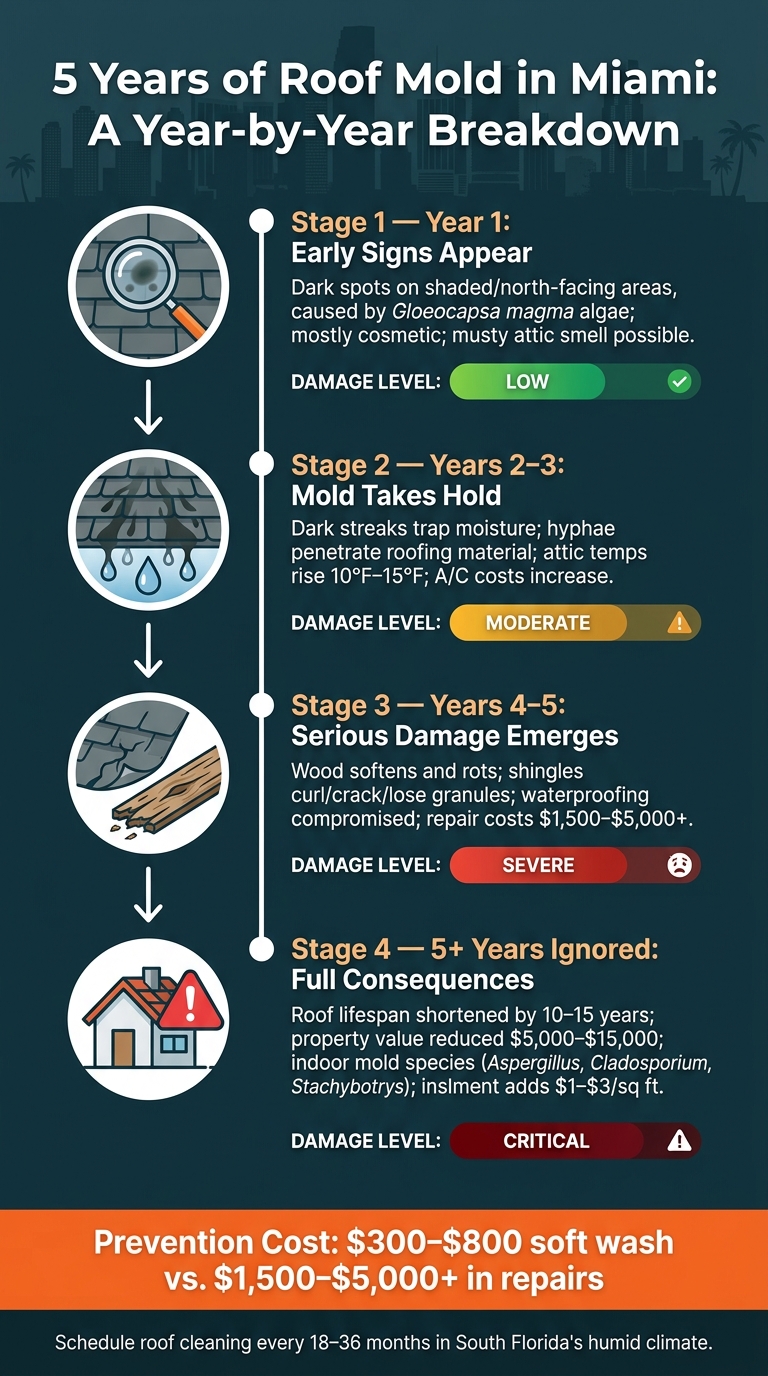
5 Years of Roof Mold in Miami: A Year-by-Year Breakdown
Roof mold doesn't just show up out of nowhere. In Miami's humid climate, it follows a clear pattern - starting small and becoming more destructive if left untreated. Here's how mold typically evolves over five years in this environment.
Year 1: Early Signs Appear
In the first year, you might notice dark spots forming on shaded areas of your roof, especially on north-facing slopes or near gutters and trees. These spots are often caused by Gloeocapsa magma, a type of algae that thrives on the limestone filler in asphalt shingles and tiles. At this stage, the discoloration is mostly cosmetic. However, subtle signs like a musty smell in the attic or faint water stains on rafters could indicate that spores are beginning to spread indoors.
Years 2–3: Mold Takes Hold
By the second and third years, those small spots grow into long, dark streaks that trap moisture. This moisture, combined with debris buildup, keeps the roof surface damp, creating the perfect environment for mold to thrive. During this phase, the mold's hyphae dig into the roofing material, making it harder to remove. The trapped moisture can also increase attic temperatures by 10°F to 15°F, putting extra strain on your air conditioning system.
"Those black streaks aren't just ugly - they're living algae feeding on your shingles. This growth traps heat, increasing your A/C costs and shortening your roof's lifespan." - Coastal Roofing
By the end of year three, the mold is no longer just a cosmetic issue - it’s actively damaging your roof.
Years 4–5: Serious Damage Emerges
In the fourth and fifth years, the problem escalates. The persistent moisture starts to weaken the underlayment and decking, causing the wood to soften and rot. Shingles and tiles may begin to curl, crack, or lose granules, further reducing the roof's ability to protect your home.
"By the time the problem becomes visible from inside the home, the damage underneath has usually already progressed much further than expected." - Leighanne Thompson, Owner, Thompson's Roofing Division
At this stage, repair costs can skyrocket, ranging from $1,500 to over $5,000. If left unchecked, the mold could shave up to ten years off your roof's lifespan.
sbb-itb-20350f7
What Five Years of Roof Mold Looks Like
After five years of neglect, roof mold can cause serious and lasting harm. Below, we’ll look at how mold impacts various roofing materials and the structural integrity of your home.
How Mold Affects Asphalt, Tile, and Flat Roofs
Roofing materials react differently to mold, especially in Miami's humid climate.
Asphalt shingles: These often develop dark streaks caused by Gloeocapsa magma, a type of algae. The algae feed on the limestone filler in the shingles, leading to granule loss and exposing the asphalt mat beneath. Over time, this can result in "bald" patches, curling edges, and blistering, which reduce the roof's ability to reflect heat effectively.
Clay and concrete tiles: These materials, being porous, absorb moisture easily. This can lead to efflorescence, a white powdery residue from salt deposits, and thick moss growth. Moss can lift the edges of tiles, allowing water to seep underneath and damage the underlayment.
Flat roofs (like TPO or modified bitumen): These often show fuzzy black or gray mold patches in areas where water pools. This biological buildup can weaken the seams and compromise the roof's waterproofing.
While these surface issues are concerning, they often hint at deeper, more severe damage underneath.
Structural Damage That Builds Over Time
What starts as surface staining can lead to significant structural problems. Tino, the owner of Kleanway Cleaning Services, explains:
"Algae eats away at the protective granules on asphalt shingles. Moss roots get under tile edges and push them up, allowing water underneath. Mold deteriorates the underlying wood or substrate."
Mold's tiny, thread-like structures, called hyphae, penetrate roofing materials, breaking them down from the inside. Over time, the plywood or OSB decking beneath the roof can become soft and weak, unable to support the roof's weight. Replacing damaged decking can cost between $50 and $100 per 4×8 sheet, not including labor.
How Roof Mold Affects the Inside of Your Home
Once mold breaches the roof's surface, the damage doesn’t stop there. It can spread into the attic, affecting rafters, decking, and insulation. Mold spores may then infiltrate your living space through recessed lighting, HVAC ducts, or attic hatches.
South Florida attics often host mold species like Aspergillus, Cladosporium, and Stachybotrys chartarum (commonly known as black mold). Signs of indoor mold include ceiling stains, musty odors, and respiratory issues such as coughing, congestion, or worsened asthma symptoms that improve when leaving the home.
"If anyone in your household has unexplained respiratory symptoms that improve when they leave the house, have your attic inspected for mold immediately." - WeatherShield Roofing
Addressing mold inside the home can be costly. Moldy insulation must be removed and replaced, which can add $1 to $3 per square foot to the overall remediation costs. The longer you wait, the more extensive - and expensive - the damage becomes.
Why Roof Mold Is a Serious Problem in South Florida
How Mold Shortens Roof Life and Raises Energy Costs
Roof mold is more than just an eyesore - it actively reduces the lifespan of your roof and increases energy expenses. Dark mold and algae streaks absorb sunlight instead of reflecting it, which means higher attic temperatures. In South Florida, where summers are already scorching, this added heat forces your air conditioner to work overtime, spiking your energy bills. On top of the financial burden, mold also introduces safety concerns.
Safety Risks Caused by Roof Mold
The dangers of roof mold go beyond structural damage. Algae and moss can make roof surfaces dangerously slippery, especially after heavy rain or during maintenance work. Walking on a mold-covered roof significantly increases the risk of falls.
Mold also invites pests. Over time, it weakens roof sections, creating soft spots that make it easy for rodents, squirrels, and wood-boring insects like termites and carpenter ants to enter. Once inside, these pests often chew through electrical wiring, turning the issue into a fire hazard - a danger that starts with mold but escalates due to the resulting infestation.
How Roof Mold Affects Property Value and Compliance
In South Florida’s competitive housing market, a roof stained with mold can be a major red flag.
"Real estate professionals in South Florida routinely note that black streaks on a roof cause potential buyers to assume the roof is failing or near the end of its service life." - Roofing Recovery
A mold-streaked roof doesn’t just lower curb appeal - it can reduce the resale value of your home and lead to insurance complications. Many Florida insurance companies now factor roof condition into their renewal decisions. Visible mold or heavy staining often signals deferred maintenance, which could jeopardize your coverage. On the flip side, keeping your roof in good condition can sometimes help secure better insurance terms.
For those living in HOA communities across Miami-Dade, Broward, and Palm Beach counties, mold can bring even more headaches. HOAs enforce strict roof cleanliness standards, and visible mold could lead to violation notices or fines long before you plan to sell. Palm Shine Pros frequently helps homeowners in the area restore their roofs to compliance, preventing fines from escalating. These issues highlight why regular roof maintenance is so important in South Florida’s climate.
How to Fix Roof Mold: What Palm Shine Pros Does
How Palm Shine Pros Cleans Roof Mold Safely
Using high-pressure washing on a roof is a bad idea. Anything above 100 PSI can strip nearly half of an asphalt shingle's protective granules, potentially crack tiles, and even void your manufacturer's warranty.
Instead, Palm Shine Pros relies on soft washing. This method uses low-pressure water combined with specially formulated solutions to safely clean asphalt shingles, clay tiles, and metal roofs. It doesn’t just remove stains - it targets mold, algae, and mildew at their roots. This approach not only brings back your roof's clean look but also prevents the long-term damage that mold can cause.
"Soft washing uses a low-pressure application of a properly diluted cleaning solution that kills the algae, mold, and mildew at the root level. The result lasts longer than pressure washing because you're treating the actual biological growth, not just blasting it off the surface temporarily." - Tino, Founder, Kleanway Cleaning Services
For a typical residential roof, a professional soft wash usually costs between $300 and $800.
Once your roof is clean, regular maintenance is key to keeping mold from making a comeback.
Maintenance Steps to Keep Mold From Coming Back
Cleaning is just the first step. In South Florida’s humid climate, mold can easily return without preventive measures. Here’s how to keep it at bay:
Gutter Maintenance: Clogged gutters trap water near the roof edge, creating the perfect environment for mold to thrive. Palm Shine Pros offers gutter cleaning services to ensure proper drainage. Ideally, gutters should be cleared every three months.
Tree Trimming: Overhanging branches block sunlight and drop leaves and debris onto your roof. Trimming these branches allows more sunlight to reach the roof, helping it dry faster after rain.
Preventative Metal Strips: Installing zinc or copper strips near the roof’s peak can help. As rainwater flows over these strips, they release ions that naturally prevent algae and moss from growing. These strips can remain effective for over a decade.
Given Miami’s climate, scheduling a roof inspection and professional cleaning every 18 to 36 months is a smart way to avoid biological buildup.
When Your Roof Needs Repairs or Further Evaluation
Soft washing and regular upkeep can handle surface mold, but deeper issues may need a professional’s attention. If mold has been ignored for years, cleaning might reveal damage that requires more than just surface treatment. Be on the lookout for these warning signs:
Spongy or soft spots on the roof, which could mean mold has reached the roof deck.
Sagging rooflines, missing or rotted shingles, or cracked tiles.
Interior leaks or visible mold on attic rafters and insulation.
Excessive granules in gutters, indicating shingle deterioration.
If mold has spread to the attic’s insulation or decking, interior mold remediation may be necessary. This process can cost anywhere from $1,500 to over $5,000.
Every service from Palm Shine Pros includes a detailed roof assessment. If the damage is beyond what cleaning can fix, they’ll recommend consulting a licensed roofing contractor to ensure the problem is fully addressed.
Conclusion: Why Regular Roof Maintenance Matters
In Miami, leaving roof mold unchecked for five years can lead to serious structural issues. What starts as a minor problem can quickly escalate, especially in South Florida's hot, humid climate, where mold and algae thrive and spread faster than expected.
Ignoring roof mold can shorten a roof's lifespan by 10–15 years and lower property value by $5,000–$15,000. Compare that to the relatively small investment of $300–$800 for a professional soft wash. Plus, repair costs often pile up due to insurance policies that typically exclude mold damage resulting from neglect.
"Every day moss stays on your roof costs you money in potential repairs and reduces your home's value." - Kleanway Pressure Cleaning
Routine roof cleaning not only extends the life of your roof but also helps you maintain insurance coverage and protect your home's value. Skipping maintenance could cost you far more in the long run.
FAQs
Is the black staining on my roof mold or algae?
In South Florida, those black streaks you often see on roofs are typically caused by Gloeocapsa magma, a type of blue-green algae that loves the area's humid and warm climate. Mold, however, looks quite different. It shows up as fuzzy, irregular patches in shades of black, brown, or green. The key to telling them apart lies in their appearance: algae creates flat, dark streaks, while mold is spongy or slippery and thrives in areas that stay constantly damp.
How can I tell if roof mold has spread into my attic?
If your home or attic has a musty smell, it could be a red flag. Take a closer look for water stains or dark green and black spots on areas like rafters, roof decking, or insulation. Keep an eye out for moisture near vents or light fixtures, and even pay attention to any unexplained respiratory symptoms that seem to get better when you’re not at home. If these signs point to mold, it’s a good idea to call in a professional to check for leaks or ventilation issues.
How often should my Miami roof be soft washed?
Most residential roofs in Miami benefit from professional soft washing every 1 to 2 years. If your home has heavy shade or is surrounded by trees, you might need to clean it twice a year. On the other hand, standard shingle roofs typically require cleaning every 2 to 3 years. Miami's humid climate promotes mold and algae growth, making regular soft washing essential to protect your roof and keep it in good shape. For tailored recommendations, it’s best to consult a professional.
.avif)


.avif)