Siding Cleaning in South Florida: What Each Material Needs
Lorem ipsum dolor sit amet, consectetur adipiscing elit. Suspendisse varius enim in eros elementum tristique. Duis cursus, mi quis viverra ornare, eros dolor interdum nulla, ut commodo diam libero vitae erat. Aenean faucibus nibh et justo cursus id rutrum lorem imperdiet. Nunc ut sem vitae risus tristique posuere.
South Florida siding needs material-specific treatment. Humidity, salt air, strong sun, and heavy rain push mold, algae, chalking, rust, and trapped moisture to show up faster than most homeowners expect.
The method varies by surface:
Vinyl: soft washing is the right call for most cases
Fiber cement: mild soap and a soft brush, cleaned gently
Wood: the lowest pressure of any material, with extra care around seams and joints
Brick and masonry: controlled low pressure works, but mortar is the weak point
Metal: needs a wash that clears salt and oxidation without wearing down the finish
Most South Florida homes need siding cleaning every 12 to 24 months. Coastal properties, shaded lots, and homes near sprinklers often need it sooner. Multi-story homes, heavy biological growth, or visible cracks, peeling paint, oxidation, or rust are signs that hiring a licensed pro is the safer move.
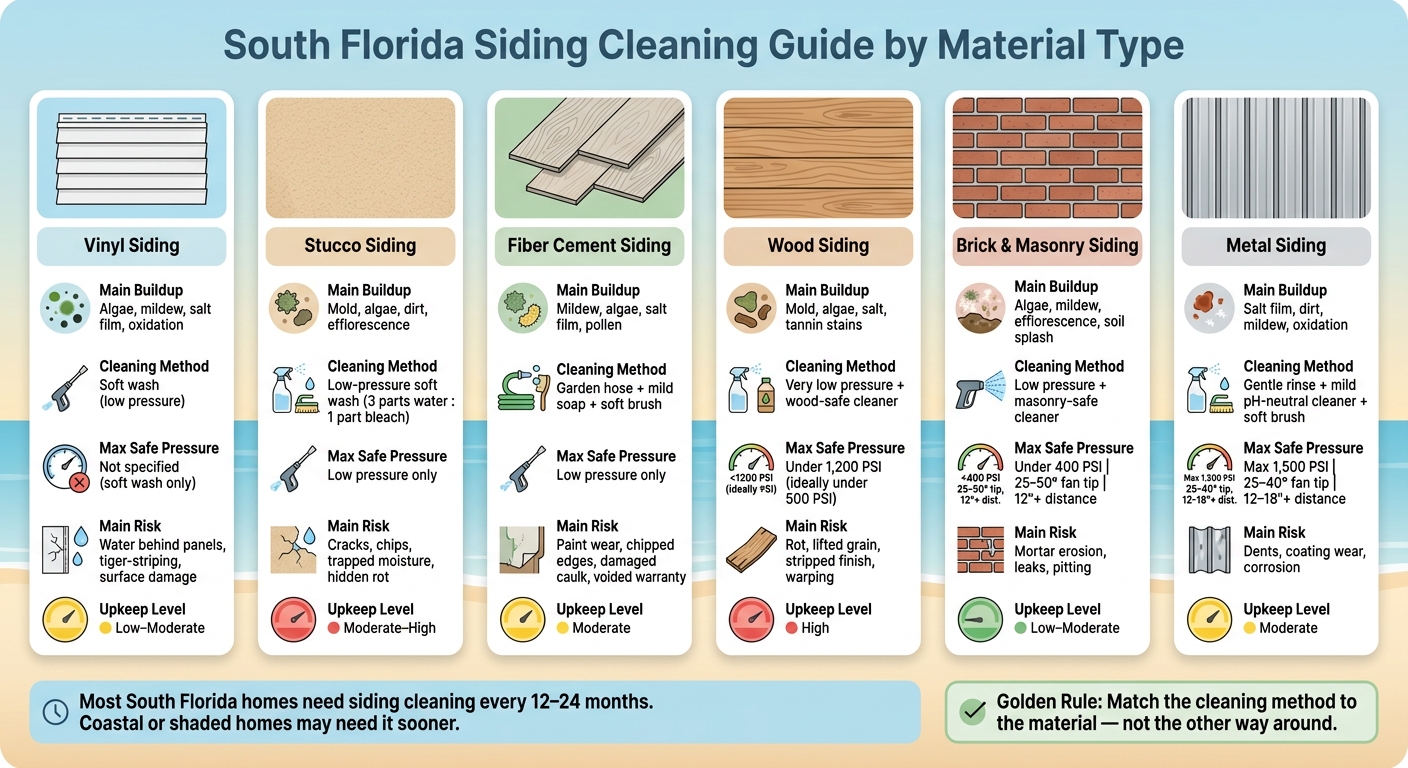
South Florida Siding Cleaning Guide by Material Type
Quick Comparison
Material
Main buildup
Safer cleaning method
Main risk
Vinyl
Algae, mildew, salt film, oxidation
Soft wash
Water behind panels, streaking, surface damage
Stucco
Mold, algae, dirt, efflorescence
Low-pressure soft wash
Cracks, chips, trapped moisture
Fiber cement
Mildew, algae, salt film, pollen
Hose, mild cleaner, soft brush
Paint wear, chipped edges, damaged caulk
Wood
Mold, algae, salt, tannin stains
Very low pressure, wood-safe cleaner
Rot, lifted grain, stripped finish
Brick & masonry
Algae, mildew, efflorescence, soil splash
Low pressure with masonry-safe cleaner
Mortar erosion, leaks, pitting
Metal
Salt film, dirt, mildew, oxidation
Gentle rinse, mild cleaner, soft brush
Dents, coating wear, corrosion
If you want to keep siding clean without causing damage, the rule is simple: match the cleaning method to the material.
sbb-itb-20350f7
1. Vinyl Siding
Vinyl siding tends to show grime fast in South Florida. Humidity and salt air make a rough combo, and the usual result is algae, mildew, and oxidation.
Common South Florida Buildup
The first trouble spots are often shaded walls and north-facing sides of the house. That’s where you’ll usually notice green algae streaks, black mildew spots, pollen, and plain old surface dirt. If the home sits near the coast, a thin, sticky layer of salt can form too. That residue holds onto dirt, so the siding starts looking dingy sooner.
Older panels that get a lot of sun may also develop oxidation. You can often spot it with a simple check: run your finger across the surface. If you see a white, powdery residue, that’s oxidation.
Safest Cleaning Method
Soft washing is the go-to method for vinyl siding, and it lines up with manufacturer guidance. It cleans the surface without putting the panels at risk.
For oxidation, a water-vinegar mix or a specialty vinyl restorer used with a soft-bristle brush is a safer choice than pressure washing. In South Florida, cleaning every 6 to 12 months is a solid baseline. A lot of homeowners book one wash in spring and another in fall.
Damage Risks
High-pressure washing can do more harm than good. It can warp panels, etch the surface, and force water behind the siding. On oxidized vinyl, too much pressure can also cause tiger-striping, which leaves streaks that are tough to fix.
A few other things can cause problems fast:
Harsh solvents
Undiluted bleach
Abrasive scrub pads
These can strip color, dull the finish, and make the siding more likely to pick up algae again.
When to Call a Pro
DIY soft washing can be enough for routine upkeep on a single-story home. But there’s a point where it makes sense to bring in a pro. If mold or algae covers large sections, oxidation is heavy, or the home is multi-story, the job gets a lot less forgiving.
A pro can also catch warning signs you might miss, like soft spots behind the panels or rust near fasteners. Those issues can point to moisture trouble or a structural problem.
Vinyl is the least risky siding to clean. Stucco needs a lot more care.
2. Stucco Siding
Stucco is common in South Florida. It also needs more care than vinyl.
Why? Its porous, textured finish holds moisture and grime. That means a gentler wash is the safe move.
Common South Florida Buildup
Stucco tends to hang onto moisture and airborne debris. In South Florida, the most common problems are mold and mildew, green and black algae streaks, dirt and grime, efflorescence, and rust or metal staining from nearby hardware.
The worst buildup usually shows up on shaded walls, north-facing elevations, and areas near irrigation, since those spots stay damp longer.
Because stucco traps moisture so easily, cleaning should stay low pressure.
Safest Cleaning Method
Soft washing is the best option for stucco. That means using low-pressure washing with a sodium hypochlorite-based cleaner and surfactant.
If you're taking the DIY route, a Florida Lath & Plaster Bureau bulletin recommends a mix of three parts water to one part household bleach, applied after pre-wetting the wall. Let it sit for about 10–20 minutes, but don't let it dry. Then rinse from top to bottom. Pre-soak nearby plants before you start, and rinse them again after cleaning.
Damage Risks
High-pressure washing can do a lot of harm to stucco. It can widen hairline cracks, chip the finish coat, and push water deep into the stucco system.
In South Florida's humid climate, that trapped moisture can take a long time to dry. And when water lingers inside the wall, it can lead to mold inside wall cavities or rot in the framing underneath.
When to Call a Pro
If the stucco already has visible cracks, old patches, or signs of water intrusion, get that checked before washing. The same goes for large multi-story homes, heavy organic growth across several elevations, and homes with decorative details.
A good pro should specialize in low-pressure stucco washing, explain their pressure settings and chemical mix, and carry insurance. In South Florida, that kind of care helps protect both the finish and the structure underneath.
3. Fiber Cement Siding
Fiber cement siding, including products like James Hardie, is a tough pick for South Florida homes. It stands up well to rot, termites, and warping. But that doesn’t mean it can be ignored. In South Florida, it still needs routine cleaning. And just like stucco, it should be cleaned with low pressure. Unlike vinyl, fiber cement can be damaged if the washing is too harsh.
Common South Florida Buildup
In South Florida’s humidity and salt air, fiber cement tends to collect mildew, algae, and salt film, along with pollen and general dirt. You’ll usually see buildup first on shaded or north-facing walls, and around landscaping or sprinkler overspray. On coastal homes, salt film can make the surface look chalky sooner and can encourage mildew growth.
Because fiber cement has a painted surface and sealed joints, cleaning should remove the buildup without wearing down the finish.
Safest Cleaning Method
For routine buildup, hand washing is often enough. Use a garden hose, mild soap or an approved exterior cleaner, and a soft brush. If mildew or algae is present, an oxygen-based bleach or a fiber-cement-approved mildew cleaner usually does the job. Apply it, let it sit for a short time, scrub lightly, and rinse it off before it dries.
Work from top to bottom and follow the siding laps. Don’t scrub upward into the joints, because that can push water behind the boards. Rinse well. Leftover soap residue can attract dirt and make the finish look dull over time.
Damage Risks
The biggest risk to fiber cement is high-pressure washing. It can etch the paint, chip the board edges, strip caulk from the joints, and force water behind the siding.
Harsh chemicals can cause just as much trouble. Acid washes, paint thinners, undiluted bleach, and strong solvents can damage the surface, and fiber cement manufacturers warn against them. Hard scrubbing also wears down the paint and leaves the surface more exposed to sun and moisture. In some cases, ignoring these warnings can also void the manufacturer’s warranty.
When to Call a Pro
If mildew or salt buildup is too heavy for a hose and mild cleaner, a qualified soft-wash contractor is usually the safer option. The key is low pressure and the right cleaning mix, not brute force. That helps protect the paint, caulk, and seams.
It also makes sense to call a pro if you spot cracked caulk, loose boards, or peeling paint before cleaning. Those issues should be fixed first, or water can get pushed into places it shouldn’t go. And for multi-story homes or hard-to-reach spots, professional cleaning can lower fall risk.
If damage is already present, the cleaning method matters even more on wood siding.
4. Wood Siding
Wood is less forgiving than fiber cement, so the cleaning approach needs to stay gentle.
In South Florida, wood siding needs the softest touch. Humidity, salt air, and strong UV wear down finishes fast.
Common South Florida Buildup
The biggest problems for wood siding in this area are mildew, mold, and algae. Along the coast, salt air adds another layer of trouble. High humidity keeps salt stuck to the wood for longer, which speeds up the breakdown of paint and other protective coatings.
Tannin-rich woods like cedar and redwood are more likely to develop dark organic stains when moisture gets into the grain. Strong afternoon UV can also open small cracks in paint and stain, which gives salty, humid air a direct path into the wood itself.
Once moisture gets into the grain, cleaning stops being just about looks. It turns into upkeep.
Safest Cleaning Method
Wood should be cleaned with a controlled low-pressure wash. Keep pressure under 1,200 PSI, and under 500 PSI if you want to be extra careful.
For mildew, algae, and tannin stains, mild oxalic- or citric-based cleaners do the job without stripping the wood. A monthly fresh-water rinse helps wash away salt before it bonds to the surface. If you're cleaning before repainting, let the wood dry all the way first.
Damage Risks
High-pressure washing can strip paint, lift the grain, and force moisture deep into the wood, which increases the risk of rot. Once the fibers are raised, they hold even more salt and moisture, and that makes the problem worse over time.
Near the coast, corroded fasteners can leave rust streaks that look like wood stains. If you spot those streaks, the issue may not be the surface at all. The fasteners themselves may need work.
When to Call a Pro
Once paint starts to blister or boards begin to warp, you're no longer dealing with simple surface dirt.
In Florida, wood siding often needs repainting every 4 to 6 years. Before repainting, professional soft washing under 500 PSI can clean the surface without harming the wood or pushing water into seams.
Call a pro if you notice:
Bubbling or blistering paint
Warping boards
Hairline cracks or gaps
Heavy biological growth
At that stage, the cleaning process needs even more care.
5. Brick and Masonry Siding
Brick and masonry look tough, and in many ways they are. But in South Florida, humidity, rain, and salt air still leave their mark. Unlike vinyl or fiber cement, brick and masonry can soak up moisture and hold onto mineral deposits. That means the mortar matters just as much as the face of the wall.
Common South Florida Buildup
The most common issues on brick and masonry are mold, mildew, and algae, especially in spots where moisture gets trapped. Heavy rain and irrigation can also kick soil onto the lower part of the walls.
Another common problem is efflorescence. That’s the white, chalky residue that shows up when moisture moves through masonry and carries dissolved minerals to the surface. If it keeps coming back, that usually points to a moisture issue that simple surface cleaning won’t solve. In coastal areas, salt film from the Atlantic or Gulf can add another layer of buildup and speed up wear on mortar and metal attachments.
Safest Cleaning Method
For brick and masonry, go with low pressure and a cleaner made for masonry. Keep pressure under 400 PSI, use a 25–50° fan tip, and stay at least 12 inches away.
For mold and algae, a masonry-safe mix in the 2–4% sodium hypochlorite range usually does the job. Pre-wet the wall first, let the solution sit for 10–20 minutes without drying out, then rinse gently from top to bottom.
Efflorescence needs a different approach. Start with a dry stiff-fiber or nylon brush. Skip the wire brush, since it can damage the brick face and mortar joints. If brushing doesn’t work, move to a masonry cleaner. If the white deposits keep showing up, the moisture source still needs to be fixed.
Damage Risks
Too much pressure can wear away mortar, pit the brick, and force water behind the wall. That can lead to leaks, interior mold, and expensive repointing work.
Acid cleaners can also cause trouble when used carelessly. They may roughen the surface and make the brick more porous, which can lead to faster staining later on.
When to Call a Pro
Bring in a professional if you see widespread growth, stubborn efflorescence that won’t come off with brushing, or any visible cracking, loose mortar, or spalling. Cleaning damaged masonry before repairs can make the problem worse.
It also makes sense to call a pro for multi-story walls or coastal surfaces with heavy salt buildup. A qualified contractor will inspect the masonry, look for damage, and adjust the pressure and cleaning mix to fit the surface.
Metal siding shifts the concern from moisture absorption to corrosion and oxidation.
6. Metal Siding
Metal siding - mainly aluminum and steel - does a good job of shedding rain. But in South Florida, salt air is the problem. Over time, that salty film can lead to corrosion, oxidation, and coating wear. With metal, the weak spot usually isn't the panel itself. It's the finish. So the goal is simple: clean the surface without wearing down the coating.
Common South Florida Buildup
Salt air is the biggest issue for metal siding near the coast. Homes can pick up a thin layer of salt, and that residue slowly wears on protective coatings and fasteners. Add South Florida's heat and humidity, and you also get a steady mix of algae, mildew, and dirt on the surface.
Another common issue is oxidation. On aluminum, it often shows up as a chalky, faded film. A lot of homeowners assume it's just dirt, but it's usually a sign that the finish is starting to fail.
Safest Cleaning Method
When you clean metal siding, the job is to remove salt and grime without stripping away the coating. Start with a rinse from a garden hose. For anything that sticks, use a mild, pH-neutral cleaner with a soft cloth, sponge, or soft-bristle brush.
If you use a pressure washer, keep it in the low range - generally no more than 1,500 PSI with a 25–40° fan tip - and stay at least 12–18 inches from the surface. Spray downward, not up into the seams, so you don't push water behind the panels.
Oxidation needs a different approach. Use an oxidation remover or TSP substitute and apply it by hand with a soft brush. Work in sections from the bottom up, then rinse from the top down.
Damage Risks
Most damage comes from three things: too much pressure, harsh chemicals, and rough tools.
High pressure can dent thin aluminum panels, strip factory coatings, and force water behind seams, which can lead to hidden moisture issues. Abrasive pads, wire brushes, and steel wool can scratch the finish and leave behind tiny metal bits that rust and stain later. Strong solvents and bleach-heavy mixes can dull the surface and make oxidation move faster on worn finishes.
When to Call a Pro
With metal siding, bigger problems usually show up through finish damage, not water absorption. Bring in South Florida's exterior professionals if you see widespread oxidation, heavy salt buildup, rust streaks near fasteners, or mildew that keeps coming back.
The same applies to multi-story homes or properties close to the water, where salt exposure never really lets up. A qualified pro can choose the right detergents and pressure for the exact finish - painted, powder-coated, or anodized - without damaging it.
Cleaning Pros and Cons by Siding Type
Here’s the fastest way to compare the six siding types side by side.
Material
Cleaning Pros
Cleaning Cons
Upkeep Level
Vinyl
Non-porous; mold and algae usually stay on the surface; responds well to soft washing
UV exposure can cause chalking and oxidation; high pressure can crack panels or force water behind seams
Low–Moderate
Stucco
Works well with low pressure; soft washing removes mildew well
Porous and textured; traps moisture; high pressure can chip the finish and contribute to hidden rot
Moderate–High
Fiber Cement
Dimensionally stable; painted surfaces clean well with mild detergents and soft brushes
Sensitive to acid washing and high pressure; water driven behind boards can damage paint and caulk
Moderate
Wood
Can be cleaned safely with low pressure and wood-safe cleaners; the finish can be restored through refinishing
Highly porous; prone to rot, grain damage, and warping; strong bleach can strip natural oils
High
Brick & Masonry
Durable; handles carefully controlled pressure well; does not rot
Porous mortar joints can erode under high PSI; efflorescence may need specialized masonry cleaners
Low–Moderate
Metal
Non-porous; salt film and dirt stay on the surface
Salt air can cause oxidation and chalking; harsh chemicals or high pressure can damage factory coatings
Moderate
In South Florida, some siding types are simply less forgiving than others. If a material soaks up moisture or reacts badly to cleaning chemicals, the wash needs a gentler hand. That’s why stucco, wood, and masonry usually call for more care than vinyl or metal.
The core idea is simple: match the pressure, cleaner, and method to the siding, not the other way around. That sets up the final takeaway.
Conclusion
South Florida's humidity, salt air, rain, and sun make siding cleaning a material-specific job. The right method for one home can damage the next.
Vinyl and coated metal can usually handle controlled low-pressure washing with a wide fan tip and a downward angle. Stucco, fiber cement, painted wood, and most masonry need soft washing instead. Wood needs the most restraint.
Most South Florida homes need cleaning every 12 to 24 months. Coastal and shaded properties often land on a shorter cycle. Multi-story homes, heavy organic growth, oxidized vinyl, corroding metal, aging stucco, or siding with a history of leaks are situations where a licensed exterior cleaning crew makes more sense than a DIY approach. Palm Shine Pros handles that kind of work across Miami-Dade, Broward, and Palm Beach — matching method and pressure to the surface on every job.
FAQs
How do I know if my siding is oxidized or just dirty?
Look for a chalky residue or a gritty texture. Dirt usually sits on the surface, so you can rinse it off or clean it away.
Oxidation is different. It means the siding’s finish is starting to break down from UV exposure. If the surface looks faded, chalky, or leaves a powdery film on your hand instead of just looking dirty, it’s likely oxidized.
Can I use a pressure washer on my siding at all?
You can, but there are real risks: cracked stucco, stripped paint, and water pushed behind panels, which can lead to mold growth. Soft washing is usually the safer choice for siding because it uses low pressure and specialized detergents to treat mold and algae.
If you use pressure anyway, keep the wand at a 45-degree angle, stay 12 to 18 inches away, and never spray upward into siding gaps.
What signs mean I should call a pro instead of cleaning it myself?
Call a professional if the problems stick around or you notice signs of damage. That includes dark or dull walls, mold or algae that keeps coming back, peeling paint, slippery surfaces, or wear like cracks, stucco chips, and fading.
It’s also smart to bring in a pro for hard-to-reach spots or stubborn salt buildup. That can help you avoid damage from improper pressure washing, such as trapped moisture or paint getting stripped off.
Lorem ipsum dolor sit amet, consectetur adipiscing elit, sed do eiusmod tempor incididunt ut labore et dolore magna aliqua. Ut enim ad minim veniam, quis nostrud exercitation ullamco laboris nisi ut aliquip ex ea commodo consequat. Duis aute irure dolor in reprehenderit in voluptate velit esse cillum dolore eu fugiat nulla pariatur.
.avif)

.avif)