What Soft Washing Does to South Florida Plants and Lawns
Lorem ipsum dolor sit amet, consectetur adipiscing elit. Suspendisse varius enim in eros elementum tristique. Duis cursus, mi quis viverra ornare, eros dolor interdum nulla, ut commodo diam libero vitae erat. Aenean faucibus nibh et justo cursus id rutrum lorem imperdiet. Nunc ut sem vitae risus tristique posuere.
Soft washing can burn your plants and grass - even with low pressure. Before spraying starts, check drainage, pre-wet nearby landscaping, and plan to keep runoff out of planting beds, storm drains, ponds, and canals.
Your risk depends on cleaner strength, contact time, and exposure to South Florida’s heat and wind. Limit spray drift and rinse exposed leaves and turf before residue dries; rinsing cannot repair tissue already burned.
After cleaning, watch for leaf spots, curling, and brown lawn edges. <u>Check soil moisture and sprinkler coverage before blaming the cleaner</u>, since heat, disease, and watering problems can look similar. Take photos, track new growth, and ask your cleaning provider about plant protection before the next job.
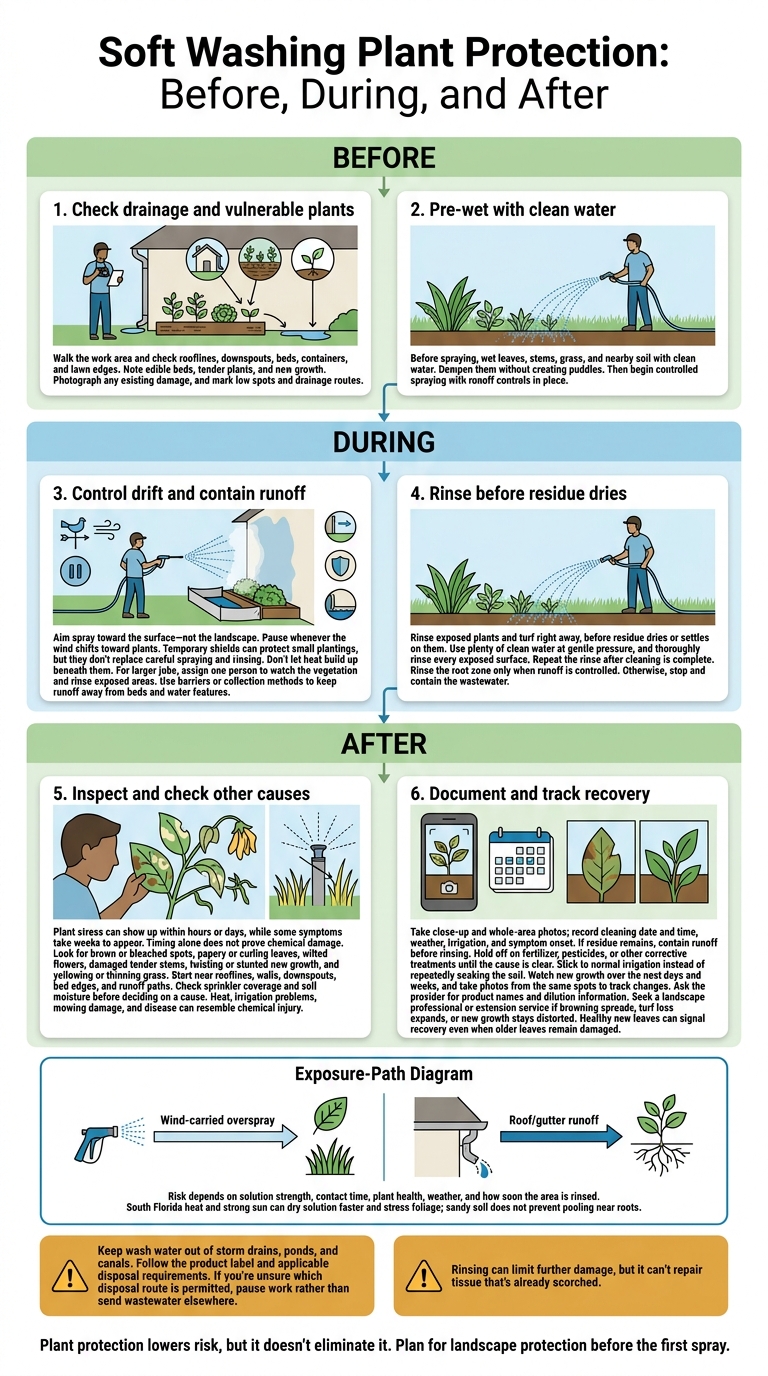
Soft Washing Plant Protection: Before, During, and After
I kill less plants when SOFT WASHING by doing this!
sbb-itb-20350f7
How Soft-Washing Chemicals Affect Plants and Grass
Bleach-based soft-washing solutions can burn foliage, bleach turf, and stress roots if they reach plants or soil. Signs include curling leaves, leaf drop, scorched new growth, and brown lawn edges. The extent of damage depends on solution strength, contact time, plant health, weather, and how soon the area is rinsed. Drifting mist and runoff that collects in one spot can make damage worse.
How Overspray and Runoff Reach Plants
Wind can carry droplets beyond the spray zone onto leaves, flowers, shrubs, palms, fences, and turf. Narrow spray patterns add to the risk. Leaf spots on the side facing the cleaned surface often point to overspray.
Roof and gutter discharge can send concentrated runoff into a single area. That runoff may follow pavement or foundation edges and pool near roots, leaving a narrow brown strip beneath downspouts.
Why South Florida Conditions Matter
Strong sun and heat can dry the solution faster and put more stress on exposed foliage. Tender ornamentals and new plantings are more vulnerable than established palms or turf, but none are immune.
Fast-draining sand doesn't prevent runoff from pooling near roots. Slopes, compacted spots, irrigation, and planting beds beside buildings can still cause cleaner to collect. Rinsing can limit further damage, but it can't repair tissue that's already scorched.
Protect Plants Before and During Soft Washing
Once you know how bleach can reach plants, take steps to keep overspray, runoff, and residue off plants and turf.
Check Drainage and Pre-Wet Plants
Walk the work area and check rooflines, downspouts, beds, containers, and lawn edges. Note edible beds, tender plants, and new growth. Photograph any existing damage, and mark low spots and drainage routes.
Before spraying, wet leaves, stems, grass, and nearby soil with clean water. Dampen them without creating puddles. Then begin controlled spraying with runoff controls in place.
Limit Overspray and Contain Runoff
Aim spray toward the surface - not the landscape - to help prevent leaf burn and brown turf edges. Pause whenever the wind shifts toward plants.
Temporary shields can protect small plantings, but they don’t replace careful spraying and rinsing. Don’t let heat build up beneath them. For larger jobs, assign one person to watch the vegetation and rinse exposed areas.
Use barriers or collection methods to keep runoff away from beds and water features. Keep wash water out of storm drains, ponds, and canals. Follow the product label and applicable disposal requirements. If you’re unsure which disposal route is permitted, pause work rather than send wastewater elsewhere.
Rinse Plants Before Residue Dries
Rinse exposed plants and turf right away, before residue dries or settles on them. Use plenty of clean water at gentle pressure, and thoroughly rinse every exposed surface. Repeat the rinse after cleaning is complete.
Rinse the root zone only when runoff is controlled. Otherwise, stop and contain the wastewater.
Spot Plant Stress After Cleaning
Plant stress can show up within hours or days, while some symptoms take weeks to appear. Timing alone does not prove chemical damage. Heat, irrigation problems, and existing disease can cause similar symptoms. Start with the most exposed areas: near rooflines, walls, downspouts, bed edges, and runoff paths.
Inspect Leaves, New Growth, and Lawn Edges
Look for brown or bleached spots, papery or curling leaves, wilted flowers, and damaged tender stems. Check new growth for twisting, cupping, or stunting. Inspect grass for yellowing or thinning below rooflines, beside walls, near downspouts, and along runoff paths. A sharp damage line may suggest exposure, but it does not prove it.
Take close-up photos and shots of the whole affected area, including any visible residue or pooled runoff. Record the cleaning date and time, weather, irrigation, and when symptoms began. Check sprinkler coverage and soil moisture before deciding on a cause.UF/IFAS recommends ruling out irrigation problems, mowing damage, and disease when assessing turf injury.
Rinse Residue and Track Recovery
If residue remains, contain the runoff before rinsing it away with clean water. Hold off on fertilizer, pesticides, or other corrective treatments until the cause is clear. Stick to normal irrigation instead of repeatedly soaking the soil.
Watch new growth over the next days and weeks, and take photos from the same spots to track changes. Share your observations with the cleaning provider and ask for product names and dilution information. Seek advice from a landscape professional or extension service if browning spreads, turf loss expands, or new growth stays distorted. Healthy new leaves can signal recovery even when older leaves remain damaged. Keep these notes for the next cleaning plan.
Conclusion: Make Landscape Protection Part of the Plan
After cleaning, check the areas that had the most exposure. Plant protection lowers risk, but it doesn’t eliminate it. Soft-washing solution can still burn leaves, grass, and roots, especially if it lands on dry leaves or pools around roots.
When scheduling service with Palm Shine Pros, point out sensitive plants, drainage paths, and spots where runoff could collect. Ask whether the plan covers drainage review, pre-wetting, drift control, runoff containment, rinsing, and a final walk-through. Confirm how wind, sun, and irrigation will affect the work, and plan for landscape protection before the first spray.
FAQs
Will my plants recover from soft-washing damage?
Plants can often recover from soft-washing damage if you act promptly. Before applying cleaning solutions, wet the landscaping with water. Afterward, rinse the vegetation thoroughly to limit harm.
If you spot leaf burn or discoloration, rinse the plants immediately and thoroughly to help reduce further chemical absorption. Choosing eco-friendly, non-toxic cleaning products also lowers the risk of long-term damage.
Is produce safe to eat after soft-wash overspray?
The provided information does not confirm whether produce exposed to soft-wash overspray is safe to eat. As a precaution, don’t eat fruits, vegetables, or herbs that have touched cleaning solutions or chemical runoff. If you suspect exposure, discard the produce rather than trying to wash it or eat it.
Should I reschedule soft washing during extreme heat?
Yes, consider rescheduling. High temperatures can cause cleaning solutions to evaporate too fast, making them less effective and putting plants at risk of stress or leaf burn.
If you need to clean in warmer weather, thoroughly water nearby soil and plants before, during, and after cleaning to help prevent chemical damage. For the best results and to protect your landscaping, schedule professional exterior cleaning during cooler, drier months.
.avif)

.avif)