What to Ask Before Hiring a Roof Cleaner in South Florida
Lorem ipsum dolor sit amet, consectetur adipiscing elit. Suspendisse varius enim in eros elementum tristique. Duis cursus, mi quis viverra ornare, eros dolor interdum nulla, ut commodo diam libero vitae erat. Aenean faucibus nibh et justo cursus id rutrum lorem imperdiet. Nunc ut sem vitae risus tristique posuere.
The safest hire is the roof cleaner who usessoft washing, shows proof of insurance, and puts plant protection, pricing, and warranty terms in writing.
South Florida roofs face algae, mold, mildew, salt air, heavy rain, heat, and storms year-round. Before anyone starts work, ask about cleaning method, roof type experience, runoff control, worker safety, licenses, insurance, and what the estimate covers.
Whether they use low-pressure soft washing instead of high pressure
How they protect plants, gutters, patios, pools, and pets
License and insurance proof
How much work they've done on tile, shingle, or metal roofs like yours
What the written estimate, deposit, guarantee, and maintenance plan include
How they handle lightning, wind, heat, and runoff
South Florida's warm, wet climate spreads algae fast. Black roof streaks typically come from Gloeocapsa magma, not plain dirt. On coastal homes, salt air degrades metal roof components over time. Asking the right questions upfront is what separates a clean result from roof damage, plant loss, or a crew unprepared for local conditions.
Roof Cleaning Transformation in Carrollwood, FL (Before & After)
sbb-itb-20350f7
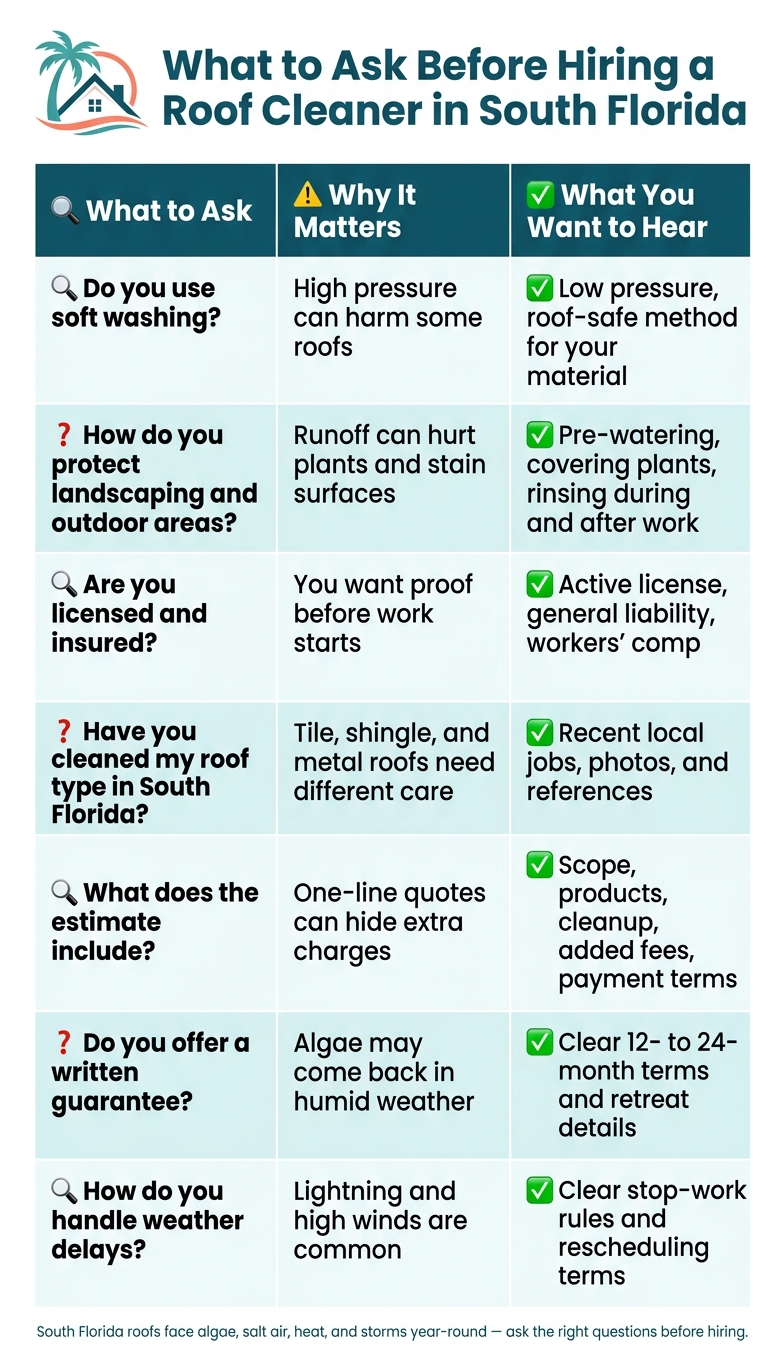
Quick Comparison
What to Ask Before Hiring a Roof Cleaner in South Florida
What to ask
Why it matters
What you want to hear
Do you use soft washing?
High pressure can harm some roofs
Low pressure, roof-safe method for your material
How do you protect landscaping and outdoor areas?
Runoff can hurt plants and stain surfaces
Pre-watering, covering plants, rinsing during and after work
Are you licensed and insured?
You want proof before work starts
Active license, general liability, workers’ comp
Have you cleaned my roof type in South Florida?
Tile, shingle, and metal roofs need different care
The rest of the article walks through each question so you can compare roof cleaners with less guesswork and more confidence.
Questions to ask about safety and property protection
Once you understand why South Florida roofs need extra care, the next step is simple: ask how the crew will protect your property while the work is happening.
Safety questions aren't only about the people on the roof. They're also about your home, your yard, and your family. If a contractor can't clearly explain fall protection, weather delays, or runoff control, that's a red flag.
How do you keep workers safe and plan around South Florida weather?
Ask how the crew handles harnesses, roof anchors, and ladder setup. You also want to know when they stop work for lightning or high winds.
Weather planning matters a lot in South Florida. A responsible contractor should stop for lightning and wait 30 minutes after the last thunder before starting again. It's also smart to ask whether the crew starts early in the day and builds in hydration breaks when the heat is intense.
How do you protect plants, gutters, and outdoor surfaces during cleaning?
Soft-wash cleaners can harm plants if runoff isn't managed well. Before you hire anyone, ask whether the crew waters landscaping before applying chemicals, covers sensitive plants with tarps or sheeting, and keeps a worker on the ground to rinse plants when needed.
You should also ask:
Whether they flush gutters and downspouts after cleaning
Where the runoff goes
How they keep cleaning solution off patios, pavers, and pools
Get these protections in writing before you sign.
After that, ask what cleaning method and products they use.
Questions to ask about cleaning methods and products
After property protection, get clear on how the roof will be cleaned and what will be used on your home.
Do you use soft washing on roofs, and why does it matter?
Start here. Soft washing uses low pressure and a cleaning solution to remove algae, mold, and mildew at the source instead of hitting the roof with force. On humid, algae-prone South Florida roofs, that difference matters.
Ask what pressure they use on your roof. Soft washing should stay low enough to clean without harming tiles, shingles, or roof coatings. It removes growth at the root, not just the surface stain, so the results usually last longer than a high-pressure rinse.
You’ll also want to ask what equipment they plan to use and whether it fits your roof material. If they can’t clearly tell you the roof pressure, that’s a red flag.
Once you understand the cleaning method, move to the solution they apply and how they deal with runoff.
What products do you use, and are they safe for plants and pets?
Ask for the exact cleaning solution in plain English. You should know what they use, how strong it is, and what steps they take to protect plants and pets during application and rinsing.
Then ask how long the results should last on your roof and what kind of upkeep they suggest. If they offer a maintenance plan, ask what it includes and get it in writing so you can look it over before you commit.
Questions to ask about licensing, insurance, roof experience, and written estimates
Once you know how the roof will be cleaned, the next step is simple: check the contractor’s paperwork. This is where the gap between a prepared pro and a risky hire usually shows up.
Are you licensed, insured, and experienced with my type of roof?
Ask for the Florida license number or local business license, then confirm that it’s active. Check it through DBPR’s license lookup or county records, look for any disciplinary actions, and make sure the business name matches the estimate exactly.
Insurance matters just as much. Ask for current general liability and workers’ compensation certificates, and have them sent straight from the insurer. In Florida, construction employers with one or more employees must carry workers’ compensation, so verify this before anyone steps onto your roof.
Roof type matters too. In South Florida, tile, shingle, and metal roofs don’t all react the same way to heat, humidity, and salt air. That’s why local roof experience counts. Ask how many roofs like yours they’ve cleaned in South Florida over the past year. Then ask for before-and-after photos or local references. It also helps to ask how they change their method for tile, shingle, or metal roofs without harming the surface or affecting warranties.
What does the estimate, guarantee, and maintenance plan include?
After you check credentials, get the scope of work, guarantee terms, and pricing in writing.
A solid written estimate in U.S. dollars ($) should spell out the roof area, cleaning method, products used, site protection, cleanup, and any added charges, such as steep pitch, hard access, or heavily stained sections. If you get a one-line estimate with just a dollar amount, treat that as a warning sign.
Ask this plainly: Do you offer a written satisfaction guarantee, and what happens if algae comes back? Many roof cleaners in humid climates offer limited guarantees against organic regrowth for 12 to 24 months, but the fine print matters. Get clear terms in writing, including what a return visit covers, whether it means full or partial retreatment, and what could void the guarantee, like a major storm or long periods of standing water.
Also make sure the deposit, balance-due date, and weather-delay terms are written into the estimate.
Conclusion: What to remember before hiring a roof cleaner in South Florida
In South Florida, roof cleaning is basic upkeep. Heat, humidity, salt air, and storms put constant stress on roofing materials regardless of age or condition.
For most roofs in this area, soft washing is the safer method. It removes algae and biological growth at the root without putting the roof surface at risk. Cleaning method matters, but so does how the crew handles the rest of the property — plants, gutters, patios, and nearby surfaces all need protection before work starts.
Before signing anything, confirm active licensing, current insurance, and recent experience with your specific roof type. Get the price, scope, guarantee, and maintenance plan in writing. Palm Shine Pros structures every job that way — method matched to the roof, terms on paper before the crew arrives.
Hiring the right exterior cleaning contractor comes down to those details. A contractor who explains the process clearly and puts everything in writing is the one most likely to leave the roof in better shape than they found it.
FAQs
How often should I clean my roof in South Florida?
In South Florida, plan to inspect your roof at least twice a year: once in the spring before hurricane season starts, and again in the fall after the busiest storm months have passed.
A professional soft wash can keep a roof looking clean for 18 to 36 months. That said, South Florida’s humidity and algae growth can shorten that window. If you live near the coast, a quick monthly rinse with a garden hose can help wash away salt, pollen, and dust.
Can roof cleaning affect my roof warranty?
Yes. Improper roof cleaning can affect your roof warranty. High-pressure washing can crack tiles, cause leaks, and strip protective granules from shingles.
That kind of damage can wear down your roof’s protective layers and even affect its structure. And once that happens, manufacturers may void your warranty, and insurance claims can get denied.
Soft washing uses low pressure and specialized solutions, which helps reduce the risk of that damage.
What should I do before the roof cleaning crew arrives?
Before the crew arrives, inspect your roof for any damage or trouble spots. Clear away branches, leaves, palm fronds, and other organic debris that can leave stains behind.
Cover exterior outlets with waterproof covers, and use tarps to protect delicate plants. It also helps to take dated photos or videos of your roof, exterior walls, and landscaping so you have a clear record of their condition before work starts.
Lorem ipsum dolor sit amet, consectetur adipiscing elit, sed do eiusmod tempor incididunt ut labore et dolore magna aliqua. Ut enim ad minim veniam, quis nostrud exercitation ullamco laboris nisi ut aliquip ex ea commodo consequat. Duis aute irure dolor in reprehenderit in voluptate velit esse cillum dolore eu fugiat nulla pariatur.
.avif)

.avif)