Lorem ipsum dolor sit amet, consectetur adipiscing elit. Suspendisse varius enim in eros elementum tristique. Duis cursus, mi quis viverra ornare, eros dolor interdum nulla, ut commodo diam libero vitae erat. Aenean faucibus nibh et justo cursus id rutrum lorem imperdiet. Nunc ut sem vitae risus tristique posuere.
In Miami, roof stains spread fast, and the safest fix for most homes is low-pressure soft washing every 1 to 2 years.
If you see black streaks, green patches, moss, or debris-filled valleys, your roof likely needs attention now. In South Florida, 70% to 90% humidity, heavy rain, shade, and salt air help algae and other growth spread fast, which can shorten roof life by 10 to 15 years and may affect insurance or renewal questions.
Here’s the short answer:
Black streaks usually mean algae
Green or fuzzy areas often point to mold, mildew, or moss
Crusty patches are often lichen and are harder to remove
Soft washing is the safer choice for asphalt shingle, tile, and metal roofs
High-pressure washing can strip shingle granules, crack tiles, and force water under roofing parts
Most Miami homes need roof cleaning every 12 to 24 months
Roof cleaning in Miami averages about $459, with many jobs falling between $295 and $623
Trimming branches, cleaning gutters, and adding zinc or copper strips can slow future staining
Soft Washing a Shingle Roof + Full Property Protection
Asphalt shingles, clay tile, concrete tile, and metal
Common warning signs
Black streaks, green growth, lichen spots, clogged valleys
Usual cleaning schedule
Every 1 to 2 years
Typical 2026 Miami cost
$295 to $623, average about $459
Prevention steps
Trim branches 6 to 10 feet, clean gutters, add metal strips
The rest of the guide breaks down what causes the stains, when to schedule cleaning, what a proper service should include, and what to look for before hiring a company.
Why Miami roofs stain faster than most
Miami roofs stain faster because the conditions that feed roof growth barely let up. Heat, rain, shade, and salt air keep algae and other growth active for most of the year.
Humidity is only part of the story. Salt air is a big reason Miami roofs have a tougher time than roofs in many other places. The Atlantic and Biscayne Bay leave mineral residue on roofing surfaces, which helps growth take hold and speeds up corrosion on metal parts like flashing and nails. Homes within 1 mile of open water often see staining come back sooner. That residue gives algae and other growth more to cling to.
The main causes of black streaks and roof discoloration
Black streaks usually come from Gloeocapsa magma. This algae darkens shingles with a UV-protective sheath and feeds on limestone filler, or calcium carbonate, found in asphalt shingles.
Algae is the most common cause, but it’s not alone. Mold and mildew often show up as green or fuzzy patches in damp spots. Lichen looks crusty or leaf-like, and it’s tougher to remove because it roots into the shingle surface. Leaf debris also plays a part. It builds up in valleys and other poor-drainage areas, traps moisture, and gives all of these growth types more room to spread.
Different types of growth cause different kinds of damage.
Organism
Appearance
Typical Roof Impact
Algae (Gloeocapsa magma)
Black streaks or dark blotches
Feeds on limestone filler; increases heat absorption
Mold & Mildew
Green patches or fuzzy texture
Thrives in humidity; speeds up surface wear
Lichen
Crusty, leaf-like patches in various colors
Roots (rhizines) penetrate shingles; very hard to remove
Moss
Thick, green carpet-like growth
Holds moisture; lifts shingle edges and causes rot
Here’s the part many homeowners miss: algae often opens the door for the rest. Once a Gloeocapsa magma colony takes hold, it creates a damp, shaded surface that makes it easier for lichen and moss to move in. Catching it early usually means an easier cleaning job with less stress on the roof.
South Florida weather conditions that speed up staining
Shade is one of the biggest drivers. North-facing roof slopes and sections under tree canopies stay wet much longer than sun-exposed areas, which gives algae and moss the kind of conditions they like. Overhanging branches make things worse by dropping leaves and debris into roof valleys, where moisture gets trapped against the surface.
Storm season adds another problem. Heavy summer rain keeps roofs wet for long stretches, and storm debris creates new damp pockets after the weather clears. That steady moisture, mixed with Miami heat, keeps the growth cycle going. Our posts on how storms impact South Florida roofs and salt-air corrosion on Miami homes go deeper on both issues.
Algae also lowers roof reflectivity, which means the roof absorbs more heat and the home needs more cooling.
Roof types and safe cleaning methods
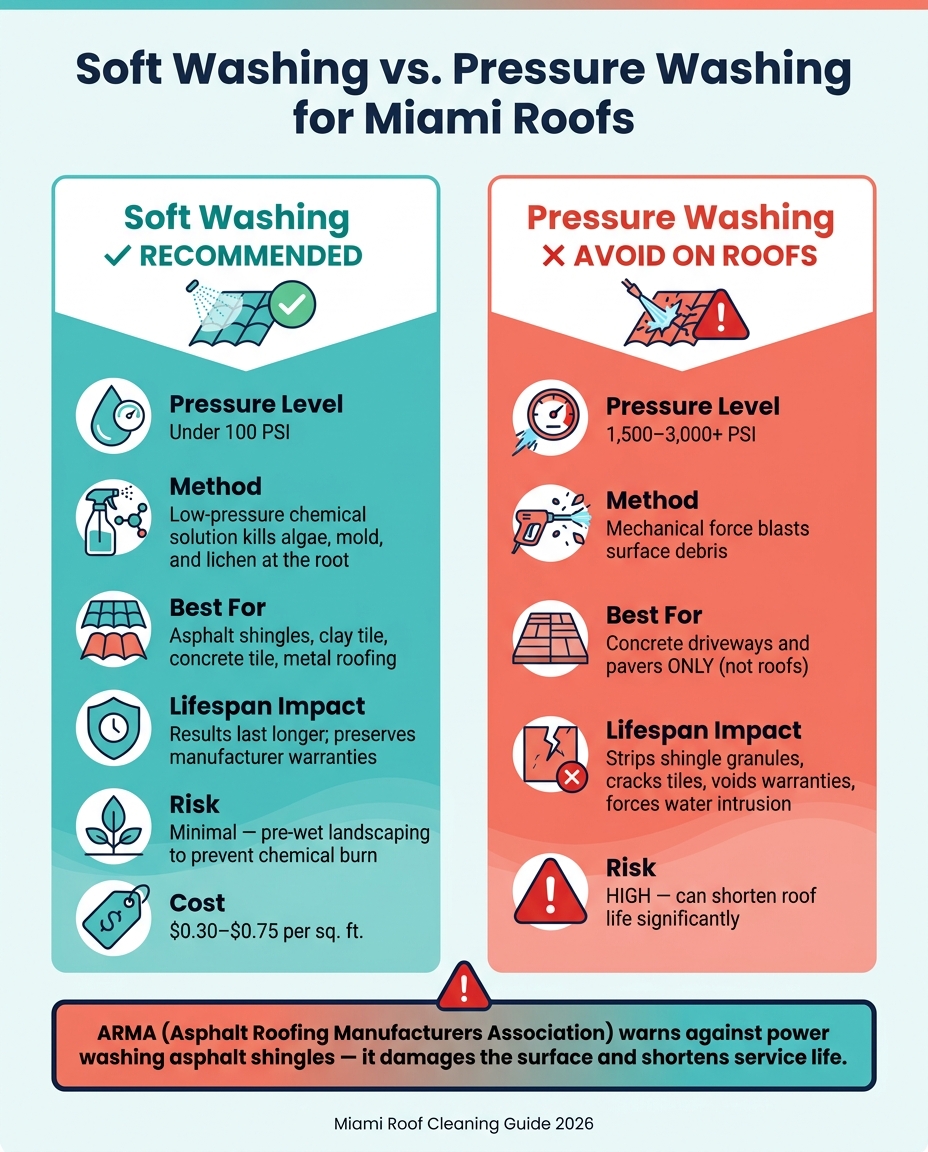
Soft Washing vs. Pressure Washing for Miami Roofs
Miami roofs use different materials, so they shouldn't all be cleaned the same way. Pick the wrong method, and the cleaning itself can cause more harm than the stains.
Asphalt shingles, clay tile, concrete tile, and metal roofing
"The Asphalt Roofing Manufacturers Association warns against power washing asphalt shingles because it can damage the surface and shorten service life."
Clay tile doesn't handle pressure well either. A strong spray or careless foot traffic can crack or chip the tiles.
Concrete tile is tougher than clay, but high pressure can still knock tiles loose or damage the waterproof seals underneath.
Metal roofing can take damage from high pressure too. It can dent panels, strip factory coatings, and push water into standing seam joints or around fasteners. On coastal homes, salt film can make wear on metal roofs worse.
Why soft washing is usually the safer choice for roofs
Soft washing uses low pressure - usually under 100 PSI - plus a cleaning solution that kills algae, mold, and lichen at the root. That matters because it doesn't just clean the surface. It deals with the growth causing the stains. It also tends to last longer than pressure washing and is less likely to conflict with manufacturer warranties.
Soft washing, pressure washing, and spot treatment compared
Spot treatment works well for small, isolated issues like HVAC drip stains, irrigation overspray, or pollen residue. It's a good fit for a limited problem area, but it won't do much if growth has spread across the roof.
Method
Pressure Level
How It Works
Best For
Key Risk
Soft Washing
Under 100 PSI
Low-pressure solution kills organisms at the root
Asphalt shingles, clay tile, concrete tile, metal roofing
Plant damage if landscaping isn't pre-wet and covered
Pressure Washing
1,500–3,000+ PSI
Mechanical force removes surface debris
Concrete driveways and pavers
Granule loss, cracked tiles, voided warranties, water intrusion
Spot Treatment
Varies
Targeted chemical or low-pressure application
Isolated stains such as HVAC drip stains, irrigation overspray, or pollen residue
Ineffective if growth is widespread
The method is the big thing here: soft washing for roofs, pressure washing for hard surfaces.
Once the right method is clear, the next question is when the roof needs cleaning.
When to clean a roof in South Florida
After you pick the cleaning method, the next call is timing. And in Miami, timing matters a lot.
Roofs here stain fast. Once growth takes hold, cleaning gets tougher and the chance of damage goes up. In many cases, the first trouble spots show up on shaded slopes and in roof valleys.
Signs your roof needs cleaning now
The most obvious warning sign is black streaks on the roof. These usually appear first on north-facing or shaded areas that stay damp longer after rain.
Green patches, fuzzy growth near gutters, or lichen spots are also signs that it’s time to act. The same goes for debris like palm fronds, leaves, or sand packed into roof valleys or trapped behind raised roof features. That kind of buildup can block drainage and lead to ponding and water damage.
Sign of Trouble
Likely Cause
Why It Matters
Black streaks
Gloeocapsa magma algae
Often appears first on shaded slopes and signals active growth
Green haze or patches
Moss or algae
A reliable trigger for cleaning, especially near gutters after summer storms
Clogged valleys
Leaves and sand buildup
Blocks drainage and can lead to ponding during heavy rain
How often Miami roofs typically need cleaning
For most Miami-Dade homes, every 1 to 2 years is the standard maintenance window. Homes under heavy tree cover or with a lot of shade may need service closer to every 12 months. On the other hand, well-exposed inland roofs can sometimes go 18 to 24 months between cleanings.
That’s why inspections matter just as much as the cleaning itself. If you’re seeing any of these signs, the next move is a roof inspection and a cleaning plan from a qualified provider.
How professional roof cleaning works and what to look for in a provider
Once you know the right cleaning method, the next step is making sure the job is done the right way.
The roof-cleaning process from inspection to final review
A proper roof cleaning starts with an inspection, site prep, and a plan that fits the roof material. The technician should walk the property, look at staining patterns, check for cracked tiles or lifted shingles, and spot hazards like overhead power lines. That first inspection sets the direction for the whole job.
Before any cleaning starts, the crew should pre-wet nearby plants, grass, and shrubs with fresh water to help prevent chemical burn. They should also cover landscaping and outdoor furniture with plastic sheeting or tarps, while a ground crew member keeps rinsing the area to dilute any overspray.
Next, the crew applies the selected solution from the ridge downward so it follows the roof’s natural drainage path. Then comes the dwell time. The solution needs 15 to 20 minutes to soak into porous surfaces and kill organic growth at the root level. After that, the roof is rinsed with low-pressure water to wash away dead buildup without damaging shingles or tiles.
Once the roof is clean, the crew should clear gutters and downspouts, rinse residue off walls and walkways, and do a final walkthrough. Good providers also document the job with before-and-after photos. That can help with HOA compliance or insurance records.
What to look for in a roof-cleaning company
Start with the basics: make sure the company is licensed and carries both general liability and workers' compensation insurance for roofing and exterior cleaning work. If something goes wrong, that coverage helps protect you from being on the hook for accidents or worker injuries.
Then ask a direct question: do they use soft washing? If a company jumps straight to high-pressure washing on a residential roof, that’s a red flag. High pressure can strip granules from asphalt shingles, crack clay or concrete tiles, and even void manufacturer warranties. It’s safer to work with a company that follows guidance from the Asphalt Roofing Manufacturers Association (ARMA), which warns against power washing asphalt shingles.
Local experience also matters. In Miami, roofs made of clay tile, concrete tile, metal, and asphalt shingles all respond differently to South Florida’s humidity and salt air. A company that works in this market on a regular basis is more likely to know which solutions and pressure levels fit each material.
Before you agree to anything, get a written scope of work that spells out:
the cleaning method
the plant-protection steps
the total price
Those details make quote comparisons much easier in the next section.
Roof cleaning costs, prevention, and next steps
Once you’ve compared written scopes, the next step is simple: figure out what a roof cleaning should cost and what you can do to keep those stains from coming back. In Miami, humidity and salt air make both price and upkeep frequency matter.
What affects roof cleaning cost in Miami
The average professional roof cleaning in Miami averages around $459 in 2026, with most jobs falling between $295 and $623. Most companies price the job by square footage, and soft washing usually runs $0.30 to $0.75 per sq. ft..
Roof size is the biggest cost factor. But it’s not the only one. Prices tend to go up when the roof is steep, hard to access, heavily stained with algae, moss, or lichen, or made from tile. If you want gutters cleaned at the same time, expect to add $0.70 to $1.30 per linear foot.
Preventive maintenance that reduces future staining
Cleaning removes what’s already there. Prevention helps slow down the next round of staining.
A few small steps can make a big difference:
Trim overhanging branches back 6 to 10 feet from the roof to help with sunlight, airflow, and drying.
Install 2- to 4-inch zinc or copper strips near the roof ridge. Materials cost less than $50, installation takes about 30 minutes, and they can help block algae and moss for 10+ years.
Routine gutter cleaning matters too. When gutters clog and storm debris piles up, water can back up under shingles or tiles. That creates the kind of damp conditions that lead to rot and organic growth. There’s also a money angle here: Florida homeowners who keep their roofs in good condition may qualify for homeowners insurance discounts of 15% to 35%.
Here’s a quick side-by-side look at cleaning versus prevention:
Professional Soft Washing
Preventive Maintenance
Upfront Cost
$300 – $1,500+
$50 – $250
Primary Goal
Remove existing stains and algae
Inhibit new growth and improve airflow
Frequency
Every 1–3 years
Annual inspection and trimming
Long-Term Value
Restores curb appeal and reflectivity
Can extend roof life by 10–15 years
The best results usually come from doing both. Cleaning gives the roof a clean start. Maintenance helps it stay that way longer.
Key takeaways for Miami homeowners
Miami's humidity, heat, and coastal salt air make roof staining hard to avoid. For most roofs, soft washing is the right method once stains appear. Black streaks, moss, and uneven discoloration are early warning signs. Left too long, algae feeds on the limestone filler in asphalt shingles and can shorten a roof's lifespan by 10 to 15 years.
When hiring, look for a company that is licensed and insured, provides a detailed written quote, and protects landscaping during the job. Palm Shine Pros covers all three across Miami-Dade, Broward, and Palm Beach. Keep cleaning records and before-and-after photos — if a storm-related claim comes up later, that paperwork matters.
For scheduling, late fall through early spring offers the best drying conditions.
FAQs
Can I clean my roof myself?
It may be tempting, but hiring a pro is the safer move.
Roof cleaning comes with serious risks. You're working on a wet, slippery, sloped surface, and one misstep can lead to a bad fall.
There's also the risk of damaging the roof itself. The wrong equipment or cleaning solution can strip shingle granules, loosen tiles, or cause other damage. In some cases, it can even void your warranty.
Professionals have the safety gear, insurance, and know-how to soft wash a roof safely.
Will roof cleaning affect my insurance?
Yes. Keeping your roof free of algae, moss, and debris helps protect the roof itself, and some Florida homeowners may qualify for insurance discounts of 15% to 35% with proper upkeep.
On the flip side, when organic growth and moisture are left alone, they can lead to damage that may make coverage issues more likely or push repair bills higher. Hiring a licensed and insured professional can also lower liability risks compared with doing the job yourself.
What time of year is best for roof cleaning in Miami?
The best time to schedule roof cleaning in Miami is late winter or early spring. That timing gives your roof a clean slate before the wet season starts in May, when heat and frequent rain can speed up algae and organic regrowth.
It also gives you a chance to clear debris before storm season, which helps water drain the way it should and can lower the risk of water damage. If you notice major debris buildup or dark streaks after a stormy month, an in-season touch-up may make sense too.
.avif)

.avif)