When Metal Roofs in South Florida Need Professional Cleaning
Lorem ipsum dolor sit amet, consectetur adipiscing elit. Suspendisse varius enim in eros elementum tristique. Duis cursus, mi quis viverra ornare, eros dolor interdum nulla, ut commodo diam libero vitae erat. Aenean faucibus nibh et justo cursus id rutrum lorem imperdiet. Nunc ut sem vitae risus tristique posuere.
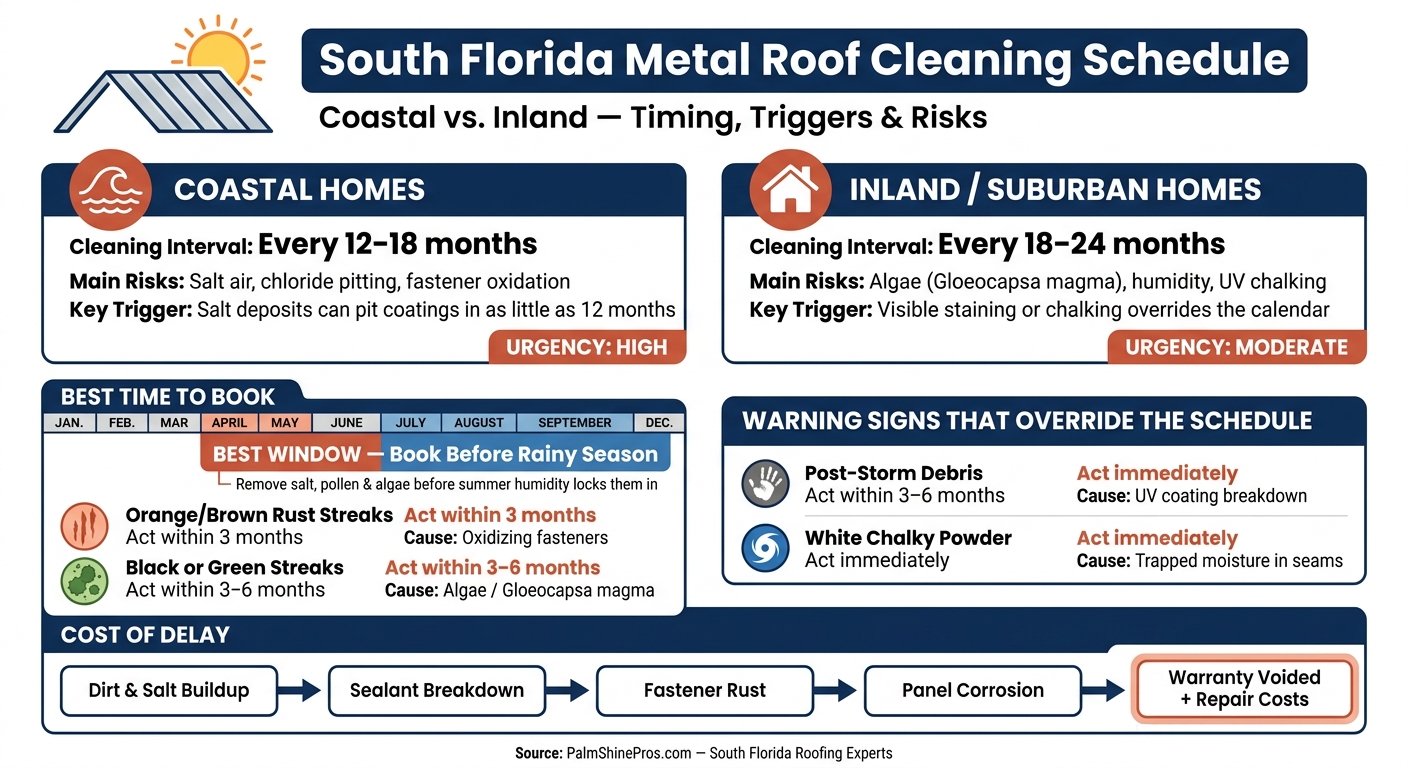
If your South Florida metal roof has rust streaks, black or green stains, white chalky residue, or storm debris, cleaning is likely overdue. Most coastal roofs need cleaning every 12–18 months, while inland roofs usually fall in the 18–24 month range. If any warning sign shows up first, the calendar no longer matters.
You should aim to schedule cleaning in April or May, before the rainy season. That timing helps remove salt, algae, pollen, and grime before summer moisture keeps those materials on the roof longer. Waiting too long can lead to fastener rust, sealant wear, coating loss, panel corrosion, and warranty trouble.
Here’s the short version:
Coastal homes: clean every 12–18 months
Inland homes: clean every 18–24 months
Best time to book:April–May
Clean sooner if you see: rust streaks, algae, chalking, or post-storm buildup
Main risk of delay: dirt turns into roof wear, then repair costs
Roof condition
What it often means
What to do
Rust streaks near screws or seams
Fasteners or hardware may be corroding
Schedule cleaning and inspection soon
Black or green streaks
Algae, mildew, or trapped moisture
Book service within a few months
White powder on the surface
Coating is breaking down from sun and salt
Act as soon as you spot it
Debris after a storm
Moisture can stay trapped in seams
Arrange post-storm cleaning
The article below explains the signs to watch for, when to book service, and what can happen if cleaning gets pushed back.
Visible signs your metal roof is overdue for cleaning
You can spot a lot from the ground. And in many cases, the roof starts sending clear warning signs before bigger damage sets in.
Rust streaks at fasteners and panel laps
Orange or brown lines running down from screws, HVAC feet, or satellite mounts are one of the clearest signs that cleaning is overdue. In most cases, those streaks come from corroding hardware, not the metal panels themselves.
Once iron particles get lodged in the coating, they can start pitting the surface from the outside in. In coastal areas, this tends to show up sooner. For more on that, see the salt-air corrosion guide. It also helps to watch panel laps and seams closely. Those spots hold moisture, which gives hidden corrosion time to start quietly before you can see it.
Algae colonies, oxidation patches, and black or green streaks
Black streaks and green patches often point to algae or mildew. Both hold moisture against the roof and speed up coating wear. Black streaks are usually colonies of Gloeocapsa magma, a cyanobacteria that thrives in South Florida’s heat and humidity, while green patches in shaded areas or along seams can point to algae, mold, or mildew. Either way, the result is the same: moisture stays trapped on the panel surface, coating wear speeds up, and corrosion can start beneath the growth.
A dull, faded finish or a white, powdery residue - also called chalking - is a different warning sign, but just as serious. It means UV exposure and salt air are breaking down the roof’s protective resin layer, usually Kynar or PVDF. A simple check can help: wipe a finger across the faded area. If white powder comes off, the coating is breaking down. Left alone, chalking can lead to permanent paint loss and expose the metal underneath.
These signs matter even more when they show up before the rainy season.
Use the summary below to gauge how fast you should move.
Symptom
Likely Cause
Structural Risk if Ignored
Recommended Action Timing
Orange/brown streaks
Oxidizing fasteners or rooftop hardware
Fastener failure; panel coating pitting
Immediate (within 3 months)
Black/dark green streaks
Gloeocapsa magma or algae colonies
Moisture retention; coating degradation
Within 3–6 months of appearance
White powdery residue (chalking)
UV-driven oxidation of resin layer
Permanent paint failure; base metal exposure
Upon discovery
Even one of these signs is enough to justify an inspection.
If you’re seeing any of them, the next move is to schedule cleaning before the rainy season begins.
sbb-itb-20350f7
Best time to schedule metal roof cleaning in South Florida
South Florida Metal Roof Cleaning Schedule: Coastal vs. Inland Guide
Once rust streaks, staining, or oxidation show up, the next step is figuring out when to book cleaning. In South Florida, timing matters a lot. Heat, humidity, and salt can speed up buildup, and there’s a pretty small window when cleaning does the most good.
Pre-rainy season scheduling: April–May is usually the best window
April–May is usually the best time to schedule professional metal roof cleaning before South Florida’s wet season kicks in. Cleaning ahead of the rains clears away salt deposits, pollen, and organic growth before heat and moisture help them spread and speed up corrosion.
How coastal exposure shortens the cleaning interval
Coastal roofs usually need cleaning every 12–18 months. Inland roofs can often go 18–24 months. The reason is simple: salt air leaves corrosive residue behind, and those deposits can start pitting paint coatings in as little as 12 months if they’re left in place. The salt air corrosion guide explains how that happens in more detail.
The table below shows how location changes the recommended cleaning schedule:
Property Type
Recommended Interval
Main Risk
Coastal (within 5 miles of coast)
12–18 months
Salt air, chloride pitting, fastener oxidation
Inland / Suburban
18–24 months
Algae (Gloeocapsa magma), humidity, UV chalking
Visible rust, streaking, or chalking overrides the calendar. If the roof is already showing signs, cleaning is overdue.
Storms can shrink that timeline even more.
Post-storm buildup as an early cleaning trigger
In South Florida, major storms can push salt spray farther inland, pack debris into seams and panel laps, and hold moisture against the metal surface. That mix can move a roof from “not yet” to clean it now months ahead of schedule. The storms impact roofs in South Florida guide goes over what to check after a major weather event.
After major storms, schedule an inspection and cleaning if you can see debris or streaking.
If that buildup stays put, the next problem is sealant breakdown and fastener rust.
What happens when cleaning is delayed
Putting off cleaning does more than make a roof look bad. On South Florida metal roofs, buildup can start wearing down sealant, fasteners, and the protective coating. At that point, the roof isn’t just dirty anymore - it’s beginning to break down.
Sealant breakdown and fastener rust
Algae, mold, and lichen trap moisture against the roof surface. When that growth settles into seams, around fasteners, and near penetrations, those spots stay wet long after the rain is gone. Over time, that moisture can wear down the washers and sealant that help keep water out.
By the time you notice rust streaks, fastener corrosion has usually already started. And once rust spreads across the painted surface, it can speed up galvanic corrosion where different metals meet.
Moisture retention usually starts with damage to the hardware, then moves into coating failure.
Coating damage, panel corrosion, and warranty concerns
In coastal air, salt deposits can pit roof coatings within 12 months. Once that coating gives way, the metal underneath is more exposed. Galvalume panels can then develop white rust, a powdery corrosion that attacks the alloy layer.
There’s also the warranty issue. Manufacturers often call for regular maintenance, and visible neglect can put warranty claims at risk.
If you can already see any of these signs, it’s time to schedule professional cleaning before the damage spreads.
When to call for professional cleaning
When you see rust streaks, algae in seams, oxidation patches, or black and green growth, don’t treat it like a routine touch-up. At that point, timing matters more than a set maintenance schedule. Schedule cleaning now.
Any one of those signs means the roof is already past due for service.
After major storms or hurricanes, schedule cleaning to clear off salt and debris that hold moisture against the roof. That leftover storm grime can speed up hidden wear, even if the roof still looks fine from the ground. For more context, see the guide to storms and roof damage in South Florida.
If you live near the coast, don’t let the roof go beyond a 12-month cleaning interval. Salt exposure wears roofs down faster than many homeowners expect. For more on that, see the salt air corrosion article.
Conclusion: Spot the signs early and schedule before damage spreads
Timing matters more than most homeowners realize. Rust streaks at fasteners, algae in panel seams, oxidation patches, and black or green streaking all point to the same thing: cleaning is already overdue.
In South Florida, April through May is the window to schedule before the rainy season. That clears winter salt buildup before humidity climbs and gives roof coatings a better chance of holding through summer. Coastal homes or roofs that took storm exposure may be looking at a 12-month or shorter cycle. Palm Shine Pros services metal roofs across Miami-Dade, Broward, and Palm Beach on that kind of schedule.
Wait too long and the problem stops being cosmetic. Sealant breaks down, fasteners rust, coatings degrade, and manufacturer warranty coverage becomes a concern.
The signs are easy to read. The timing is predictable. Waiting is where it gets expensive.
FAQs
Can I wait if only a small area is stained?
It’s best not to wait, even if the stained area looks small. On South Florida metal roofs, visible stains often point to more than surface dirt. They can be a sign of biological growth, salt buildup, or rust streaks.
Cleaning the roof early can help prevent sealant breakdown, fastener corrosion, and possible warranty issues.
Does a recent storm mean I should clean sooner?
Yes. After a major storm, it makes sense to bring in a pro. Plan for an inspection and cleaning within one to two weeks. That gives you a chance to clear away debris and contaminants before they turn into hidden damage or mold growth.
This is also the right time to check for structural problems, like loose panels or damaged fasteners.
Could overdue cleaning affect my roof warranty?
Yes. If you don’t maintain your roof, or you clean it the wrong way, your warranty may be affected. Many manufacturers expect periodic professional cleaning. They may also deny coverage for damage caused by unapproved chemicals or high-pressure equipment.
To help protect your coverage, use manufacturer-approved soft washing methods. It also helps to keep clear records of cleaning dates, methods, and products used.
Lorem ipsum dolor sit amet, consectetur adipiscing elit, sed do eiusmod tempor incididunt ut labore et dolore magna aliqua. Ut enim ad minim veniam, quis nostrud exercitation ullamco laboris nisi ut aliquip ex ea commodo consequat. Duis aute irure dolor in reprehenderit in voluptate velit esse cillum dolore eu fugiat nulla pariatur.
.avif)

.avif)